Get Full Government Meeting Transcripts, Videos, & Alerts Forever!
Get email alerts on the City Attorney Proposal topic
No spam. Unsubscribe anytime.
Woods Fuller presents team-based city attorney proposal, highlights Brookings experience and environmental work
Summary
Woods Fuller LLP presented a proposal to serve as Brookings' contracted city attorney, emphasizing a team approach, local experience with Brookings matters and state regulatory work including long-running mine site cleanup work with DANR. The firm proposed hourly billing with no minimum retainer, paralegal support and flexible travel billing.
Woods Fuller LLP told the Brookings City Council on Tuesday that it would provide a lead attorney as contract city attorney supported by a team of specialists, offer flexible billing and bring existing experience on Brookings matters and state environmental regulation.
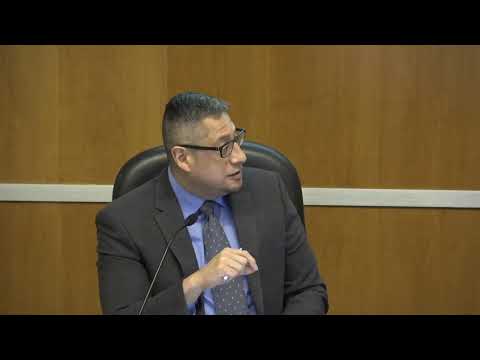
The presentation — led by Vince Jones of Woods Fuller — said Jones would serve as the city attorney and be the primary point of contact, but that a deep bench of municipal attorneys and paralegals at the firm would support Brookings when specialized or high‑volume work is required. “I would be the city attorney. The department heads that need to get a hold of me would have my cell number,” Jones told councilors during the firm’s 20‑minute presentation and subsequent question period.
Why it matters: The council is replacing a long‑time contracted city attorney and is weighing proposals that differ on staffing, price structure and local presence. Woods Fuller emphasized continuity with Brookings practice and the firm’s prior work for the city, saying multiple firm attorneys have handled Brookings litigation, contract drafting and ordinance work in the past.
Woods Fuller detailed several operational points: the firm bills hourly with no monthly minimum retainer; it uses paralegals and lower‑rate attorneys for routine work when appropriate; invoices are monthly and list work in six‑minute increments (tenths of an hour); travel time would be billed at 50 percent of the hourly rate; and the firm typically proposes annual rate adjustments tied to CPI. Jones also outlined a scope exclusion: construction contract drafting for large projects would be handled by a specific senior attorney (Jim Weidrick) and negotiated on a per‑matter basis.
On regulatory experience, Jones pointed to a decades‑long involvement with a contaminated mine site in the Black Hills (the Gilt Edge mining site) and said that work required repeated interaction with the state Department of Environment and Natural Resources (DANR) and federal regulators. “We’ve had to navigate many, many different things on the state and on the federal level,” he said, describing work on remediation, permitting and related litigation.
Councilors asked about conflicts checks, in‑person meeting attendance, and cost control. Jones described the firm’s conflicts‑checking software and explained that some conflicts are waivable with informed consent while others require the firm to step away. He said he would attend council meetings in person “fairly often, especially at the beginning” to build relationships and that staff could choose more virtual appearances later. On staffing for routine matters such as magistrate court, Jones said lower‑rate team members (including Susan Rasmussen) could handle procedural tasks to reduce city costs.
During public comment and Q&A, Woods Fuller reiterated that the firm would work with the city’s outgoing attorney during a transition if desired and would provide emergency availability via cell phone for after‑hours matters.
Ending: The Council will consider Woods Fuller’s proposal alongside competing firms before a planned selection vote; no formal contract decision was made at Tuesday’s meeting.