Get Full Government Meeting Transcripts, Videos, & Alerts Forever!
Get email alerts on the Municipal Budgeting topic
No spam. Unsubscribe anytime.
Norwalk officials, parents and educators spar over 9.7% school budget request as city warns of tax pressure
Summary
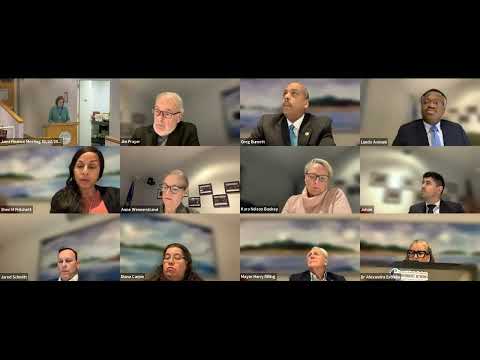
Norwalk City and Board of Education finance leaders and residents debated the proposed FY 2025–26 operating budget at a joint meeting Wednesday, centered on the Board of Education’s 9.7% spending request and the city’s options to cover rising costs without sharply raising property taxes.
Norwalk City and Board of Education finance leaders and residents debated the proposed FY 2025–26 operating budget at a joint meeting Wednesday, centered on the Board of Education’s 9.7% spending request and the city’s options to cover rising costs without sharply raising property taxes.
The Board of Education approved the superintendent’s recommended budget on Jan. 14, calling for a 9.7% increase — about $22.6 million — to cover contractual obligations, growing special-education and multilingual-learner costs, transportation and health-insurance increases. At the same time, city finance officials warned the combined set of pressures — a multi-year real-estate revaluation phase-in, state-mandated changes to motor-vehicle taxation, pension funding adjustments and higher health-insurance and transportation costs — could push median household taxes materially higher if left unaddressed.
Why it matters: The board’s spending request would preserve school-based staff and programs that parents, teachers and union leaders said are essential to student safety and instruction. City officials said many of the biggest cost drivers are out of local control or recurring and that one-time use of reserves would not solve structural gaps.
Public testimony at the meeting was dominated by parents, teachers and union leaders urging the council to fund as much of the board’s request as possible so the district does not cut nurses, assistant principals, counselors, paraeducators and interventionists. Lisa Britton, an independent-party town chair and longtime district volunteer, told the committees: “Our children's education cannot be in the cross fire of this decision making process so please do not let them down.” Several speakers provided examples of daily health and safety risks they said would increase if nursing staff were shared between schools.
City and school finance presentations laid out the numbers that underlie both sides’ appeals. Jared Smith, the city’s chief financial officer, said the city’s unassigned fund balance rose by $8.7 million to about $86 million, but flagged several revenue and cost changes that reduce flexibility. Smith said a state-mandated reduction in the motor-vehicle mill rate will likely cost the city roughly $10 million in revenue next year, and a separately described change to vehicle valuation is projected to cost about $2 million. He also noted long-term liabilities rose 2.8% to about $615 million.
Board of Education Chief Financial Officer Nunez Islam (presentation) and other district staff said enrollment is roughly flat but the district’s “high‑needs” population — multilingual learners, specialized learners and students eligible for free or reduced-price meals — has climbed sharply. Islam said, “Since 2019 to this date, our high needs population has increased by 29%,” and that higher needs drive outsized costs for services, staff and out‑of‑district placements.
Islam summarized budget drivers included in the 9.7% request: collective-bargaining wage adjustments (budgeted at about $6.6 million across unions), rising employer health‑insurance costs (the district’s advisers estimated total health and related benefit spending near $49.7 million next year), additional mandated special-education staffing, transportation contract increases and the expiration of several grants that previously funded summer programs, behavioral-health partnerships and other services.
The board said it has already reduced central-office spending: the district reported 21 central-office positions were reorganized, producing a net reduction of about 14 positions and roughly $2.1 million in savings; the board is also evaluating another $1 million of reductions to reduce pressure on the operating ask. Islam also identified approximately 1,700 locally funded staff positions and about 187 positions funded by grants.
City officials stressed constraints and limits to one-time fixes. Smith and other city staff explained that while the fund balance can be used for one-time needs, tapping reserves only delays recurring costs. “If we contribute whatever number of dollars on the rainy day fund ... it’s not a permanent solution,” Jared Smith said during the discussion, adding that structural changes would be needed to address ongoing shortfalls. Council members and the mayor said they will review the board’s request alongside department budgets before determining the final appropriation.
On the mechanics: city staff said budget work will continue through February, with the common-council Finance and Claims public hearing set for Feb. 13 and the Board of Estimate and Taxation public hearing on March 26. City staff warned that if preliminary department requests held as-is, a median household could see taxes rise by as much as 20% next year — a projection council members and the mayor said they intend to avoid by negotiating reductions, reallocations and seeking state support where possible.
What’s next: The joint meeting closed after questions from councilors and board members; both parties signaled continued collaboration and follow-up meetings. Council and board members repeatedly urged joint state advocacy to address special-education excess-costs and other state-level funding shortfalls that they say are shifting costs to local taxpayers. The committees adjourned at 8:28 p.m.
Ending: Officials emphasized the budget process is ongoing. The city and board urged residents to follow the posted budget materials and attend scheduled hearings if they want to weigh in on priorities and trade-offs.