Get Full Government Meeting Transcripts, Videos, & Alerts Forever!
Get email alerts on the Homeless Services Hdrdc topic
No spam. Unsubscribe anytime.
Public and commissioner raise concerns about HRDC warming-shelter temperature policy and access
Summary
Speakers and a commissioner said the local warming shelter lacks basic measures (a thermometer) and suggested the nonprofit's internal cold-weather cutoff should be reviewed as volunteers reported people turned away during extreme cold.
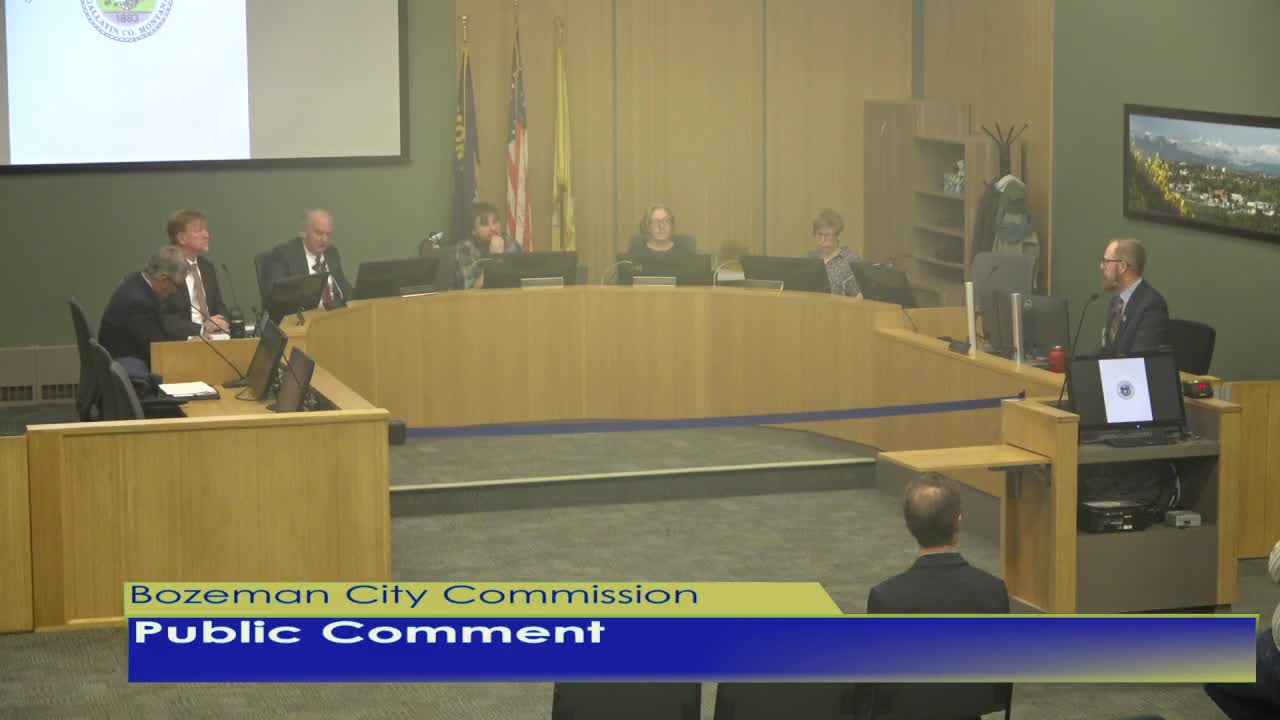
During public comment and later in FYI, a resident and commissioners raised concerns about how the Human Resource Development Council (HRDC) operates the local warming shelter and whether its internal temperature thresholds leave people exposed during extreme cold.
Bozeman resident Henry Hall told the commission he had volunteered at the warming shelter and found it lacked a thermometer to confirm outside temperatures: “You would think that the warming shelter would have a thermometer for outside at least to understand... They don't own a single thermometer.” He said the shelter had closed its doors while temperatures were still roughly minus 9 degrees outside and urged the commission to press HRDC on standards for opening and closing.
Commissioner Bode later reported staff research did not find a statutory city requirement forcing HRDC to operate at specific temperature thresholds; he noted the shelter’s operating rules appeared to be an internal policy set by the nonprofit. Bode said the city provides grant funds to the shelter but does not have the authority in that grant to mandate that it be open 24/7.
Deputy Mayor Morrison and other commissioners acknowledged ongoing efforts to fund and expand shelter capacity but said the city’s current funding levels and policy tools limit direct compulsion of the nonprofit operator. Commissioners said they would continue budget and program conversations to improve access.
Why it matters: Cold-weather sheltering and the rules that govern access affect public health, homeless-services operations and the city’s emergency-response obligations. The exchange underscores citizens’ expectations for transparency and reliable shelter access during extreme weather.