Get Full Government Meeting Transcripts, Videos, & Alerts Forever!
Get email alerts on the Ancient Empires And Silk Road Trade topic
No spam. Unsubscribe anytime.
Student compares Parthian and Han empires, emphasizing trade, governance and military contrasts
Summary
A student presenter outlined a 480‑year comparative overview of the Parthian Empire and China’s Han dynasty, highlighting differences in political structure, economic models, Silk Road trade and military tactics.
Tyler Wurm, a Central and Southwest Asian Studies student, presented a comparative outline of the Parthian Empire and the Han dynasty, focusing on governance, trade, military tactics and cultural legacies.
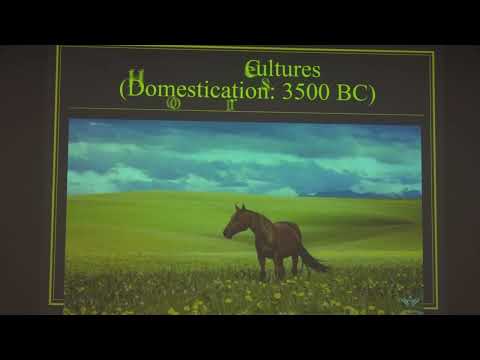
Tyler summarized the Parthian polity as a decentralized system of local rulers (satraps) that leveraged cavalry mobility and controlled key Silk Road corridors, trading goods such as saffron, lapis lazuli and metals. He contrasted that with the Han dynasty, which Tyler described as a centralized, bureaucratic state that developed state monopolies, invested in roads and canals and supported agricultural and industrial expansion.
The nut graf: Tyler argued the two polities had complementary but contrasting strengths — Parthian cavalry and trade‑oriented wealth versus Han administrative reach and technological innovation — which together shaped interregional exchange along the Silk Road.
Tyler covered military distinctions (Parthian mounted archers and the noted “Parthian shot,” versus Han infantry and fortification strategy), cultural exchange including the spread of Buddhism along trade routes, and technological legacies such as papermaking credited to Han China. He closed by observing that both empires left legacies influencing neighboring regions and later historical narratives.