Get Full Government Meeting Transcripts, Videos, & Alerts Forever!
Get email alerts on the Europe Political Stability topic
No spam. Unsubscribe anytime.
University of Montana panel: European political upheaval is weakening post‑World War II order, speaker says
Summary
At a University of Montana conference, Professor Michael Mayer said electoral upsets, slow growth and energy dependence have eroded Western Europe—s post‑World War II institutions and complicated U.S. policy toward Russia and Ukraine.
Professor Michael Mayer, a retired University of Montana professor of U.S. foreign policy, told an audience at the Central and Southwest Asian Studies Conference that a series of political, economic and energy crises has produced what he called "a disintegration of the post World War 2 liberal order." Mayer said those strains have contributed to an uneven European response to Russia's 2022 invasion of Ukraine and complicated U.S. diplomatic options.
Mayer, speaking June 2025 at the University of Montana in Missoula, framed the recent years as a moment in which "corrosive issues" such as stagnant economies, immigration and energy policy have battered Western institutions and made timely military assistance more difficult. "Western Europe over decades has chronically underspent on defense," he said, adding that leaders legitimately worried about provoking a wider war led to delayed or limited weapons transfers to Ukraine.
Why it matters: Mayer argued that divisions inside key European democracies and rising populist parties reduce the continent's ability to sustain unified security and economic responses. That weakens NATO's deterrent posture and narrows options for U.S. policy toward Russia and the broader transatlantic alliance.
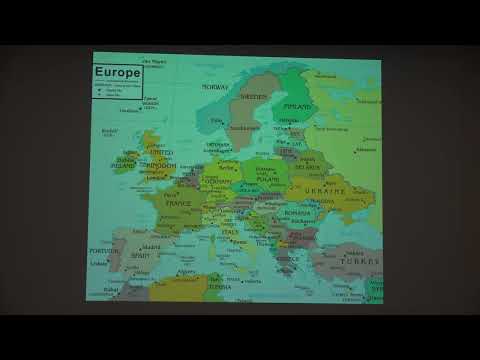
Mayer reviewed how electoral shifts and economic strains have played out in several countries. In France he cited gains by the National Rally and described months of governmental uncertainty after the European parliamentary elections; he said the French government faced a public deficit projected at 5.6% of GDP in 2024 and over 6% in 2025, above the European Union's 3% limit. He said Marine Le Pen was barred from running for office for five years after an embezzlement conviction but remained a leading political figure.
On Germany, Mayer described a string of political setbacks for Chancellor Olaf Scholz's coalition, a shrinking industrial base and rising popularity for the Alternative for Deutschland party. He said Germany had taken in about 1,500,000 Ukrainian refugees and that German industrial output had fallen about 20% since 2017, comments he linked to high energy costs and the country's rapid pivot away from nuclear power.
Mayer said Britain—s recent election produced a "large but shallow" Labour parliamentary majority — winning many seats but only about a third of the vote — and that the new government had found a substantial budget shortfall after the campaign. He also touched on Italy, the Netherlands and Spain, saying each country faces its own mix of populist gains and coalition instability.
Mayer concluded that the political instability, economic weakness and disagreements among France, Germany and Britain complicate allied strategy on Ukraine and burden the United States with difficult choices about how and when to press for European burden‑sharing.
"It doesn't look all that promising for Europe," Mayer said, noting concerns about defense spending, energy dependence and the influence of Brussels bureaucrats.
The panel was presented by the Central and Southwest Asian Studies Center; the discussion moved on after Mayer's remarks to the conference's planned focus on the Middle East.