Get Full Government Meeting Transcripts, Videos, & Alerts Forever!
Get email alerts on the Central Asia History And Geopolitics topic
No spam. Unsubscribe anytime.
Conference opener traces Central Asia from steppe cultures to post‑Soviet borders and Kazakhstan disarmament
Summary
At the University of Montana’s 20th annual Central and Southwest Asian Studies conference, the opening presenter outlined the region broadly known as Inner Eurasia, covering steppe origins, archaeological finds, Soviet‑era border drawing and Kazakhstan’s post‑Soviet nuclear disarmament in the 1990s.
An opening presenter at the University of Montana’s 20th annual Central and Southwest Asian Studies conference gave a broad historical overview of Inner Eurasia — a term increasingly used in scholarship as a synonym for Central Asia — and flagged several topics of contemporary significance, including post‑Soviet borders and Kazakhstan’s renunciation of nuclear weapons.
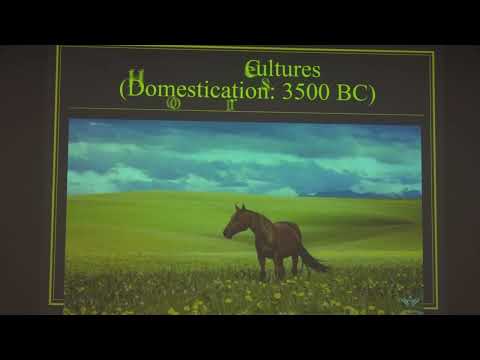
The presenter said Inner Eurasia’s story “starts with the steppe,” describing a cold grassland zone in southern Siberia where mobile herders and early metalworkers developed and spread technologies and goods across Eurasia. He reviewed archaeological highlights cited in the lecture, including gold funerary finds and examples of early textiles and chariot technology housed in museums in Saint Petersburg and elsewhere.
The nut graf: the presenter framed the region’s long history as background for modern political configurations. He noted that many modern Central Asian state boundaries were drawn in the Soviet period, citing maps redrawn between 1924 and 1936, and that those lines were not always based on historical or cultural borders. He also described how Kazakhstan inherited a large portion of the Soviet nuclear arsenal and negotiated dismantlement of missiles and test facilities in the 1990s with U.S. administrations, a process the presenter placed across the presidencies of George H. W. Bush and Bill Clinton.
The body of the talk traced the region from Bronze and Iron Age metalworking through medieval and early modern geography, touching on the Tian Shan and Hindu Kush mountain chains, the Altai, and the distribution of archaeological finds. The presenter named specific museum holdings and scholars and described the 1990s disarmament in Kazakhstan as involving dismantling long‑range RS‑10 and other missiles and closure of test ranges. He credited multiple university leaders and faculty for sustaining the local academic program that staged the conference.
The presentation ended with an invitation to the next speaker and the program moved to a student presentation.
The opening presenter and several named scholars and officials were mentioned during the talk but the transcript does not record a byline for the presenter. Where the lecture referred to historical broadcasts, archives or museum holdings, the presenter cited those sources descriptively rather than by formal citation.