Get Full Government Meeting Transcripts, Videos, & Alerts Forever!
Get email alerts on the Police Dispatch topic
No spam. Unsubscribe anytime.
Junction City reviews interim dispatch plan, technology needs as county consolidation advances
Summary
City council and police officials reviewed an interim contract to have Lane County/Lane County-aligned dispatch handle Junction City calls, outlined technology and staffing gaps, and flagged about $200,000 in untransferred RMS/CAD funds that could be applied to upgrades.
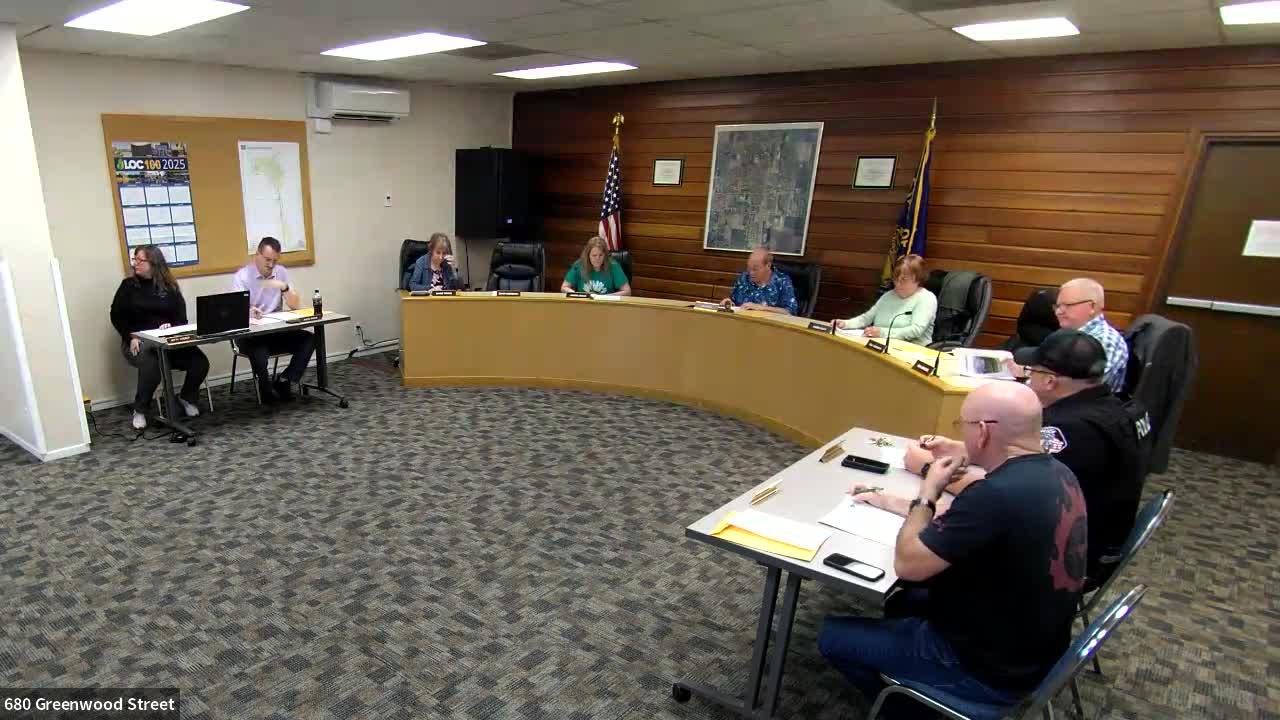
Junction City councilors and police leaders on March 25 reviewed an interim plan to rely on county dispatch services if the city’s local dispatch staffing becomes insufficient and discussed technology and budget steps needed to complete the transition.
City officials said the city will use an interim contract with the county to bridge dispatch coverage while long‑term arrangements are negotiated. The police chief told the council “the county says they’re ready to go anytime in an emergency situation,” but said detailed technical work remains to align radio systems, computer‑aided dispatch (CAD), and records management system (RMS) interfaces.
The discussion matters because the city’s two current dispatchers now operate a 9 a.m. to 6 p.m. schedule for Junction City responses; officials said that schedule was set after talks with the county about call loads and the county’s ability to handle calls outside those hours. Council members were told the city has not received two‑week notices from either dispatcher and the schedule change began this week.
Police and IT staff described several technical challenges that must be resolved before a full handover can occur. Those include: ensuring officers’ mobile terminals can run the county CAD, linking the CAD to the city RMS so incident data and reports transfer automatically, upgrading aging radio tower equipment and microwave/fiber connections, and deciding whether to license CAD user access from the county or to host separate modules locally. The chief said some radio and tower hardware is “20 years old” and that the city must avoid a single point of failure by building redundancies.
Councilor Thomas asked about funding. Meeting discussion identified a non‑departmental transfer of $440,000 for police items: $240,000 already transferred and $200,000 still outstanding. Officials said part of that $200,000 was budgeted for RMS and CAD work and that savings may be possible if the city uses county CAD licenses and drops modules the city will not need (the previously quoted package included a jail module and a dispatch module). The chief said he has asked the software vendor EIS for updated quotes for an RMS plus evidence module and that the city will need mobile data terminals (MDCs) in patrol vehicles; the department currently has three new MDCs and is seeking grant funding for additional terminals.
Officials also discussed evidence tracking. The chief described the advantage of an integrated evidence module that populates seized items directly from an officer’s report; he named a commercial product called “Evidence on Queue” as one common option and said the EIS package under review includes an evidence module. He cautioned that the county has not adopted the same evidence module and that the county’s evidence database is large, which complicates migration.
Councilors asked about regional consolidation efforts. Staff said Eugene and other agencies are exploring a multi‑agency dispatch solution that could take several years to implement and that county and Springfield needs (including tower coverage to Florence and Oakridge) complicate a single solution. Officials recommended preparing for both short‑term interim contracts and a longer‑term, countywide approach while avoiding premature investments that may be redundant if a consolidated system is adopted.
The council did not take formal action on a contract at the March 25 meeting; staff said a corrected contract packet will be returned in two weeks for formal consideration. Councilors directed staff to continue technical coordination with county and agency tech personnel and to incorporate likely police technology items into next year’s budget.
Officials said they will bring updated vendor prices and a more complete scope back to the council, and continue interagency meetings to resolve radio, CAD and RMS integration issues.