Centerville police outline budget needs as staffing, drones and body cameras expand
Loading...
Summary
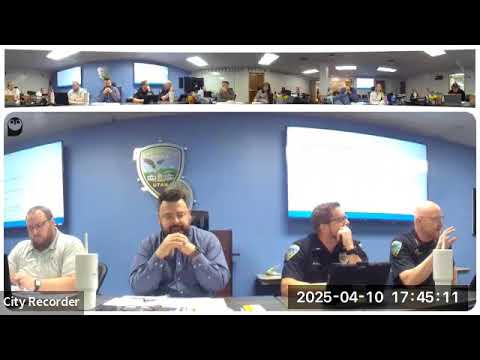
Centerville police presented budget changes at the April 10 council budget retreat, highlighting a request to preserve staffing levels while covering ongoing costs for drone maintenance, vehicle rotation, body and dash cameras and officer wellness programs.
Centerville Police Chief told the City Council at its April 10 budget retreat that the department is proposing modest line-item changes while pressing for long-term staffing support, particularly another patrol position.
The department said it has 20 sworn officers and three support staff and described current operations, specialty units and training. Chief and Lieutenant Barnes highlighted equipment and program changes: a new drone-maintenance line estimated at about $5,000 annually for three drones and three pilots; reduced vehicle-maintenance costs because of a healthy vehicle rotation; an increase in radar-recertification costs that recur every few years; and an estimated $100,000–$130,000 package to replace body and dash cameras over five years under a Motorola/WatchGuard offering.
Why this matters: Police said overtime — budgeted at about $88,000 — covers both staffing shortfalls and voluntary patrol shifts (summer/night patrols) that are cheaper than hiring a new officer once benefits and a vehicle are included. Councilmembers pressed for detail on whether overtime masks understaffing and discussed the recruiting challenges that lengthen academy-to-field training from months to a year or more.
Chief described training and in-house instructor capacity, and explained that certification requirements average roughly 40 hours per officer per year while many officers log much more. He also described specialized capabilities: canine handlers (narcotics dog Reyna, human-tracking bloodhound Maya), drone pilots, detectives and a school resource officer. The department said firearms, taser, defensive tactics and emergency vehicle operation instruction is primarily handled in-house by state-certified instructors.
On staffing and recruitment: Chief and council discussed the department’s struggles hiring fully certified officers. A recent hire entered the police academy in April; training and field training mean that the new hire will likely not be fully independent for many months. Council members and the chief debated options: boosting recruitment incentives for certified lateral hires versus sponsoring recruits through the academy and accepting a longer lead time. The council asked staff to prepare a work session analysis of full-time-position cost (salary, vehicle, equipment) versus continuing reliance on overtime and volunteer patrol shifts.
Equipment and programs: The department reported a reduction in vehicle maintenance costs, a new drone maintenance line ($~5,000/year), a $16,000 top‑end drone (largely funded by donations), and ongoing insurance, battery and subscription costs for streaming and flight‑log services. Patrol rifle replacements, body/dash camera upgrades (Motorola quoted a multi-year payment plan), and replacement of aging patrol rifles (some 15 years old) were discussed as capital needs. The department also described shifting some small equipment into a “small equipment” line (items under $5,000) to consolidate purchases such as taser replacements, handgun lights and safe upgrades.
Officer wellness and overtime: Council members pressed on overtime levels and wellness programs. The department budgets for officer wellness services and said prices rose because of increased usage; staff are evaluating a vendor change to improve services. Chief defended voluntary overtime programs as less expensive than hiring a fully funded officer and said officers’ preference for voluntary shifts has reduced willingness to take overtime. Council members asked for data showing how overtime usage tracks with staffing deficits and for an analysis that compares overtime cost to the full cost to hire a new officer.
What’s next: Council asked staff to prepare—at a future work session—a cost analysis for (a) adding a patrol FTE (salary, vehicle, equipment and training timeline), (b) alternatives such as recruitment/lateral-pay incentives and (c) more detailed projections for equipment purchases (body cams, patrol vehicle rotation) and staffing impacts.