Get Full Government Meeting Transcripts, Videos, & Alerts Forever!
Get email alerts on the Charter Review topic
No spam. Unsubscribe anytime.
Sweet Home charter review committee appoints Gary Jarvis vice chair, plans focused review of chapters 1–3
Summary
At a committee meeting, members appointed Gary Jarvis as vice chair by voice vote, directed staff to compile model charters and legal research on vacancies and ballot language, and set the next meeting for May 6 to begin a section-by-section review of the city charter.
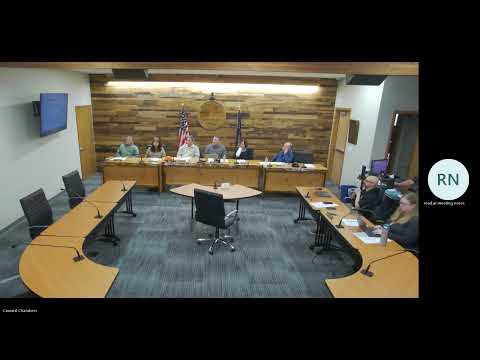
Committee members of the Sweet Home Charter Review Committee appointed Committee member Gary Jarvis as vice chair by voice vote and agreed to concentrate their next meeting on chapters 1–3 of the city charter.
The action came during a meeting in which members discussed scope and process for the committee’s work, including whether to defer consideration of a mayoral election ballot measure that would change how the mayor is selected. Committee members and staff agreed to prioritize a systematic, section-by-section review and to bring model language and examples from other jurisdictions to future meetings.
The committee’s work will be driven by staff research and outside examples. Blair, a staff member who led parts of the discussion, said staff would examine legal constraints — including state law and recent court decisions — before recommending charter language that could, for example, change vacancy or attendance rules. “I will be taking a look at what’s going on legally right now,” Blair said, referencing a recent Corvallis case involving an attempt to remove a councilor.
Members flagged specific items for staff follow-up. Committee members raised questions about the charter’s vacancy language in section 12 (whether it refers to physical absence or meeting attendance), an ordinance-reading requirement the committee previously reviewed, and a $10,000 bond amount last updated in 2014. Blair said staff would research the legal consequences of any removal or vacancy language the committee might propose and would return with findings.
The committee also discussed using outside resources. Members suggested inviting a specialist from the local Council of Governments to present model language; Blair noted the League of Cities offers a vetted model charter the committee could use as a baseline. Members agreed staff should compile a packet of model charters and benchmark language from similarly sized cities.
On election-related language, Blair said the ballot item currently scheduled would affect only chapter 2, section 3 (form of government, council and mayor), and recommended the committee not rework that section until after the outcome of the upcoming election is known. The group discussed whether multiple charter changes should be combined on a single ballot question or broken into separate questions; Blair said state law governs ballot-title drafting and that staff would research whether and how items could be bundled.
Votes at a glance
- Appointment of vice chair: Committee member Gary Jarvis — approved by voice vote; mover/second and individual roll-call votes not recorded (voice vote). Note: the transcript records only an affirmative voice vote (“Aye”) and no roll-call tally.
Decisions and directions
- Committee agreed to focus the next meeting on chapters 1–3 of the charter. - Staff to compile model charters, benchmark language, and a side-by-side comparison for committee review; staff to research legal questions on vacancies, ballot consolidation, and bond amount updates. - Next meeting scheduled by consensus for May 6 at 5:30 p.m.; staff to circulate a calendar invitation and meeting packet at least one week in advance.
Why this matters
Changes to the city charter can alter how local government functions and may require voter approval. Committee members repeatedly flagged areas where unclear wording could have legal consequences, and they directed staff to research state law and relevant court rulings before drafting proposed charter amendments.
What’s next
Staff will assemble a packet of model language and comparative charters, research legal constraints and ballot-title rules, and circulate materials to committee members ahead of the May 6 meeting, where the group will begin a detailed review of the first three charter chapters.