Get Full Government Meeting Transcripts, Videos, & Alerts Forever!
Get email alerts on the Community Schools topic
No spam. Unsubscribe anytime.
United Way and school leaders report growth in Ford and Washington community schools, urge sustained funding
Summary
United Way and community school directors reported expansion of partnerships, volunteerism, food and clothing supports, and early signs of reduced chronic absenteeism at Ford and Washington elementary schools, and outlined a phased philanthropic funding model for community school director positions.
United Way and Lynn Public Schools officials on Wednesday updated the Lynn School Committee on work at two community schools — Ford Elementary and Washington STEM — saying partnerships and volunteer programs have grown and promising attendance indicators have emerged.
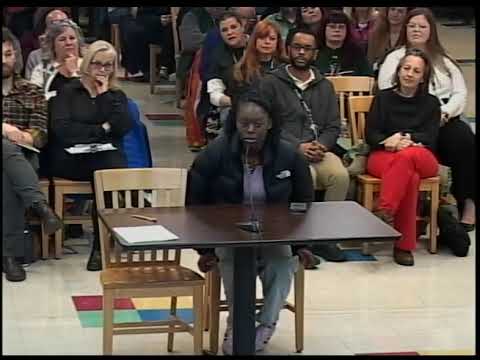
The presentations, given by Sarah Lincoln of United Way and community school directors Amy Kruniak (Ford) and Dr. Nina Krunhausen (Washington STEM), described a strategy that brings nonprofits, businesses and faith groups into schools to address students’ academic and nonacademic needs.
United Way education lead Sarah Lincoln said the community school model is intended to "transform the conditions of learning" by coordinating partners and services around schools. "The presence in the room, the palpability of the passion and love for students and families for this community is exactly why we're so proud to be here," Lincoln said.
The directors described specific growth in partners and activities. Kruniak said Ford began the year with two outside partners and ended it with six; she reported the number has since grown to about 29 partnerships. Dr. Krunhausen said Washington expanded partnerships as well and cited declines in chronic absenteeism and tardiness after targeted attendance work and volunteer engagement.
Direct-service examples offered in the presentation included a monthly food pantry supplied in part through the Greater Boston Food Bank; a community closet of clothing; volunteer support in classrooms from Lin‑Tech students; martial-arts and Girls on the Run programs; and work with Stop & Shop and Old Neighborhood Foods to secure recurring donations. Kruniak said about 72 families had used Ford's food pantry since it started last March and that the pantry fills quickly when it opens.
Presenters also described how community partnerships have supplied in-kind goods, corporate donations and grants used for field trips, student teams and family support. Kruniak said she estimated large in-kind and fundraising contributions, and that United Way’s philanthropic support funded community‑school director positions for the first two years. United Way described a phased model: philanthropy bearing a larger share at startup with the district assuming a growing portion of the cost; specifically, the presenters said the district would cover roughly 75 percent of a community‑school director’s salary going forward while philanthropy covers 25 percent in the coming year.
Parent and partner remarks echoed the directors’ descriptions. Jesmarie Perez, a parent advisory board member at Ford, told the committee that parent involvement has increased and urged the district to keep funding the community‑school positions. Olivia Grinstead, program director at the Center Board’s Lynn Family Forward Resource Center, described joint projects such as a school beautification effort with Sherwin‑Williams and the introduction of a pajama donation program.
Campfire North Shore CEO Laurie Hamill, a partner with the community schools’ 21st Century programs, said aligning out‑of‑school programming with school needs has been valuable. "When we're all in our own silos, yes, we're all making things happen. But together, collaboratively, has made a huge difference," Hamill said.
Why it matters: presenters framed community schools as an equity strategy designed to keep students in school and reduce barriers to learning. Committee members asked for cost breakdowns and grant timelines; presenters supplied a salary figure for community‑school directors (approximately $90,000) and said United Way and partners will continue to pursue grants and philanthropy to sustain programs.
Looking ahead: presenters said they plan to expand after‑school and weekend hours and pursue funding to place a third community school in Lynn if philanthropic and municipal commitments permit.