Get Full Government Meeting Transcripts, Videos, & Alerts Forever!
Get email alerts on the School Transportation topic
No spam. Unsubscribe anytime.
Transportation director outlines route counts, RFID rollout and $2.54M electric-bus grant; district to pilot stop-arm extensions
Summary
Transportation Director Casey Uns told the board on April 7 the district operates 10 daily routes plus one special-education route, is rolling out RFID cards and an app, received $2.543 million in EPA/CDPHE grants to buy three electric buses and chargers, and plans stop-arm extensions to reduce illegal passings.
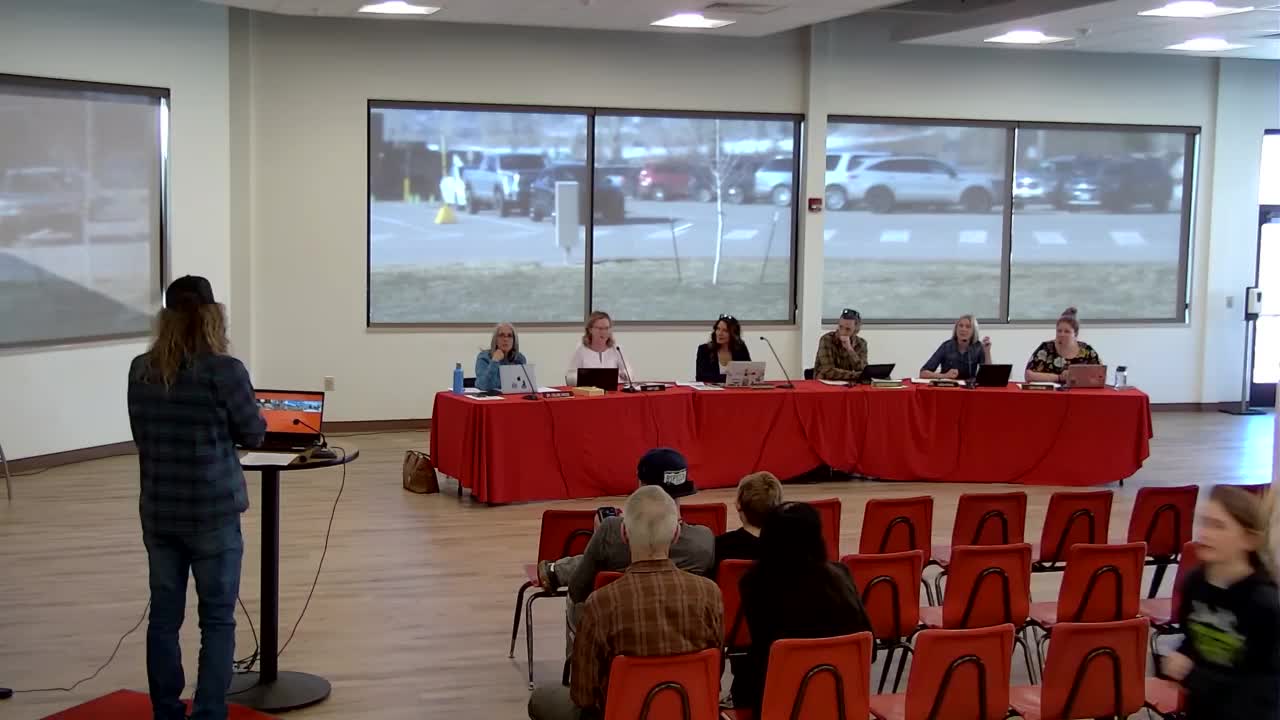
Steamboat Springs School District Transportation Director Casey Uns gave a comprehensive update April 7 on bus operations, technology deployments and recent grant funding, saying the district plans to operate its regular routes entirely with electric vehicles next year and is testing multiple measures to improve safety and efficiency.
Uns said the district runs 10 daily regular routes and one special-education route, averaging about 50 riders per regular route and serving roughly 25% of the district’s students (about 400 students by his estimate). The longest route covers about 95 miles per day; district vehicles travel about 512 miles daily and roughly 86,000 miles annually.
On technology and rider tracking, the district has distributed about 500 RFID cards and, after early deployment issues, has installed card readers on its full fleet. Uns said a district app through the vendor Tyler Technologies will be offered to parents and will show when students scan on and off buses; he expected a parent rollout in early June.
Uns described a major federal- and state-funded purchase: the district applied for and has received combined EPA and Colorado Department of Public Health & Environment (CDPHE) grant funds totaling $2,543,000 to procure three electric buses (one Type D and two Type A) and three 44-kilowatt fast chargers. He said the grants, together with prior grants, bring the district’s total funding for vehicle electrification to between $5 million and $6 million and will leave roughly $200,000 available to reimburse contractor-side infrastructure costs. "Our existing routes will be operated, 100% by EVs, next year," Uns said.
Uns also reported upgrades to the activity-trip fleet (new trip buses with upgraded seating, AC and USB charging) and said the transportation team has completed about 437 activity trips year-to-date and expects approximately 550 when the year is complete.
On safety, Uns said the district has recorded 48 instances this school year of motorists illegally passing stopped school buses. He proposed adding fiberglass stop-arm extensions with flashing lights and described plans to use stop-arm video evidence to support citations. Uns also described a technology under review used by another district (a retrofit marketed as reducing emissions by an estimated 48 tons per year — described in the meeting as an Ingevity product known locally as the CalFART bus retrofit) and said he will inspect that system on a site visit.
Uns described another pending grant application to the Colorado Statewide Internet Portal Authority (SIPA) for about $67,000 to pay for advanced fleet-maintenance software from Tyler Technologies, including telematics and GPS that would improve maintenance scheduling and real-time mileage reporting.
Board members thanked the department’s drivers and staff. Cresta and others praised drivers’ work on activity trips. Members asked about the logistics of stop-arm enforcement, whether the renewable-propane retrofit requires an on-site fueling system, and the potential for vehicle-to-grid (V2G) charging partnerships; Uns said the chargers are V2G-capable and the district is open to testing partnership models but noted utility and program details remain unresolved.
Ending: Uns said he anticipates completing RFID distribution to all students by the end of the week, will continue pursuing SIPA and other grants, and will follow up with additional reporting on stop-arm extension implementation and the CalFART retrofit site visit.