Get Full Government Meeting Transcripts, Videos, & Alerts Forever!
Get email alerts on the Planning Office Annual Report topic
No spam. Unsubscribe anytime.
Louisville planning office reports code changes, HUD grant and staff shifts in annual report
Summary
At the Louisville Metro Board of Zoning Adjustment annual meeting, Office of Planning staff summarized 2024 land-development code amendments, a $7 million HUD "pro-housing" grant award (pending finalization), and forthcoming staff transfers to other departments that will reshape review roles in 2025.
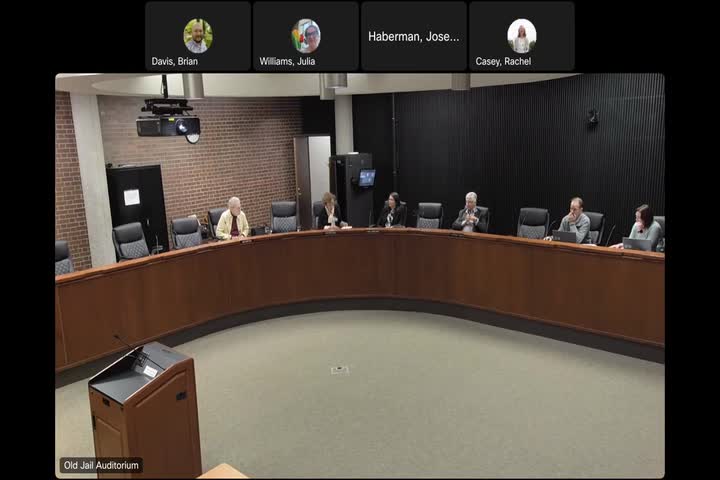
Brian Davis, director-level staff with the Louisville Metro Office of Planning, presented the office's 2024 annual report to the Board of Zoning Adjustment, outlining several land-development code changes, a major federal grant award and a series of staff transfers that will take effect in the coming fiscal year.
Davis told the board the office completed multiple land-development code amendments in 2024, including changes to side-yard setback rules intended to reduce the number of variances coming before the board and updates to the Floyd's Fork special zoning overlay district aimed at strengthening protections for waterways and adjacent habitat.
The presentation said the city also adopted new regulations for vape and smoke shops and established local rules for commercial cannabis-related businesses after state-level changes. Davis said those amendments, together with other code changes, should affect the volume and type of cases the board will see going forward.
Office staff reported a decline in application counts in 2024 — with an estimated 9.5% drop in overall applications and a fall in board of zoning adjustment applications from the 2023 count — which Davis attributed in part to a slowdown in construction activity and higher interest rates. Despite fewer applications, office revenue rose, the report said, largely because Metro Council increased the short-term rental registration fee from $100 to $250 in September 2023 and the planning commission implemented a fee increase effective Nov. 1, 2023.
Davis also announced a federal award: the Office of Planning has been selected for a $7,000,000 grant under HUD’s pro-housing initiative (award still described as pending final administrative steps). He told the board that roughly $3,000,000 of the grant is intended for the Office of Housing and Community Development for a factory-built housing program and that a portion of the remaining funds would support a comprehensive review and update of Louisville’s land development code.
On staffing and organization, Davis said the office began 2024 with 55 positions but transferred seven zoning-enforcement positions to Codes and Regulations. He said the mayor’s initiative to form a new Department of Transportation will transfer an additional eight positions in July with the new fiscal year; the Office of Planning expects to operate with about 40 positions plus two paid intern roles after those moves. Davis said the office has reclassified several technician positions to reduce turnover and has done internal restructuring to improve case management and review speed.
Davis also gave a quick summary of project- and site-level work: staff supported area-wide rezonings for three sites intended to create additional housing (John Hicks Way, the former Watson Lane Elementary site and a parcel near North English Station Road in the Middletown area), prepared updated standard design guidelines for work in historic districts, and started a local historical marker program to fill gaps left by new state criteria.
Why it matters: the combination of code amendments, a major HUD grant and organizational changes will influence the mix of cases the BZA sees and the speed and scope of development review across Louisville. The grant, if finalized, could fund significant zoning-code reform and factory-built housing initiatives that affect housing supply.
Davis said staff will share the full annual report with the board and that more detailed commission-level statistics were attached to the emailed packet. He answered board questions about the grant and the staffing transfers and noted the office is moving into phase two of a development-review process evaluation to shorten review times and improve public clarity about when and how to comment on applications.
Ending: Davis closed by inviting questions and promising to circulate the full packet of commission-level data and the corrected version of the annual report (staff said the originally attached document was the wrong file).