Get Full Government Meeting Transcripts, Videos, & Alerts Forever!
Get email alerts on the Special Education Dyslexia topic
No spam. Unsubscribe anytime.
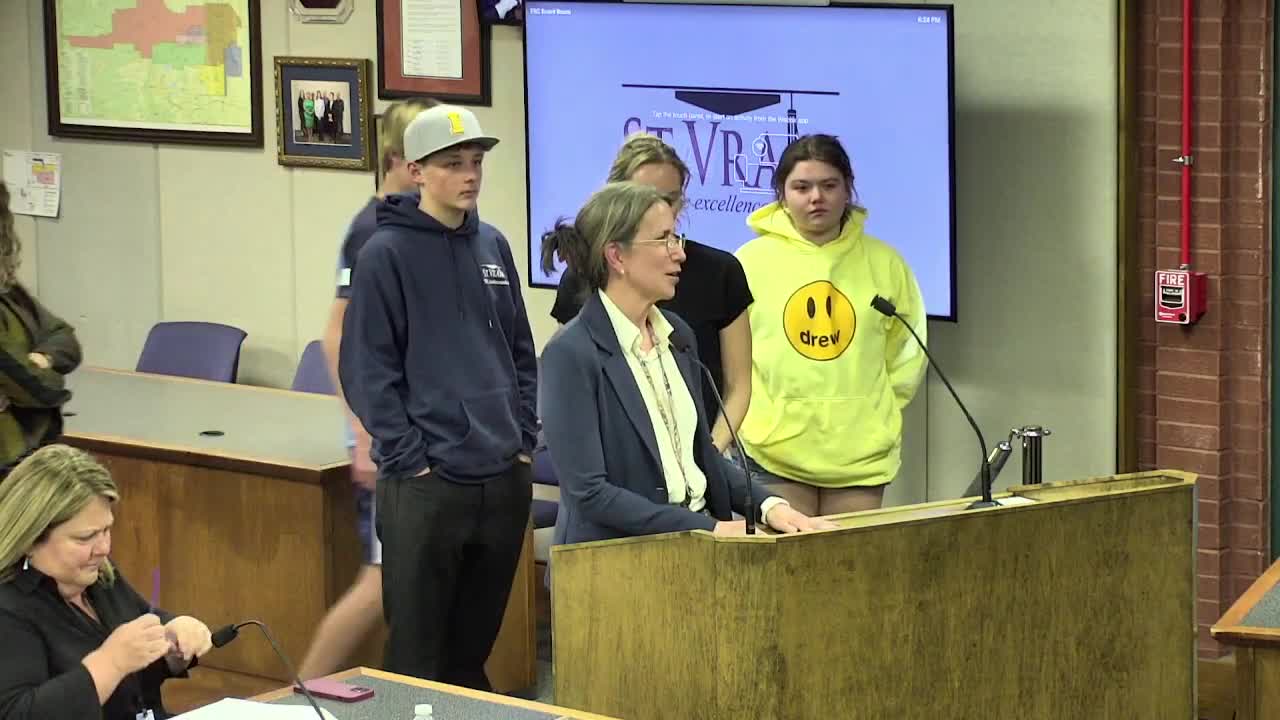
Board hears parents, student ambassadors on dyslexia task force, YES ambassadors and Dyslexia Basecamp
Summary
District staff and families described the district Dyslexia Task Force, the YES (Youth Examples of Self-Advocacy) ambassador program and Dyslexia Basecamp, saying the task force formed in August 2016 and that student ambassadors and parent simulations have supported self-advocacy and classroom accommodations.
District staff and parents told the St. Vrain Valley School District No. Re1J Board of Education on Wednesday about the Dyslexia Task Force, the YES (Youth Examples of Self-Advocacy) ambassadors and Dyslexia Basecamp, programs they said aim to improve identification, interventions and family engagement for students with characteristics of dyslexia.
"In August 2016, a district dyslexia task force was formed to provide high quality support to students with dyslexic characteristics," said Carolyn Storz, who the meeting identified as working in priority programs. Storz told trustees the task force developed a multi-year implementation plan focused on five areas: dyslexia awareness, universal curriculum, interventions, assessment, family engagement and student agency.
Parents and student ambassadors described personal benefits. Brandy Neumidal said the YES Ambassadors program "has been instrumental in boosting our confidence and fostering a sense of optimism" for her son, a seventh grader. Another parent, Kimberly Baker, described her daughter’s progress after participation in Dyslexia Basecamp: the parent said the daughter "showed tremendous growth" and that parent simulation exercises gave families insight into classroom challenges.
Staff described Dyslexia Basecamp as a Project LAUNCH initiative that offers intensive interventions, self-advocacy skill-building and teacher-family engagement. Rebecca Gonzales, a parent and task force member, said the district’s work has helped families understand learning differences and better advocate for students. Presenters invited board members and the public to a dyslexia simulation on April 1 and noted the YES Ambassadors host events across the district, including workshops for parents and students.
Why it matters: Board members praised the work and said programs increase students’ metacognition and self-advocacy. Trustees framed the initiatives as contributing to long-term student supports and inclusive classroom practices.
The presentation ended with thanks from trustees and an invitation to engage with upcoming dyslexia simulation events.