Get Full Government Meeting Transcripts, Videos, & Alerts Forever!
Get email alerts on the Conservation Easement Keyes Farm topic
No spam. Unsubscribe anytime.
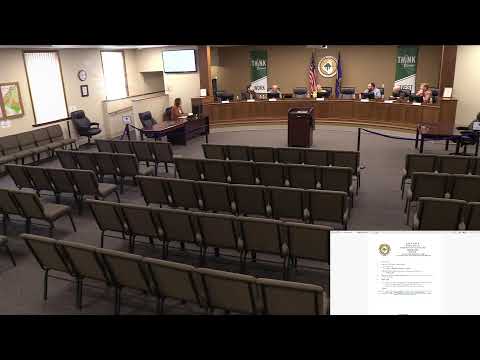
Oconee County conservation board hears application to protect 553‑acre Keyes family farm
Summary
The Oconee County Conservation Bank Board on April 8 considered an application from the South Carolina Farm Bureau Land Trust and landowner Lee Keyes to place a conservation easement on about 553 acres of family farmland along Little Chostowee Creek.
The Oconee County Conservation Bank Board on April 8 considered an application from the South Carolina Farm Bureau Land Trust and landowner Lee Keyes to place a conservation easement on about 553 acres of Keyes family land in Oconee County.
Board chair Emily Jones opened the discussion and asked Richard, a representative of the South Carolina Farm Bureau Land Trust, and landowner Lee Keyes to introduce the project. Richard said the land trust was organized as a 501(c)(3) in 2021 and has closed 15 easements while managing roughly 50 easements in process statewide. He described the Keyes property as having significant water resources, saying the property “has about a mile and a half of stream frontage on Little Chostowee Creek,” which flows to Lake Hartwell. Keyes said his family has farmed the land for generations and that he wants the property preserved for future generations.
The board did not vote on funding. Instead members discussed technical details raised in the application, asked for clarifications, and agreed to schedule a site visit before the board’s May meeting. Emily Jones said members who visit the site will report back at the May meeting so the board can score the application under its criteria sheet; the board’s application rules require farm‑land projects to reach at least 30 points to be recommended for funding.
Why it matters: the parcel is large and adjoins important water resources that feed Lake Hartwell. The easement would limit development, preserve agricultural and timber uses, and establish long‑term stewardship and enforcement arrangements with the Farm Bureau Land Trust.
Key points from the discussion
- Acreage and land cover: The application describes roughly 553 acres; board materials cited about 30 acres in pasture and about 250 acres in timber. The land trust representative and the landowner reported 116.2 acres of soils classified as prime or statewide important farmland soils. (Board members asked staff to amend the application to make that figure explicit.)
- Water and frontage: The land trust representative said the property includes roughly 1.5 miles of stream frontage along Little Chostowee Creek and noted the creek’s short distance to Lake Hartwell, where the county holds roughly 27% of that reservoir’s shoreline miles.
- Housing, building envelopes and density: The easement as described would recognize two existing homesites and allow up to two additional homesites in defined building envelopes. The land trust said each building envelope would typically be limited to roughly 1–2 acres (the representative said “no more than 2 acres per home site, but probably more like an acre, acre and a half”) and that the total allowed impervious footprint for a home site and ancillary structures would be limited (the land trust described typical allowances of 10,000–15,000 square feet of footprint and a two‑story height limit for structures). The easement would tie the homesites to the land (they cannot be parceled and sold separately from the property in perpetuity).
- Uses and protections: The land trust said allowed uses would include farming, timber management, agritourism and equestrian activities; it also described a standard 40‑foot buffer measured on either side of the creek. The easement would prohibit future increases in housing density beyond the agreed‑upon limit and could only be amended later if the change is neutral or beneficial to the property’s conservation values (the land trust representative said amendments that would add additional homesites would not meet that standard).
- Stewardship and enforcement: The Farm Bureau Land Trust said it would hold the easement and establish a stewardship endowment at closing; Richard described a stewardship donation associated with the closing “about $12,000” and said the land trust carries legal defense insurance that can cover events in the range of $2,000,000 to $3,000,000.
- Outstanding clarifications: Board members asked whether there are wetlands; Keyes said he was not aware of wetlands on the property and that a one‑acre pond exists near the residence. The board asked staff to correct inconsistent statements in the application and to add the prime‑soils acreage explicitly into the record.
Process and next steps
Board members agreed to schedule a site visit before the May meeting. At the May meeting members who visit the site will report back and the board will apply its scoring sheet (objective items such as acreage and soils are scored; some categories such as biodiversity are subjective and rely on site observations). If the application meets the required score, the board may vote to recommend funding to Oconee County Council; the board chair said those council actions typically occur in June.
No formal funding motion was made on April 8. The land trust and the landowner answered detailed questions about easement language, building envelopes, subdivision limits and stewardship.
Ending
Board members thanked the applicants and asked staff to set up a site visit; the chair said she will coordinate scheduling with the land trust representative. The board will not take a funding vote until after the site visit and the scoring exercise at the next meeting.