Get Full Government Meeting Transcripts, Videos, & Alerts Forever!
Get email alerts on the Land Development topic
No spam. Unsubscribe anytime.
Council discussion on raising acreage thresholds for land disturbance stalls; staff to return with proposed text
Summary
County staff outlined a tiered approach to raise allowable disturbance for residential and commercial projects and add engineering and BMP requirements for larger sites. Council discussed sequencing, stop-work orders, and environmental controls; no vote was taken and staff will return with proposed ordinance text.
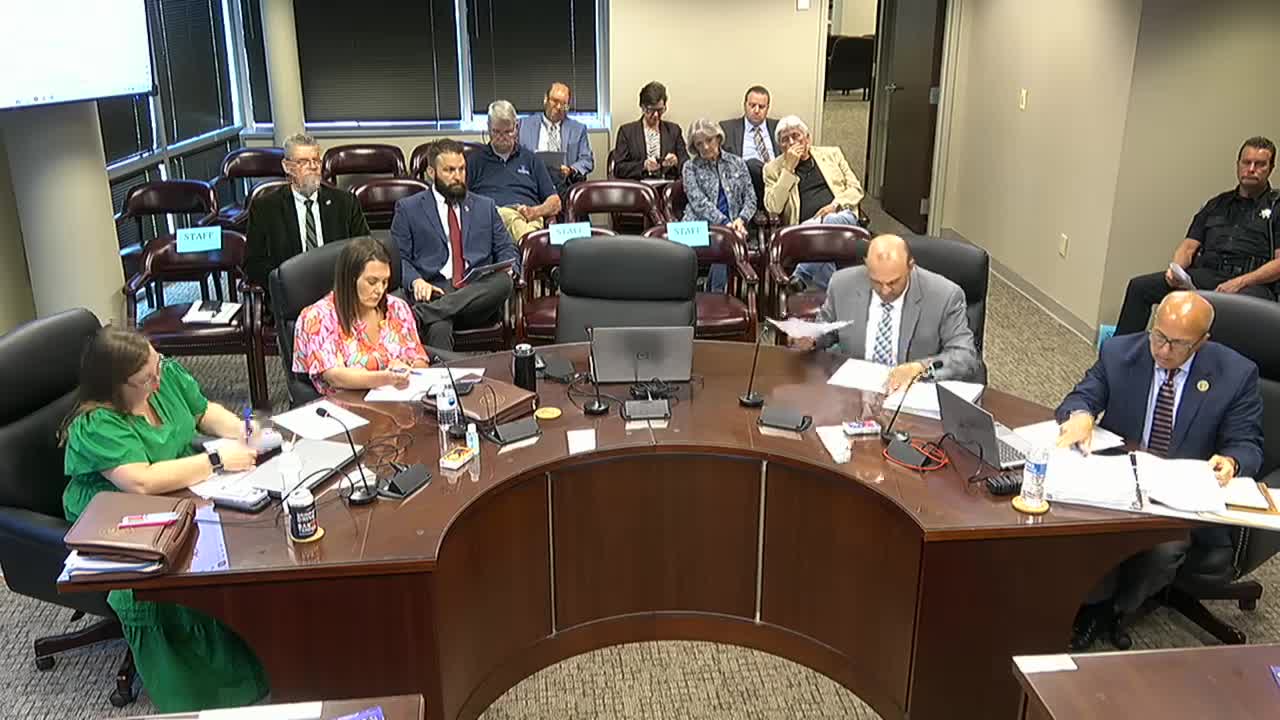
Lexington County planning staff presented a proposed amendment to the Land Development Manual (section 6.2.9) that would change how the county approves and oversees land-disturbance for residential and commercial projects.
Under the draft approach discussed in committee, staff proposed keeping projects of 0–20 acres as staff-level approvals, creating a 20–60 acre tier requiring an expanded master plan with a letter of credit and five additional best-management practices (BMPs) (the five BMPs were drawn from a Georgia erosion-control list), and treating projects larger than 60 acres as a higher tier that would first be reviewed by the Stormwater Advisory Board with a recommendation to county council as the final arbiter. Staff emphasized that projects over 20 acres would require the project engineer to justify additional acreage beyond the baseline 20 acres.
The item prompted detailed discussion among council members, contractors, and staff about construction sequencing, the effectiveness of stop-work orders, on-site grading practices, and off-site impacts. Staff reported 56 stop-work orders in the past 365 days; of those, 26 were for out-of-sequence construction and seven were for off-site impacts. Council members and contractors raised practical concerns about small phased clearing (for example, clearing only roadway corridors within a master plan) that can force heavy hauls on local roads, complicate balancing of cut-and-fill, and increase material movement. Several participants argued that larger contiguous disturbance allowances can enable on-site balancing of dirt and reduce the need to haul material off and back on site, while others warned that increasing allowable disturbance could be used to “work around” protections.
Staff proposed additional tools alongside acreage thresholds including clearer sequencing tailored to each site (engineers would tailor construction sequencing to topography and soils), on-site inspection capacity, a site-signage requirement listing developer/contractor/engineer contact information, and enforcement options such as stop-work authority and possible daily civil penalties for persistent violations. Council members asked staff to explore whether financial assurances, like letters of credit, and additional BMPs would provide adequate “teeth.”
No ordinance text was adopted at committee. Members asked staff to return with specific proposed ordinance language and implementation details (including required BMPs, stop-work enforcement language, and how the 20/60/60+ framework would be administered). Staff said they would draft proposed text for further committee review.