Get Full Government Meeting Transcripts, Videos, & Alerts Forever!
Get email alerts on the Insurance And Risk Management topic
No spam. Unsubscribe anytime.
CTSI briefing: Elbert County hears about rising health costs, workers' comp and loss-control steps
Summary
County Technical Services (CTSI) staff updated the Elbert County Board of Commissioners on the county's membership in three CTSI insurance pools, recent premium trends, equity returns to members, and recommended loss-control measures including defensive-driving training and backing policies.
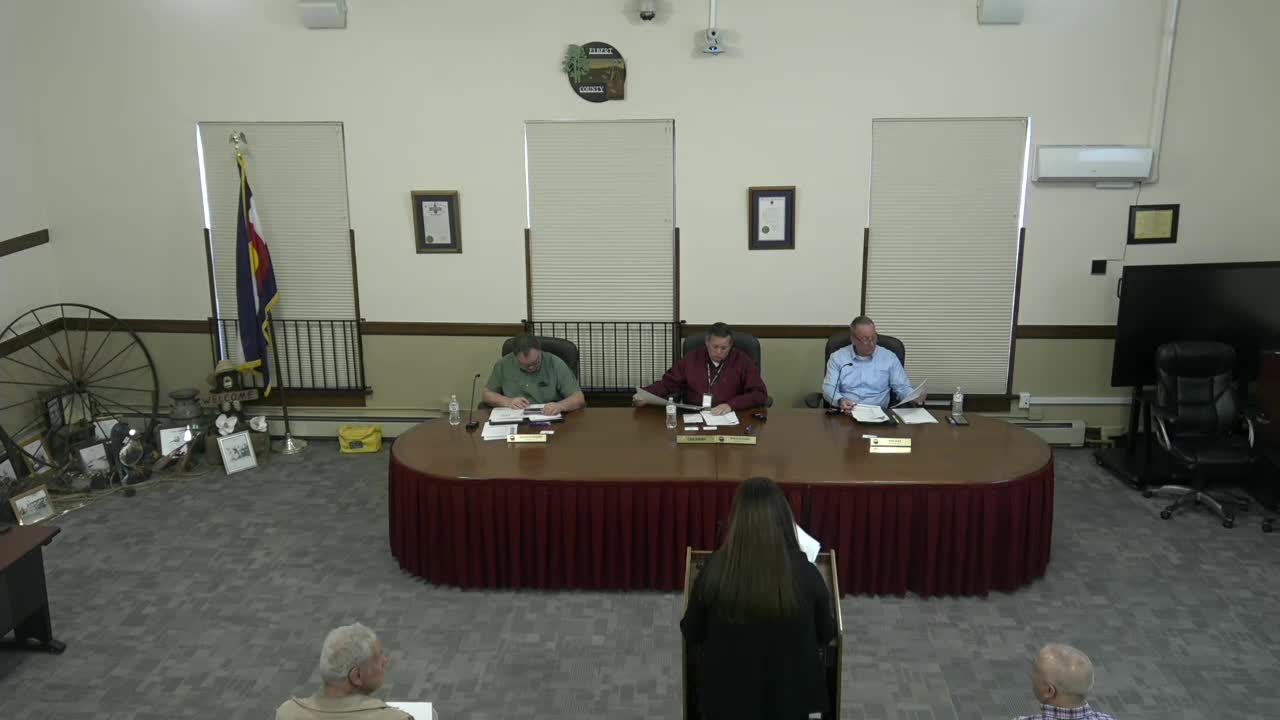
Elbert County commissioners on March 26 received a detailed briefing from County Technical Services, Inc. (CTSI) on the county’s participation in three shared insurance pools — the County Health Pool (CHP), the County Workers’ Compensation Pool (CWCP) and the Colorado Counties Casualty and Property Pool (CAP) — and steps the county can take to reduce claims and future costs.
The briefing, given by Meredith Bertram, CTSI executive director, and Dana Foley, CTSI senior loss control specialist, said the CHP has averaged a 6% increase over the last decade but experienced a 13% premium increase in 2024 and a 9% increase in 2025, driven in large part by a near-doubling in claims utilization and broader medical inflation. “We saw our claims utilization within the pool double,” Bertram said. To help counties and employees, CTSI has added a high-deductible health plan option intended to be paired with health savings accounts.
Why this matters: CTSI’s pools are owned and operated by counties and provide multiple lines of coverage that affect county budgets and operations. The county’s share of premiums, claims experience and participation in CTSI programs can materially change the department budgets and staffing costs that appear in the county’s annual budget.
CTSI reported pool-level equity and member returns. The CWCP pool provided $4,000,000 back to members in the most recent distribution; Dana Foley said Elbert County’s share of CTSI distributions and interest during the same cycle totaled $165,122. Bertram also described how pools set retention layers and buy excess coverage above specified thresholds. For example, CWCP covers claims to a pool limit (reported as up to $875,000) and purchases excess coverage above that layer.
On liability and property, Bertram said CAP has faced a hard market environment but that recent renewals showed some relief in property rates. She also warned carriers’ appetite for law-enforcement risk has tightened in recent years and cited state-level factors that reduced available capacity: “A lot of carriers pulled out and just were not going to insure in the state of Colorado,” she said, adding that CTSI had to split liability and law-enforcement towers and raise self-insured retention levels in recent years to maintain coverage.
Loss-control findings and recommendations were a prominent part of the briefing. Foley gave a year-by-year loss analysis for Elbert County: in 2024 the CAP side showed 22 claims totaling $203,319 (with 10 auto-related claims accounting for $156,445) and the workers’ compensation side showed 19 claims totaling $141,782, where one indemnity claim accounted for 65% of that total. Foley said backing-related auto claims are a frequent and costly driver and recommended renewed defensive-driving training and backing policies, including use of spotters and pull-through parking where feasible. “We really encourage counties to look at their backing policies and also our defensive driving classes,” Foley said.
CTSI staff described member services beyond insurance: in-house claims adjudication for some pools, HR consult time for members, loss-control training, sheriff analysis reports, and annual property valuations done to keep replacement limits aligned with current values. Bertram encouraged county staff to contact CTSI with questions about plan design, claims handling and available training.
County reaction: Commissioners asked about claim frequency, whether small claims should be self-insured, and the timing of defensive-driving refreshers. Foley said frequent small claims are valuable signals that can justify proactive training and that CTSI prefers counties to report claims early because small claims can escalate if not managed. Elbert County staff also discussed coordinating a defensive-driving class so employees may receive continuing education credit and a certificate usable for personal-insurance discounts.
The briefing closed with an offer from CTSI to continue working with county departments to implement training and risk controls and to provide mid-year reports so the county can adjust before year-end.