Get Full Government Meeting Transcripts, Videos, & Alerts Forever!
Get email alerts on the Minimum Wage Niwot topic
No spam. Unsubscribe anytime.
Niwot business owners urge Boulder County to pause unincorporated minimum-wage increases
Summary
Multiple Niwot residents and small-business owners told the Boulder County Board of County Commissioners during public comment that the county's higher minimum wage for unincorporated areas is harming small businesses and risking vacancies, and asked the board to pause future increases until municipalities align.
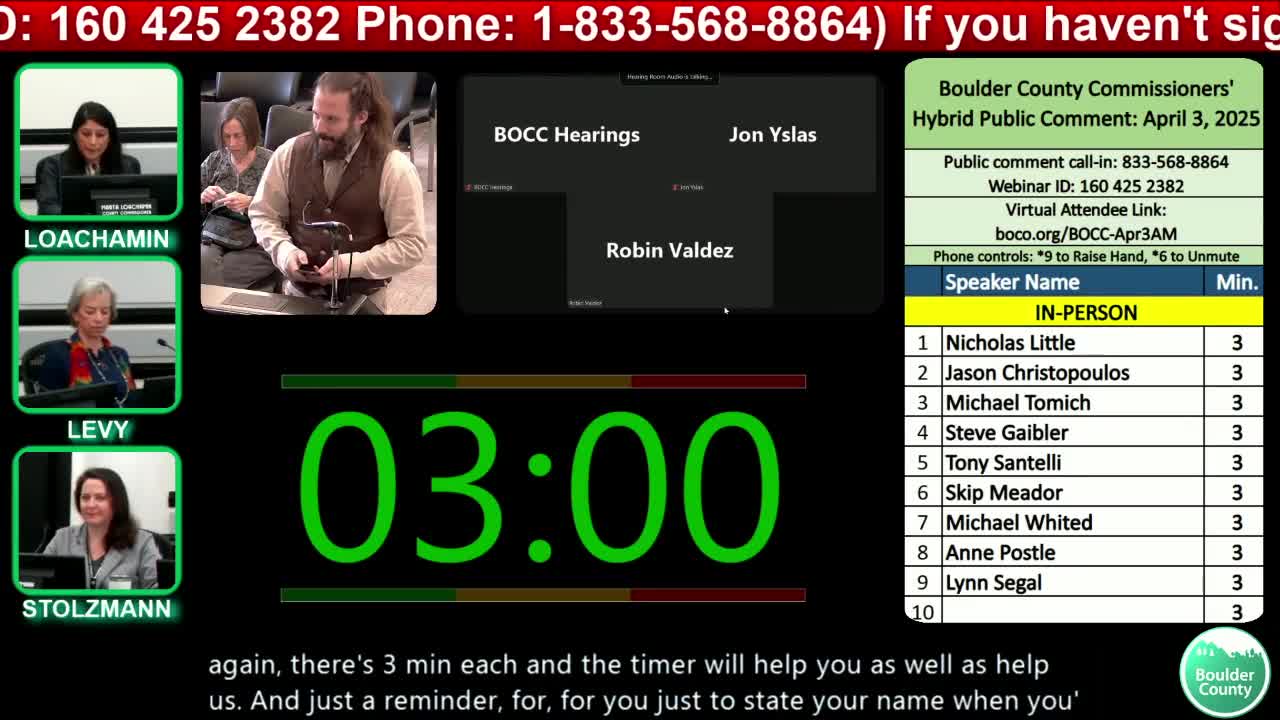
Dozens of Niwot business owners and residents told the Boulder County Board of County Commissioners on April 3 that unincorporated Boulder County's minimum wage, now higher than nearby cities, is damaging small businesses and harming the town's economic sustainability.
At the public-comment period, Niwot residents described restaurant closures, falling sales-tax receipts and hiring difficulties they attribute to the county wage schedule. "This policy was meant to be regional, you needed the municipalities to come along," Niwot resident and small-business owner Nick Little said. "But now the municipalities backed out and unincorporated Boulder County ... is left paying the price."
The speakers pressed the board to pause scheduled increases and to use a county ordinance provision that the speakers said could align the county wage with municipalities. "We're not against minimum wage," said Tony Santelli, a long-time Niwot resident and former tavern owner. "But we'd like to be comparable, not higher, because we're tiny. And like any endangered species, we need to be protected."
Why this matters: Several speakers said unincorporated Niwot is at a structural disadvantage because nearby cities such as Boulder and Longmont have either different wage levels or opt-out policies, and they asked the county to delay planned increases so municipalities can join a regional approach. Business owners said higher county wages are forcing them to reduce hours, cut hires for inexperienced workers and risk closures. "The decisions that have been made on this minimum wage are catastrophic," said Steve Gabler, owner of Garden Gate Cafe in Niwot.
Speakers repeated a range of localized claims about impact. Anne Postol, who owns property and a vacant restaurant space in Niwot, told commissioners that local sales-tax revenue has fallen in recent years and said potential restaurateurs told her the county wage made the location a "non starter." Peter Bridal, who said he recently opened a community-focused space in unincorporated Niwot, told the board his town's sales tax declined and that the $1'to $2 difference between county and nearby city wages creates a competitive disadvantage for small operators.
Commissioners' responses and constraints: The board's commissioners acknowledged the concerns and noted legal limits on the county's authority. A commissioner explained the county may change its minimum wage by ordinance only once per year and must make any change effective Jan. 1. The commissioner also said state law limits the county's ability to exempt classes of businesses or scale the wage by business size; a bill at the state legislature could alter tipped-wage rules but its outcome was uncertain.
What the board asked for next: One commissioner said county staff will check whether the small-business grants the county approved previously have been accessed by the affected businesses and explore next steps. The board did not take formal action at the meeting; the discussion occurred during the public-comment portion and the commissioners offered to follow up with staff and affected Niwot residents.
Context and limits: Speakers provided anecdotal figures during comments'for example, that Niwot's aggregate revenues dropped "15% in two years," and that some nearby cities had opted out of the county schedule. Those numbers were reported by speakers and are attributed below; commissioners noted sales-tax declines predated the county wage changes in some cases. The county emphasized the difference between public comment and agenda items that can carry formal votes.
Ending: Commissioners closed public comment after roughly an hour, said staff will follow up on certain items (including property and grant inquiries), and scheduled further business for later in the day. No ordinance changes or votes were taken at this meeting.