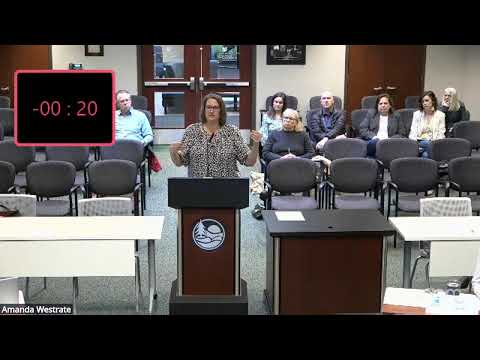
Ottawa County crisis intervention team reports more than 3,000 contacts since 2021, seeks 24/7 expansion

2980202 · March 28, 2025

Loading...

AI-Generated Content: All content on this page was generated by AI to highlight key points from the meeting. For complete details and context, we recommend watching the full video. so we can fix them.

Summary

Crisis Intervention Team supervisors described a co-response program that has trained more than 100 first responders, handled over 3,000 contacts since 2021 and uses partnerships with law enforcement and community groups; the board heard plans to centralize mobile crisis operations and pursue 24/7 coverage under CCBHC requirements.

Tim Piers, supervisor of the Crisis Intervention Team (CIT) at Community Mental Health of Ottawa County, told the board the program has grown since its 2021 launch and has made thousands of community contacts.

“Based on national numbers, we know that more than 20,000 times every year, a 911 call comes into our county’s dispatch center as a result of a behavioral health crisis,” Piers said. He told the board the CIT has “had over 3,000 contacts with individuals and families since we’ve begun the program” and has graduated “over 100 first responders from our week-long intensive training course.”

Piers described the program’s core response work as in-person clinical intervention and follow-up that pairs clinicians with local law enforcement and other first responders. Until recently clinicians sometimes rode in patrol cars, which limited where they could go; the program has since developed broader outreach including partnerships with the Holland Police Department and the sheriff’s office to place emergency pantries around the county.

Amanda Sheffield, one of the original clinicians on the CIT team, gave examples of outreach and case work the team has done, including engaging repeatedly with individuals who frequently called 911 and connecting them to medical or social services. Sheffield said such meetings could stop repeat 911 usage: she described a man with very frequent monthly 911 contacts who did not call again for several months after clinicians connected him to medical resources.

Board members asked about data collection, hours of operation and special training. Piers said the team now has three full-time master’s‑level clinicians who have completed CIT training; the co‑response program currently operates primarily during daytime hours. “We hope one day to make that available around the clock,” he said, noting that federal CCBHC (Certified Community Behavioral Health Clinic) funding will require 24‑hour mobile crisis capacity and that the agency plans to centralize mobile crisis services under one directorship as part of a strategic plan to reach 24/7 coverage.

Board members also asked about serving particular populations. Piers and Sheffield said the team routinely encounters older adults, juveniles, veterans and people with co‑occurring needs such as homelessness, substance use and medical problems; Sheffield added the program connects people to local resources such as meal programs and emergency pantries.

The board asked about autism training; Piers said the CIT training includes autism spectrum disorder content and the program has partnered with Carter Kids for additional resources. Members asked whether CIT provides training to residential providers and families; Piers said the team has not yet provided regular training for those groups but said program expansion could include broader training offerings.

The presentation concluded with board discussion of centralizing mobile crisis services countywide and bringing a plan in April or May for how the agency will move toward 24‑hour coverage.