Get Full Government Meeting Transcripts, Videos, & Alerts Forever!
Get email alerts on the Surplus Property 74 Groveland topic
No spam. Unsubscribe anytime.
Debate over sale of 74 Groveland Street focuses on church parking, public process and OCIC option
Summary
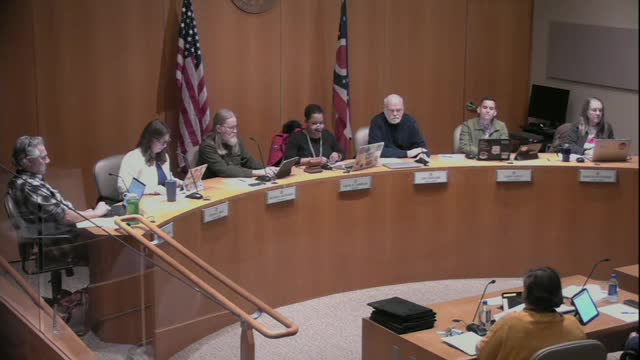
The Oberlin City Council considered Ordinance 25‑07 to declare 74 Groveland Street surplus and authorize a competitive sealed-bid sale, but the motion to approve the ordinance on first reading failed after public testimony from church representatives and discussion of alternative routes including a public hearing or routing the matter to OCIC.
The Oberlin City Council considered Ordinance 25‑07, which would declare real property at 74 Groveland Street surplus and authorize the city manager to sell it by competitive sealed bid, but the council did not approve the ordinance on first reading after extended public comment and discussion of alternatives.
The ordinance, as read into the record by the clerk, authorized sale by competitive sealed bid with a minimum acceptable bid of $20,000; conveyance by quitclaim deed “as is;” advertising requirements and retention of the city’s right to reject any and all bids. The ordinance also directed that notice be posted and the sale be prepared by the city law director.
Pastor Albert Miller and others representing the Oberlin House of the Lord Fellowship said they had requested donation of the parcel in August 2023 to use as church parking and had not received a formal city response. Miller read a letter from Phyllis Sharber Hogan saying the church had not received any reply to its request for donation and urged the council to pursue a cooperative resolution so the church could obtain parking.
Councilmembers discussed options for progressing the issue. English proposed postponing action until after a public hearing or another resolution that considered the interests of all parties; others suggested a meeting of the city manager or administrative staff with the interested parties or routing the matter to the Oberlin Community Improvement Corporation (OCIC) because OCIC’s mission includes land transfers. OCIC representatives in the audience (including Tyrone Wicks, identified in the transcript as OCIC vice chair) said OCIC meetings are public and could provide a forum for broader discussion. Neighbor Edward Dobis urged involvement of the planning commission and OCIC and requested that neighborhood stakeholders be included.
Councilmember McFarland asked about the legal process for transferring property to OCIC; the law director said he would prepare necessary materials for the next meeting if council wanted to pursue that direction. Council discussed that a smaller meeting including several council members could risk creating a quorum issue and that a public hearing would avoid that concern.
When council took the recorded vote on the motion before it (the motion to approve Ordinance 25‑07 on first reading), the roll call recorded no affirmative votes: English—No; Lopez—No; Peterson—No; Walter—No; New—No; McFarland—Nay; Johnson—Nay. The motion to approve on first reading failed. Council directed staff to prepare next steps, and members recommended OCIC and the planning commission as avenues to convene interested parties and work toward a resolution; the law director said he would prepare materials for the next meeting to facilitate whatever route council directs.