Get Full Government Meeting Transcripts, Videos, & Alerts Forever!
Get email alerts on the Public Health topic
No spam. Unsubscribe anytime.
Lorain County health chief outlines community health assessment priorities, neighborhood cleanup program
Summary
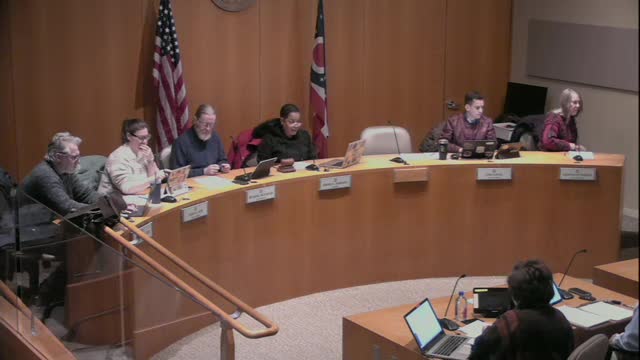
Mark Adams, health commissioner of Lorain County Public Health, told Oberlin City Council on Jan. 21 that the department's community health assessment (CHA) and three'year community health improvement plan (CHIP) will guide work across the county and in Oberlin.
Mark Adams, health commissioner of Lorain County Public Health, told Oberlin City Council on Jan. 21 that the department's community health assessment (CHA) and three'year community health improvement plan (CHIP) will guide work across the county and in Oberlin.
Adams said the CHA, based on focus groups, surveys and partnership with hospitals and community organizations, identifies five priority areas for Lorain County: chronic disease, maternal and child health, mental health, substance use and cancer. "This is what's wrong with us. This is what we need help with," Adams said, adding that the CHA should drive program and funding decisions.
The commissioner emphasized race-based disparities. "When you look at who this is affecting most. In black men, this is affecting non Hispanic black men," Adams said, noting infant mortality and chronic disease gaps. He said infant mortality began to worsen again after about 2016 and that infant deaths among Black infants were about three times the rate of other groups. He also summarized recent trends in overdose deaths, saying the county saw roughly 10'15 overdose deaths a year about a decade ago and "when we ended the year in '23, it was nearly 300." Adams said the health department retooled overdose-response efforts and later reduced those monthly numbers.
Adams gave several examples of programs anchored by the CHA and CHIP. He said the department secured a HRSA grant targeted at infant-mortality disparities, launched a breast milk donation program that collected 14,000 ounces in one year and added an epidemiology team to run data and target interventions. "We built this entire team," he said. Adams said environmental health staff were tied to housing priorities and that the department has reinstated nuisance abatement work required by state code ("under 37070 1"), using a trailer and a van to clear public-health nuisances.
The nuisance-abatement program, Adams said, pairs community-service workers with health department staff to clean properties and engage residents about health and screening. The presentation included before-and-after photos of properties Adams said the county has remediated. "When we make the neighborhoods healthier, you will actually care about going to get screened," he said.
Council members asked how residents report concerns; Adams said the department accepts anonymous complaints by phone or email and that sometimes the department charges for equipment while providing labor at low cost. He also described outreach strategies aimed at immigrant and Spanish-speaking communities, including partnerships with El Centro and the Mexican consulate and vaccine clinics at workplaces and restaurants.
Why it matters: The CHA/CHIP establishes county priorities that affect funding, grants and local public-health responses. Adams told council the plan will generate local data in coming months as the department collects focus-group results and survey information for the next three-year cycle.
Adams said he would return with more details and offered to provide Oberlin-specific data from the department's three-person epidemiology team. "If they want anything specific to that, I've got that team to be able to put together very specific data," he said.
Ending: Councilors thanked Adams; several asked that Oberlin planning and health committees coordinate on housing and equity recommendations. Adams said he would return to present more data during the department's next CHA/CHIP cycle.