Get Full Government Meeting Transcripts, Videos, & Alerts Forever!
Get email alerts on the Affordable Housing topic
No spam. Unsubscribe anytime.
Council approves nonprofit-owned affordable-housing property tax exemptions for 2025–26
Summary
The Hillsborough City Council approved a resolution annually qualifying nonprofit-owned affordable-housing properties for a state-authorized property-tax exemption; staff said the program supports roughly 15 properties and nearly 700 units and represents about $175,000 in foregone city tax revenue this year.
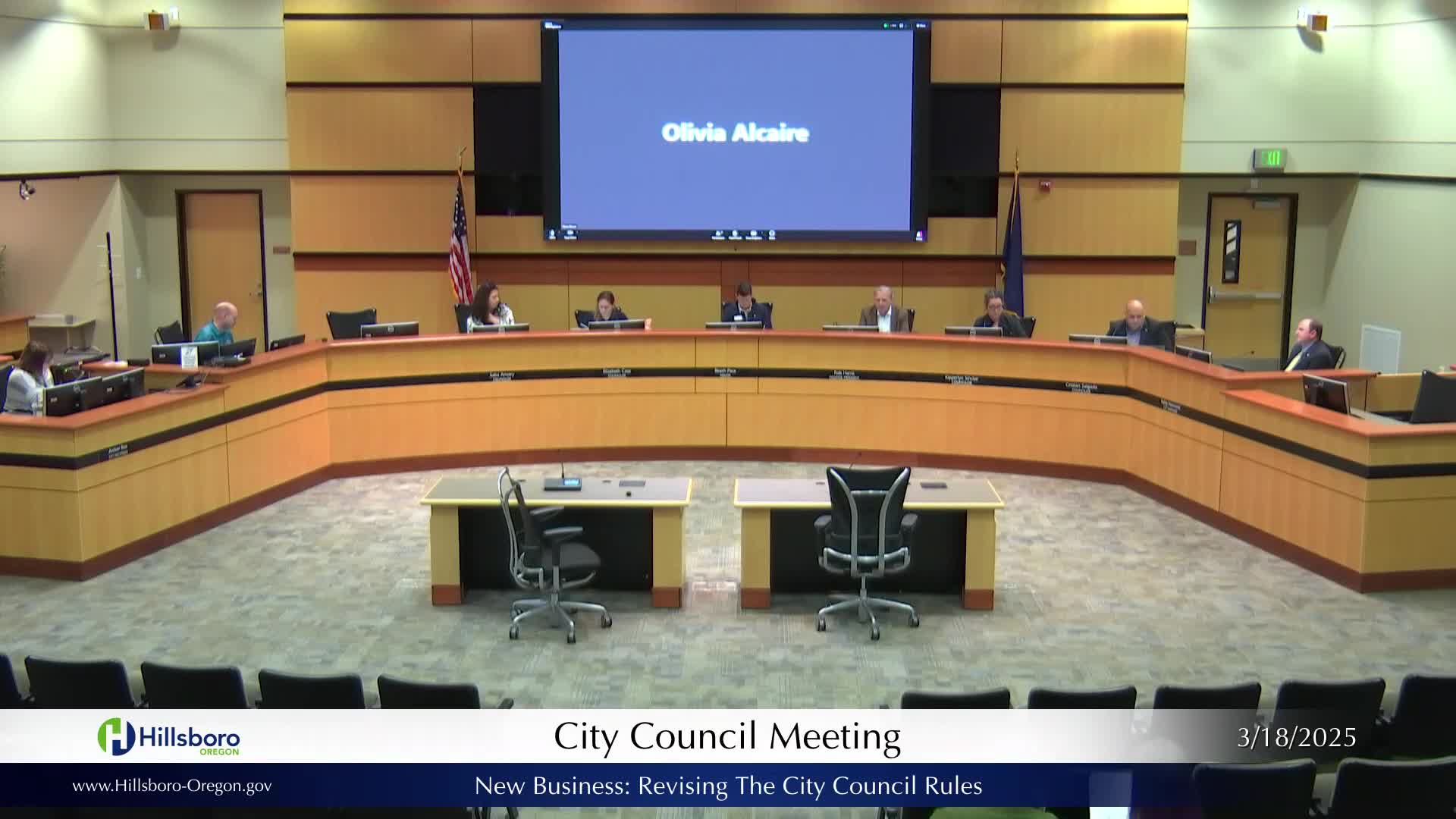
HILLSBOROUGH, Ore. — The Hillsborough City Council on March 18 adopted a resolution qualifying nonprofit-owned affordable-housing properties for the city’s property tax exemption program, a tool councilors and staff described as a long-standing local method to support affordable housing operations and new construction.
Chris Hardy, senior project manager in the community development department, briefed councilors before the vote. He said the program is authorized by state statute (cited in the presentation as RS 307.540–.548) and “exempts all property taxes, including local option levies, local and regional bonds, as well as the property taxes of the school district, for example.” Hardy said the exemption can apply to existing nonprofit-owned properties and to vacant land or projects under construction when the nonprofit certifies the site will be used for affordable housing.
Nut graf: Council voted to approve the annual list of qualifying nonprofit properties after staff said the program materially lowers operating costs for nonprofit housing providers and helps make some new construction projects economically feasible. Staff also told councilors the exemption represents a measurable city investment because it reduces local tax receipts that otherwise would flow to the general fund.
Hardy listed seven nonprofit owners on the application list for 2025–26: Vienna Star, Bridge Housing, Catholic Charities, Community Partners for Affordable Housing, Hacienda CDC, Northwest Housing Alternatives and REACH. In aggregate, he said, the 15 properties on this year’s list represent roughly 700 units. Hardy told councilors the city estimates about $175,000 in foregone property-tax revenue to the city for this program in the current year; combined with other city housing supports (about $350,000 budgeted under the strategic investment program), the annual local package totals “over $500,000” in budgetary support for affordable housing.
Council discussion included questions about income targeting and monitoring. Hardy explained program eligibility requires tenants initially be at or below 60% of area median income (AMI) with allowed adjustment in later years up to 80% AMI under program rules; he also described monitoring and tenant-certification practices used by owners and regulators, especially when federal tax credits are involved.
Action: Councilor Case moved to adopt Resolution No. 2875 to approve the qualifying properties; Councilor Sinclair seconded. A roll call vote was taken and the resolution passed unanimously. City staff will publish the adopted qualifying list with the resolution and continue annual qualification reviews.
Ending: Hardy said the program remains a “powerful tool to support affordable housing” and offered to provide follow-up data to councilors who requested more details on income studies and tenant-certification processes.