Get Full Government Meeting Transcripts, Videos, & Alerts Forever!
Get email alerts on the Stretch Energy Code topic
No spam. Unsubscribe anytime.
Sudbury committee hears case for opting into specialized stretch energy code, asks for cost and historic-building clarifications
Summary
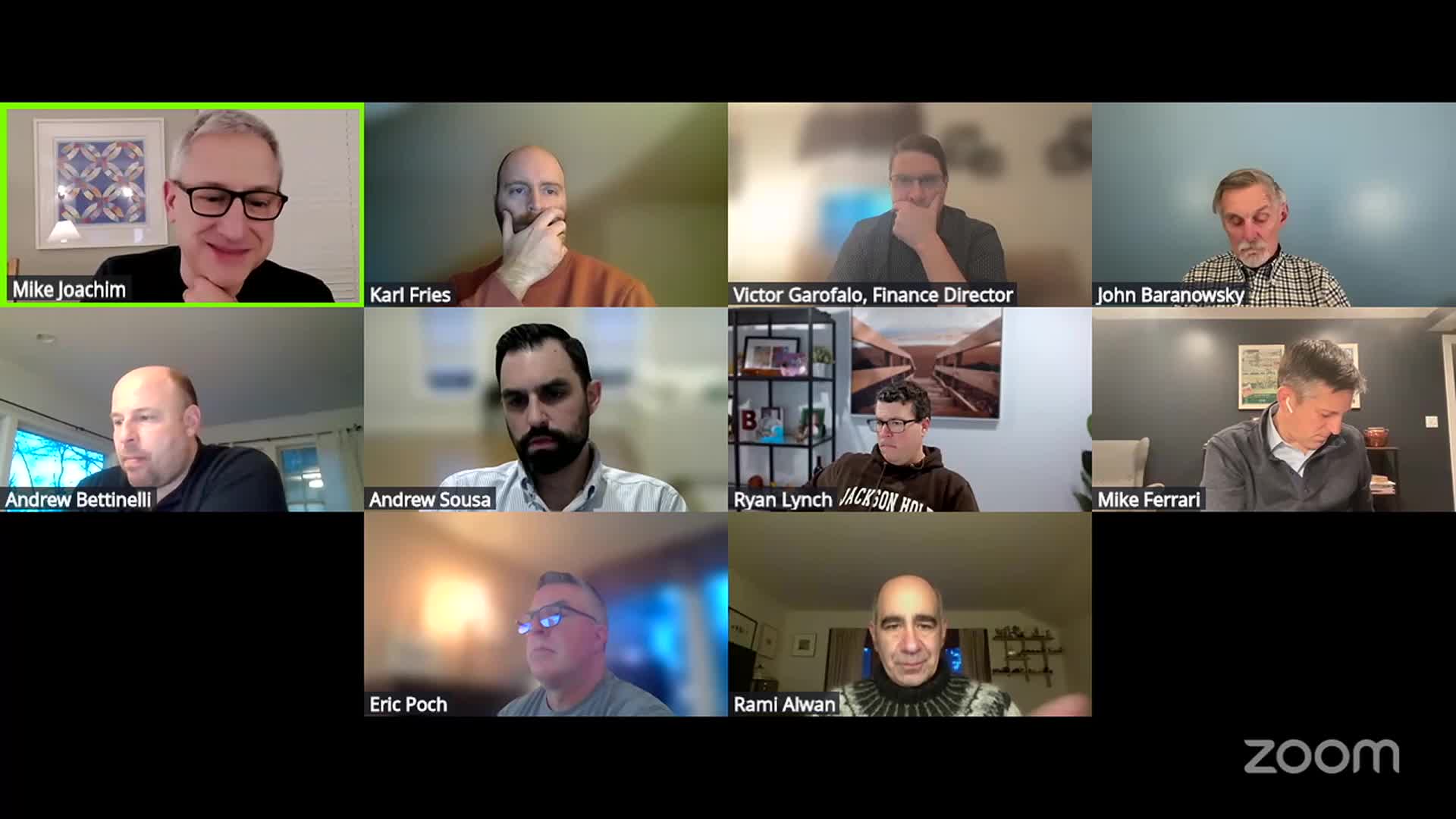
Rami Alwan, chair of Sudbury—s Energy and Sustainability Committee, briefed the Finance Committee on Article 27, the proposal to adopt the Department of Energy Resources— specialized stretch energy code.
Rami Alwan, chair of Sudbury—s Energy and Sustainability Committee, briefed the Finance Committee on Article 27, the proposal to adopt the Department of Energy Resources— specialized stretch energy code, at the March 31 meeting.
Alwan said the specialized code is the newest state energy standard and that communities often adopt it before it becomes state law because adoption can make them eligible for additional grant funding. "This is the newest, energy code," Alwan said. "Typically, what has our experience has been is that it will eventually become the state code. We've been able to take advantage of jumping in early, which has given us opportunities to write grants." He added the code—s practical difference for Sudbury is narrow: it affects new single-family homes only above certain sizes and requires either full-electric construction or solar offset for mixed-fuel homes larger than 4,000 square feet.
Committee members pressed for specific costs and impacts. Alwan estimated an incremental cost for a new home of roughly $20,000 and said the wiring to make a house "solar ready" could be about $15,000 if the owner is not building all-electric. "The current average cost of a new home in Sudbury ... is approximately $2,000,000," he said, adding the incremental cost is a small share of overall new-construction costs. He also said Mass Save and other programs offer rebates and incentives that may defray homeowner costs.
Members also asked about renovations, accessory dwelling units and historic buildings. Alwan said smaller additions (under 1,000 square feet) would not trigger the specialized code; larger additions and substantial renovations would require higher standards on a sliding scale. The treatment of historic buildings is not clearly spelled out in the state guidance, he said, and the committee requested a written answer from the DOER representative (Dylan Patel) about whether an historic building such as Town Hall would be required to add solar or otherwise meet the specialized code.
Alwan argued Sudbury—s scarce buildable land and low recent construction activity mean the near-term local impact would be small: "There have only been 14 houses built in the past 5 years. So like, how many this may be much ado about nothing at some levels." He also said opting in positions the town to be eligible for larger grant pools (he cited a figure he said was in flux, saying "I think it's $500,000,000, I believe that's it"), and he described local solar opportunities the town could pursue using grants.
The committee discussed the broader question of municipal solar ownership. Alwan described the high-school solar project he helped lead and said ownership rather than a third-party power purchase agreement could increase long-term town revenue: "If we owned it ourselves ... corporations who do this have a 5 and a half to 6 and a half year return on investment presumption." Several Fincom members said they would be willing to review both ownership and PPA models; members flagged town capacity to manage large capital projects and asked for estimates of operations and maintenance, liabilities and insurance for town-owned arrays.
Committee members said they wanted to hear from the building inspector and other municipal staff before taking a position. Several members recommended inviting the building inspector to the April meeting and limiting that appearance to questions about fiscal impact. After discussion the committee agreed to take no position on Article 27 at the March 31 meeting and to seek the additional information before a future vote.
No formal committee vote on Article 27 was held during the March 31 session.