Get Full Government Meeting Transcripts, Videos, & Alerts Forever!
Get email alerts on the Energy Code topic
No spam. Unsubscribe anytime.
Sudbury finance committee delays vote on specialized stretch energy code after concerns about costs and scope
Summary
Finance committee members and residents debated Article 27, an opt‑in 'specialized' stretch energy code (225 CMR 22 and 23). Committee members said they lacked enough information about project and homeowner cost impacts and grant eligibility and agreed to invite town staff and outside presenters for follow‑up before voting.
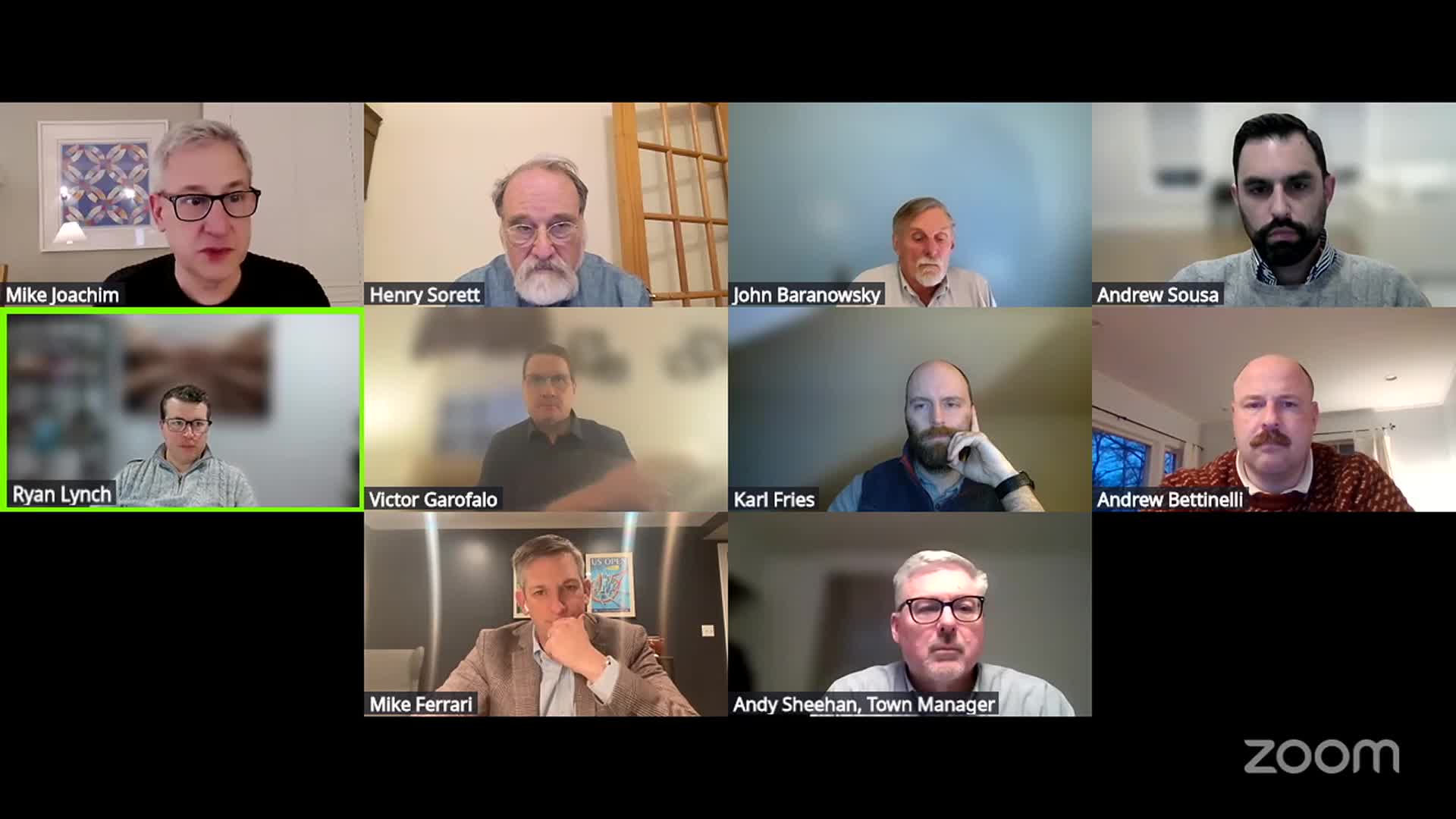
The Sudbury Finance Committee on March 24 discussed Article 27, a bylaw amendment to opt in to the specialized stretch energy code (225 CMR 22 and 23), but did not take a vote, choosing instead to request more information from town staff and outside presenters.
Members of the committee and several attendees pressed on the likely local costs and the practical trigger points in the code. “If the town were to elect to build duplexes ... the cost increase per unit would be at least $50,000,” a resident commenting during the meeting said, describing conversations with his contractor and architect and urging disapproval. Committee members repeatedly described the financial impact on municipal capital projects and private homeowners as uncertain and said they needed stronger evidence before making a fiscal recommendation to Town Meeting.
The article on the warrant would amend Town Bylaw section 129.3 to incorporate by reference the specialized stretch energy code found in 225 CMR 22 and 23 (including appendices RC and CC) with an effective date of Sept. 1, 2025. The Energy and Sustainability Committee submitted the article, and their write‑up says the specialized code offers a more energy‑efficient, lower‑greenhouse‑gas alternative to the current stretch or baseline Massachusetts energy code for new construction.
Why it matters: adopting an opt‑in specialized energy code changes local building requirements for new construction and, in some situations, for major renovations. The committee framed its role as fiscal and advisory — it will consider whether adoption would materially alter town capital costs, town operating budgets or resident renovation costs and how adoption might affect eligibility for state grants tied to green‑community criteria.
Discussion highlights - Several finance committee members said the likely fiscal impacts were speculative without input from the sustainability consultant and the town’s building inspector. “The fiscal impact of adoption ... is very remote and speculative,” Andrew B. (Finance Committee member) said, noting published materials that estimated small percentage increases for some projects but also materials claiming little construction impact. - Victor (Town staff) confirmed the town previously certified under the state Green Communities program in part by adopting a stretch energy code and said he could not yet confirm how much additional grant funding adoption of the specialized code would unlock. - Andy (Town staff) and others said it appeared the specialized code would primarily affect new construction but that there is a renovation threshold (about 1,000 square feet mentioned in the meeting) that might require wiring or other upgrades to permit future electrification; the committee asked staff to verify the renovation trigger and thresholds in writing. - A resident public commenter argued that the new code would compel electrification and cause substantial cost increases to homeowners and town capital projects, including a scenario where a town hall renovation could require demolition to comply.
Next steps: The committee agreed to postpone a recommendation. Members asked the chair and staff to invite Rami (the presenter from the Department of Energy Resources or the sustainability presenter referenced at the Select Board meeting), the town’s sustainability consultant (when hired), and Building Inspector Andrew Lewis to a future meeting or to provide written clarifications about: (1) the renovation thresholds that trigger Code compliance; (2) likely cost ranges for municipal capital projects under both the current stretch code and the specialized version; and (3) documentation about additional state grant eligibility tied to adoption of the specialized code.
The committee stressed it would distinguish between policy merit and fiscal advice: some members saw the vote as a policy choice best left to Town Meeting, while others said the committee should provide fiscal guidance where potential municipal costs are likely. The committee will revisit Article 27 after receiving the requested information.