Get Full Government Meeting Transcripts, Videos, & Alerts Forever!
Get email alerts on the Energy Efficiency topic
No spam. Unsubscribe anytime.
Sudbury debate centers on state'specialized energy "stretch" code for new homes
Summary
The Select Board on March 11 heard a detailed update on a citizen-backed proposal to opt in to Massachusetts'specialized energy ("stretch") code for new homes, a statewide policy intended to cut building greenhouse gas emissions.
The Select Board on March 11 heard a detailed update on a citizen-backed proposal to opt in to Massachusetts''specialized energy ("stretch") code for new homes, a statewide policy that aims to cut building greenhouse gas emissions.
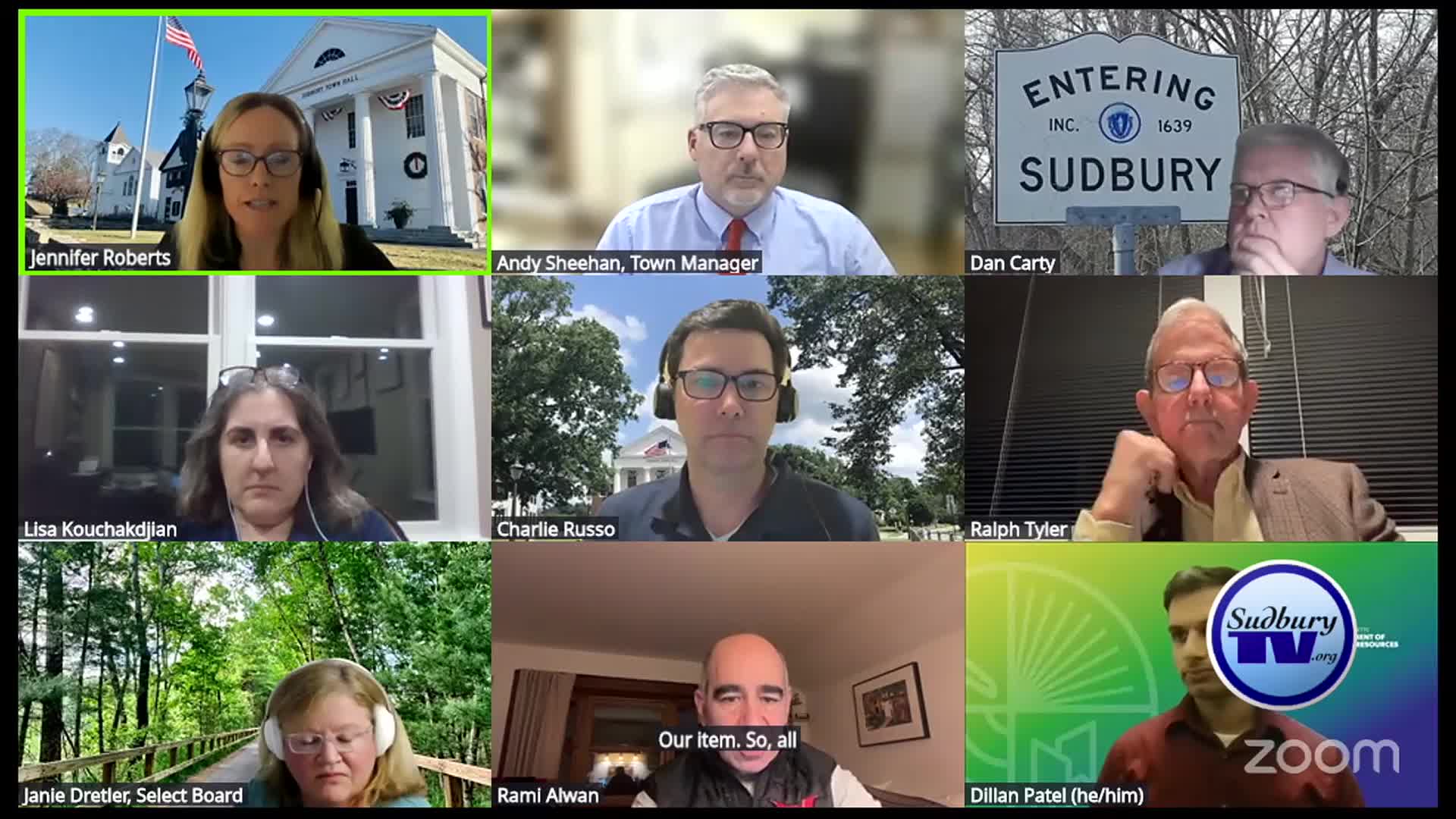
Supporters, including the town'Energy and Sustainability Committee representative Rami Elwan and a Department of Energy Resources regional coordinator, said the revised code would require new all-electric houses or mixed-fuel houses to include additional electric infrastructure and solar to offset fossil-fuel use. Dylan Patel of the Green Communities division of the Department of Energy Resources told the board the typical incremental construction cost for a mixed-fuel home could be roughly $24,000 before incentives and that, with tax incentives, the net cost of solar often cited is about $15,000. "We're talking about $24,000 in additional costs," Patel said, adding the median price of the new homes analyzed in Sudbury implied the increment was roughly 1 percent of construction cost.
The proposal'which would not change existing homes but would apply to newly permitted construction'prompted questions from several board members about the long'term cost, payback timelines and the availability of grants. Patel said the incremental costs for mixed'fuel homes are usually offset over time by solar credits and net metering; he estimated an "about an 8'year ROI" for the incremental cost on mixed'fuel single'family houses, while noting all'electric homes do not incur the same incremental requirement. He emphasized the state's goal is to reduce emissions over decades and to make the electrical grid steadily cleaner.
Several board members asked about the likely local impact. Petitioners said building activity in Sudbury is limited: "There have been 14 houses by 10 contractors in the past 4 and a half years," Elwan told the board, a figure he said was drawn from building department permit records. That limited new construction, proponents argued, meant any local budget impact from the change would be small in the near term.
Discussion also covered grant programs and recent state-level funding shifts. Board member Dan Carty flagged a March reduction in the Mass Save budget announced by the Department of Public Utilities and asked whether that would affect incentives available to homeowners and builders. Patel said the Mass Save program maintains published incentives for new construction and that some municipal grant streams administered through Green Communities were not part of the DPU reduction; he cautioned, however, that the state funding picture continues to evolve.
Board members requested additional outreach and documentation before deciding whether to support the article at town meeting. Petitioners said they plan targeted briefings for the roughly 10 local builders who have pulled house permits recently and hoped to schedule public informational sessions. Several members asked that the Select Board and the building commissioner meet with proponents and that DOER materials and Patel's presentation slides be circulated in advance of any formal vote.
The board did not take a final vote on adopting the specialized energy stretch code at the March 11 meeting; members said they expect to revisit the proposal at an upcoming meeting after receiving the DOER slide deck, a builders briefing and written materials on cost and grant assumptions.
The petitioners and state staff provided technical detail to help the board prepare for Town Meeting deliberations. The board asked staff to coordinate a short contractor-focused forum and to circulate Patel's materials to members and the public.
Looking ahead, proponents will supply a slide deck and the Energy and Sustainability Committee will seek to schedule outreach to local builders and a public session; the Select Board asked staff to confirm enforcement and inspection roles with the building commissioner so members understand how the code would be implemented locally.