Get Full Government Meeting Transcripts, Videos, & Alerts Forever!
Get email alerts on the K 12 Schools Budget topic
No spam. Unsubscribe anytime.
Valley Tech presents FY26 budget to Blackstone finance committee; emphasizes grants, MSBA roof process
Summary
Representatives for Blackstone Valley Vocational Regional School District presented a FY26 budget showing a 5.77% increase, heavy reliance on grants and stable enrollment, and said the district is in the MSBA accelerated roof repair queue but does not expect borrowing in FY26.
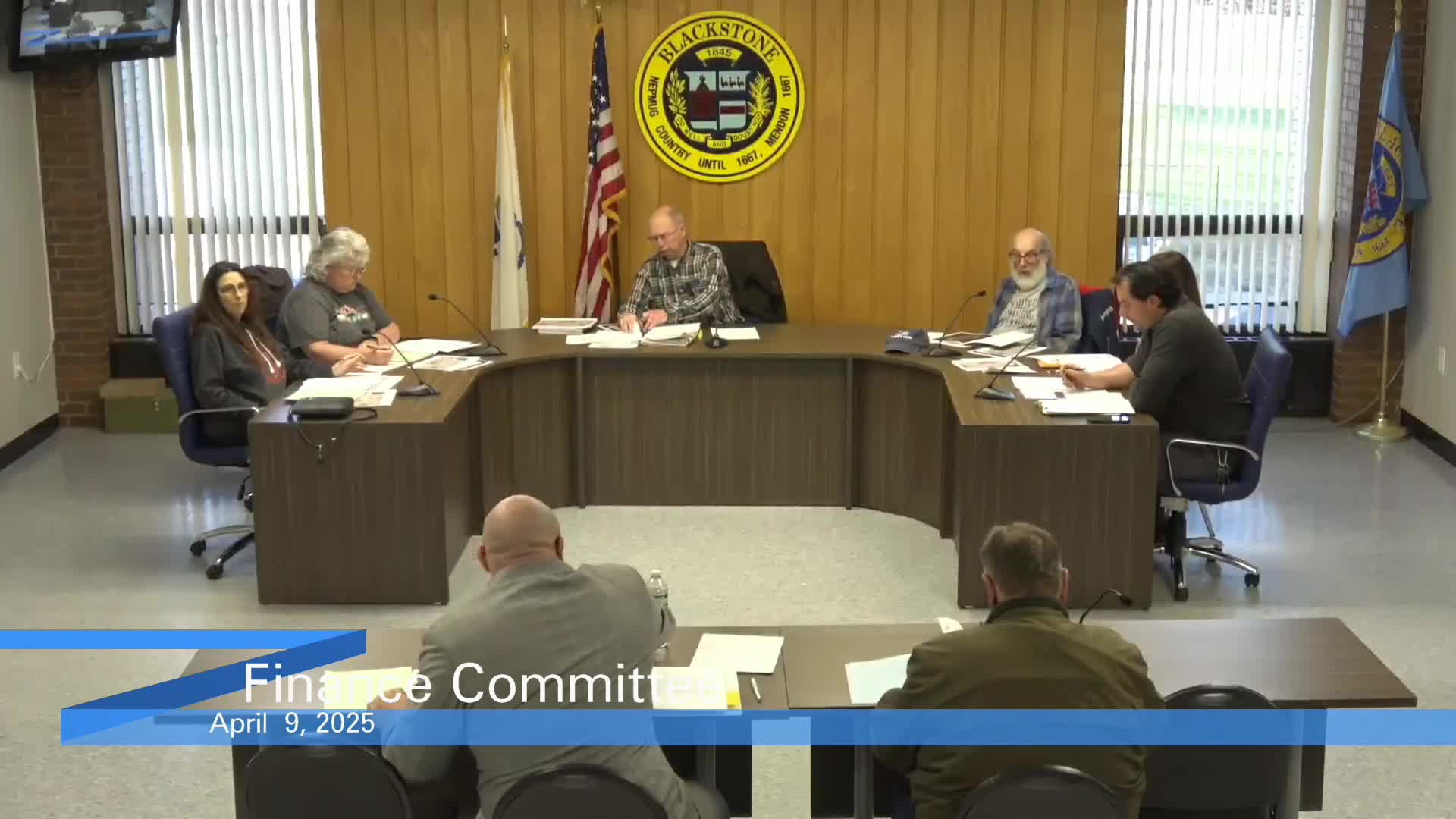
Blackstone Finance Committee Chair Jeff Silverstein heard a presentation April 9 from representatives of the Blackstone Valley Vocational Regional School District on the district's proposed fiscal 2026 budget, which the presenter described as a 5.77% increase overall.
The presenter said the district is using competitive grants and fund balances to reduce town assessments and highlighted several near-term items that affect the FY26 proposal. The presenter said the district had roughly $2,800,000 in grant awards listed in the budget booklet and that recent additional awards bring the total closer to $3,000,000, which the presenter described as roughly "$2,400 per student" in offsetting revenue.
Why this matters: Valley Tech is a regional vocational-technical district whose operating costs are apportioned among 13 member towns. Changes to the district's aid, transportation reimbursement or use of excess-and-deficiency balances directly affect Blackstone's town assessment.
The presenter told the committee the district had secured a relatively low increase in employee health insurance for two consecutive years, saying, “we were able to secure a 4% increase in employee health insurance,” and credited their broker by name. He also called out a one-time $200,000 pension-relief item that auditors advised the district it could release after an old billing issue passed the statute-of-limitations threshold; the presenter said that $200,000 was placed on the revenue side of the FY26 budget as a one-time item. The district also disclosed a planned use of excess-and-deficiency (E&D) balances in the proposed budget and a separate disclosure that the school committee may utilize up to $700,000 of E&D for grant matching and capital work.
The district described a new evening adult education effort planned under a Career Technical Initiative grant from Massachusetts workforce development. The program would offer industry-certified courses in HVAC, electrical, machining, welding and plumbing; the presenter said the state grant framework allows adults with incomes under $77,000 to take those courses free of charge.
On transportation and state aid, the presenter used an 80% reimbursement estimate for regional transportation and noted the state raised Chapter 70 school aid by an amount he summarized as “$75 per student” in current year commitments; he cautioned final transportation and Chapter 70 numbers will not be firm until the state completes its budget work later in the spring. The presenter said fixed costs (wages, insurance, transportation, utilities and pensions) make up roughly 88% of the proposed increase and that the budget includes no net new full-time-equivalent positions (the FTE count was flat to slightly down by 0.4 FTE in his presentation).
Capital and facilities: Valley Tech reported it has been accepted into the Massachusetts School Building Authority (MSBA) Accelerated Repair Program for a roof replacement and related schematic planning. The presenter said the district has been assigned an owner’s project manager and architect and that MSBA site visits had occurred; he added MSBA’s schedule is slow and the district does not anticipate major borrowing in FY26. When asked about project cost, the presenter said the application process uses recent comparable projects with an MSBA escalation factor and that it would be “premature” to give a precise number but that the project would not exceed $10,000,000, as phrased by the presenter.
Enrollment and outcomes: the district reported enrollment at approximately 1,257 students (the presenter said the number was essentially unchanged from the previous year) and noted steady application rates for seats. The presenter highlighted programmatic success including a 100% graduation rate, frequent student medals at SkillsUSA competitions, and a national teaching award in engineering.
The committee asked questions about expected operating impacts to member towns, specifics of stabilization and E&D uses, and timing of MSBA feasibility and design estimates. Presenters repeated that final state reimbursement figures and MSBA cost estimates will be clearer later in the spring and that the district would come back to member towns if any borrowing or formal capital authorizations were required.
Ending: The presenter offered to take follow-up questions after the meeting and provided the committee with a printed budget booklet and a green-sheet summary showing revenues, E&D disclosures and member-assessment calculations.