Get Full Government Meeting Transcripts, Videos, & Alerts Forever!
Get email alerts on the Traffic Safety topic
No spam. Unsubscribe anytime.
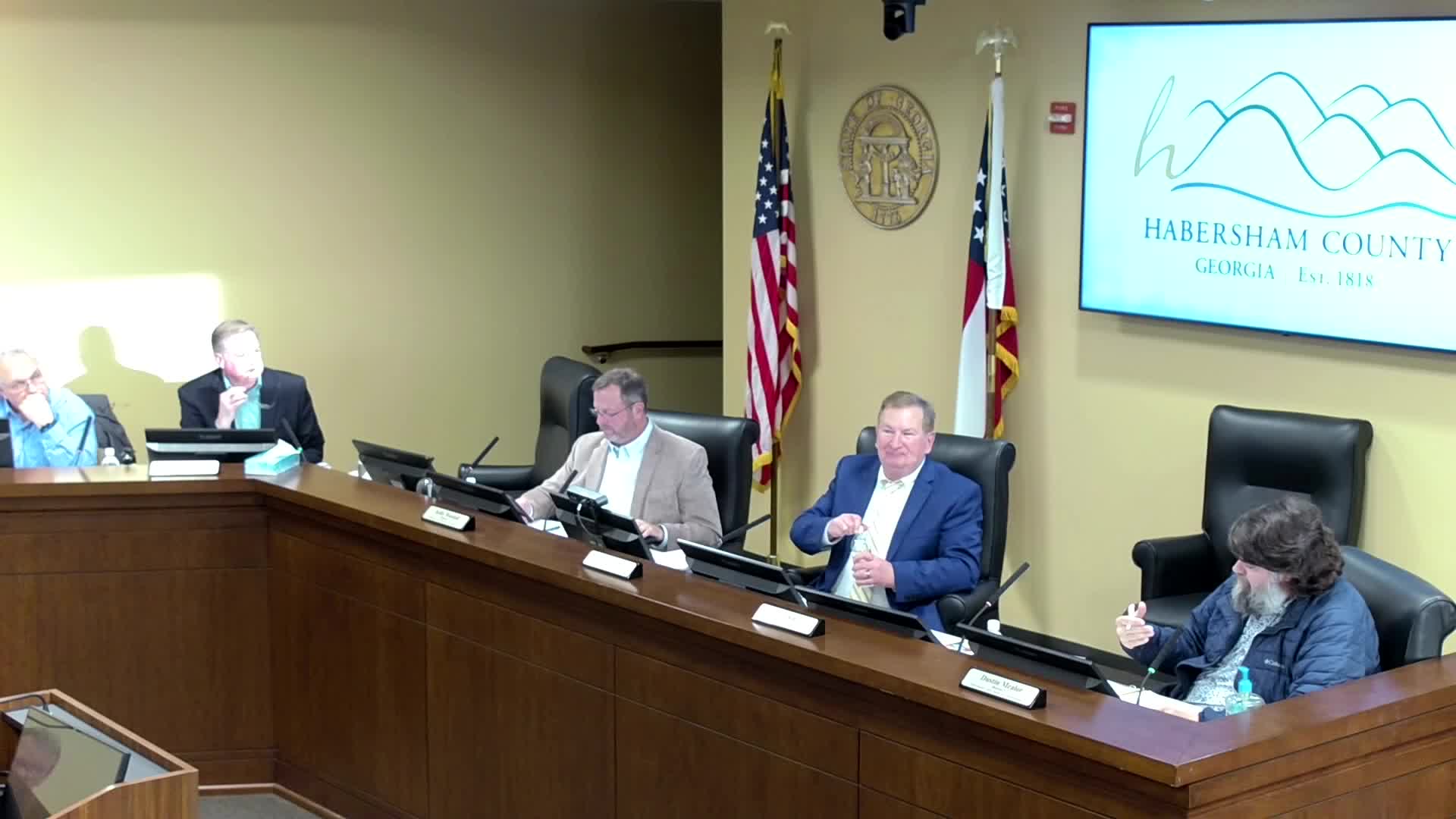
Commission declines to advance 'Safe Streets' resolution after debate over staff time and federal requirements
Summary
A county presentation on a federal Safe Streets for All grant and a proposed resolution setting a goal of zero traffic deaths by 2040 drew extended discussion; no motion was made and the item died for lack of a motion.
Staff presented a draft resolution and timeline March 17 for a federally funded Safe Streets for All project that would produce a local safety action plan and position the county to apply for a construction grant for high-priority safety projects.
The presenter, identified in the meeting as Mr. Baggett, told the board that Habersham County received a Safe Streets for All grant and that one grant requirement is a public commitment by the governing body to adopt a resolution. The draft resolution in the packet proposed two performance targets: a 50 percent reduction in fatal and serious-injury crashes on county-owned roads by 2030 (compared with 2023) and working toward zero traffic-related deaths and serious injuries on county roads by 2040.
Baggett said the grant provides roughly $160,000 for the planning phase, that Kimley-Horn (a traffic engineering consultant) is assisting with the stakeholder process, and that the draft safety action plan is due June 15, 2025, with a final draft by Aug. 15, 2025 and intended board adoption in October 2025. The grant period ends Dec. 30, 2025. He also noted the grant requires a 20 percent in‑kind match the county can meet with staff time.
Several commissioners raised concerns about the time staff must commit, the complexity of federal construction grants that could follow a planning study, and the county’s ability to meet required commitments. One commissioner argued the county already knows where dangerous intersections are and questioned the value of an external study, while another stressed that preparing the study is required to be eligible for later construction funding and could free SPLOST dollars for other projects if a construction grant is secured.
After extended discussion, no commissioner moved to adopt the resolution. The item was reported as having ‘‘no motion’’ and therefore not advanced; Baggett said he would continue work on the study tasks required by the grant, but no board action was taken to adopt the resolution at this meeting.
The discussion made clear the county must balance staff time and grant requirements; staff said accepting the planning grant obligation does not itself obligate the county to accept any subsequent construction grant if the board later declines.