Get Full Government Meeting Transcripts, Videos, & Alerts Forever!
Get email alerts on the Traffic Safety Safestreets topic
No spam. Unsubscribe anytime.
Commission discussion of Safe Streets grant and Vision Zero-style goals ends without a vote
Summary
Staff outlined the county’s Safe Streets for All grant work and a draft resolution committing the county to long-term crash-reduction goals; debate among commissioners highlighted concerns about federal strings and staff time, and no motion was made to adopt the resolution.
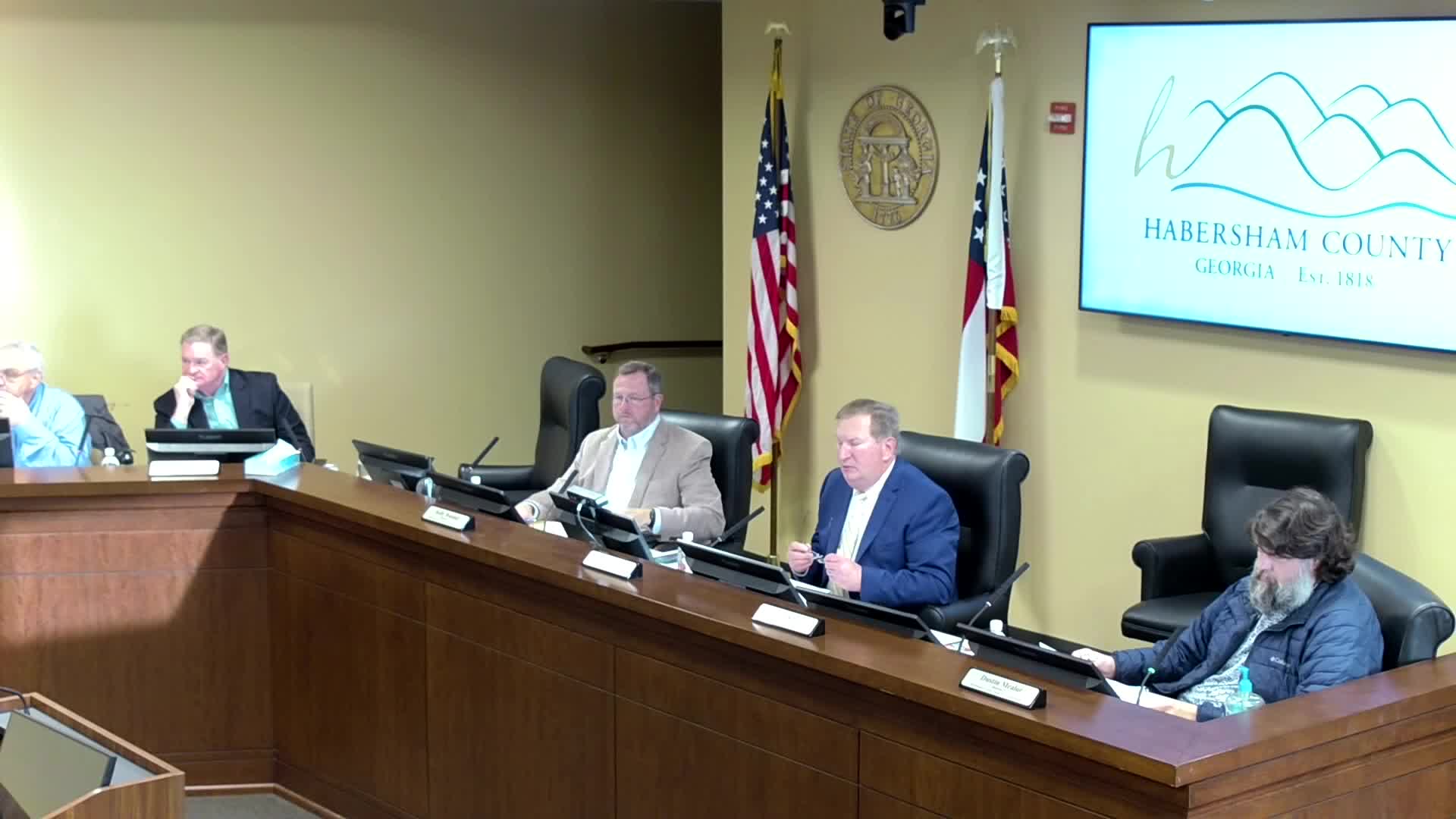
Habersham County staff briefed the commission on a federally supported Safe Streets for All grant on March 17 and proposed a resolution establishing a long-term goal to work toward zero traffic-related deaths and serious injuries by 2040, but the item received objections and no motion to adopt the resolution was made.
The grant-funded program requires stakeholder input and a safety action plan; staff (presented by Mr. Baggett) described the grant timeline and deliverables. Baggett said the county’s draft resolution establishes two targets: a 50 percent reduction in the fatal/serious-injury crash rate on county-owned roads by 2030 (compared with 2023) and a longer-term goal of working toward zero deaths and serious injuries by 2040. He said the engineering consultant Kimley Horn is under contract to prepare the safety action plan and draft engineering work, with a draft due in June and final deliverables later in 2025.
Several commissioners questioned the value and the time demands of pursuing the grant and the construction-phase funding that might follow. Speakers asked whether the county could be obligated to federal requirements, whether the county would be free to stop after the study, and whether federal construction grants would carry heavy compliance obligations. Commissioner concerns included staff time commitments, coordination among seven municipalities in the county, and whether the county should prioritize projects such as roads, bridges, or jail needs instead of the grant process.
Baggett and staff responded that the first phase — the safety study and action plan — uses grant funds and a staff time match and that completion of the study is a prerequisite to applying for later construction grants. They noted the grant’s in-kind match can be met with staff hours and that the engineering cost bid was competitive.
When a commissioner asked for a motion to adopt the resolution, no motion was offered and the item effectively died for the evening. Staff said they would continue stakeholder work on the action plan but no formal resolution was adopted.