Get Full Government Meeting Transcripts, Videos, & Alerts Forever!
Get email alerts on the Homelessness Shelter Family Promise topic
No spam. Unsubscribe anytime.
Family Promise seeks to set up three-family overnight shelter at Orting United Methodist Church; city staff say zoning review required
Summary
Family Promise of Pierce County presented a model to host up to three families overnight at Orting United Methodist Church, emphasizing short stays and intensive case management. City attorney said the church must pursue a conditional-use or nonconforming-rights review before operating.
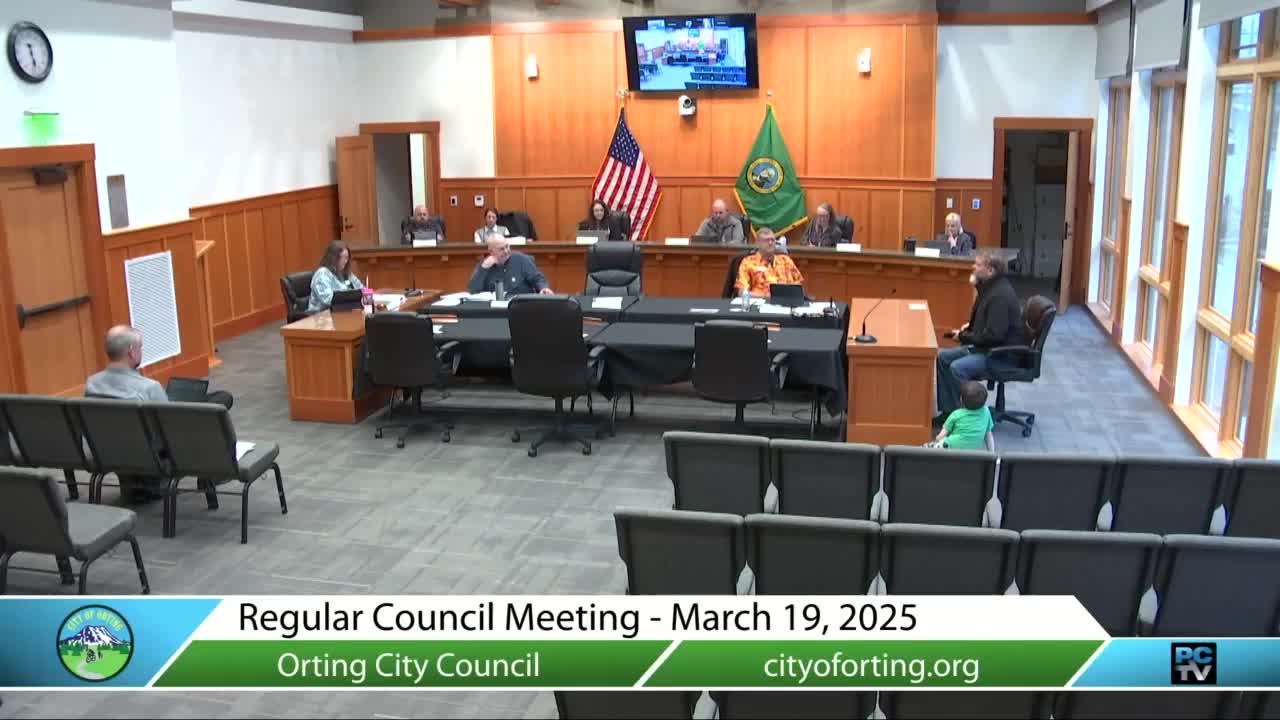
Family Promise of Pierce County told the Orting City Council that it wants to work with Orting United Methodist Church to operate a three-family, overnight shelter for families with children.
The presentation by Family Promise CEO Steve Decker described a model of “scattered-site” shelters and intensive case management. Decker said the program keeps stays short — “our average is 26 days for families, almost just over a third of the time” compared with the county average — and focuses on rapid exits to permanent housing. He said the group has been operating in Pierce County since January of the previous year and had housed 130 families in a small Spanaway shelter to date.
City staff and council members asked operational and permitting questions. City Attorney Larson told the congregation’s representatives and Family Promise that the proposed activity would require local land‑use review: if the church is claiming grandfathered, nonconforming use rights, it must apply for a nonconforming‑rights review; otherwise the operation would require a conditional‑use permit under the city’s zoning code. Larson said “this operation does need to undergo some sort of review from the staff before standing up.”
Why it matters: Council members and staff said preserving neighborhoods, keeping children in their home schools and minimizing public safety or traffic impacts are priorities. Family Promise emphasized that its model is intentionally brief, “safe but slightly uncomfortable,” and oriented toward re‑housing families rather than long‑term shelter stays.
Council discussion and next steps: Council members asked how case management and mental‑health referrals would work. Decker said case management is mobile and flexible, with staff meeting families at night, at work or at Family Promise offices as appropriate; mental‑health treatment is provided by referral partners rather than in‑house. CA Larson advised the presenters to contact city staff about the permitting path and to file the applicable review application. No formal council action or vote was taken at the study session; staff will accept and review any application the church or Family Promise files.
Ending note: Decker said Family Promise already serves some Orting residents and has families from Orting on its current wait list. The organization offered to partner with the church on a small, church‑based shelter to keep children in their school districts while case managers work to place families into permanent housing.