Get Full Government Meeting Transcripts, Videos, & Alerts Forever!
Get email alerts on the Public Safety Pedestrian Ordinance topic
No spam. Unsubscribe anytime.
Pittsfield City Council files proposed median-safety ordinance after extensive public opposition
Summary
After more than an hour of public comments opposing a proposed “median safety and pedestrian regulations” ordinance, the City Council accepted an Ordinance & Rules Committee report recommending the measure be filed and placed on record. Councilors and dozens of residents debated safety data, free-speech risks and possible legal exposure.
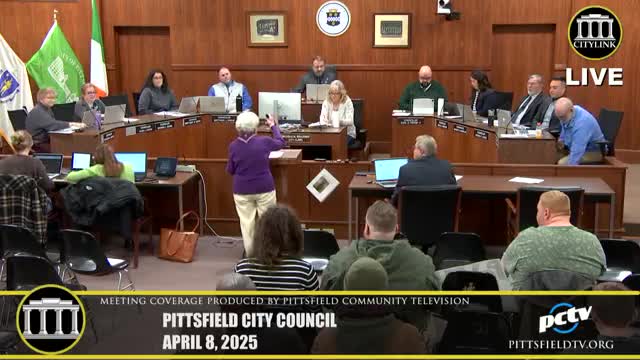
The Pittsfield City Council on March 20 accepted a report from its Ordinance & Rules Committee and placed on file a proposed ordinance titled “Median safety and pedestrian regulations” (chapter 14, §14-12), after lengthy public comment and council debate.
Supporters of keeping the proposal off the agenda said the ordinance would criminalize poverty and risk First Amendment challenges, while proponents cited pedestrian safety concerns at several high-traffic intersections. “This ordinance is about kicking poor people out of downtown so that we don't see them,” said Kamar Taliaferro, a Pittsfield resident. “It's cruel.”
Dozens of residents — including pastors, food pantry volunteers and leaders of local advocacy groups — urged councilors to drop the ordinance and instead expand housing, food and outreach services. “Panhandling and medians is not a risky behavior as much as it is a symptom of lives already full of risk,” said Mike Denton, pastor of United Church of Christ, Pittsfield. Several speakers described the ordinance as a permission to push people “out of view” rather than address homelessness.
Members of Berkshire Interfaith Organizing and other local groups repeatedly urged the council to file the measure. Ephraim Alexander Schwartz, representing Berkshire Interfaith Organizing, summarized concerns raised at the Ordinance & Rules meeting and cited the Berkshire Regional Planning Commission report, saying crashes “attributed to panhandling and distraction” ranked lower than other causes of crashes. He also noted that similar ordinances in other cities have resulted in litigation.
In committee, the Ordinance & Rules panel recommended filing the ordinance by a 4–1 vote. At the City Council meeting, Councillor Warren moved to accept the committee report and place it on file; the motion passed unanimously. Councilors who spoke during the debate emphasized the need for more data and community engagement before taking legislative action. Councillor Cavy asked officials to produce data tying pedestrian behavior on medians to collision causation; the police lieutenant cited by a council member told the council that the department had no data directly linking panhandlers in medians to multi-vehicle crashes.
Several councilors also raised the legal and financial risk of passing an ordinance without a clear evidentiary record. Speakers cited cases in other Massachusetts cities where similar laws led to lawsuits and settlements. Council members repeatedly encouraged pursuing upstream services — shelter expansion, supportive housing and outreach — while refining any safety-focused proposals.
The council’s acceptance of the committee report means the proposed ordinance will not proceed to a final vote this session. Councilors and community members repeatedly called for further study, better data, and direct outreach to people who spend time downtown before drafting new regulations.
In closing remarks before the vote, Councillor Warren said he had been involved in local outreach and referenced visits to shelters and food pantries as part of his judgment to file the ordinance for further work. The vote to accept the report and place it on file was unanimous.
The debate over the proposed median-safety ordinance combined public-safety language with questions of civil liberties and homelessness policy; councilors instructed staff and colleagues to continue community engagement and to refine any future draft with more precise data and legal review.