
Clark County Mosquito Control outlines lower taxes, Steigerwald treatment hurdles
Get AI-powered insights, summaries, and transcripts
Sign Up Free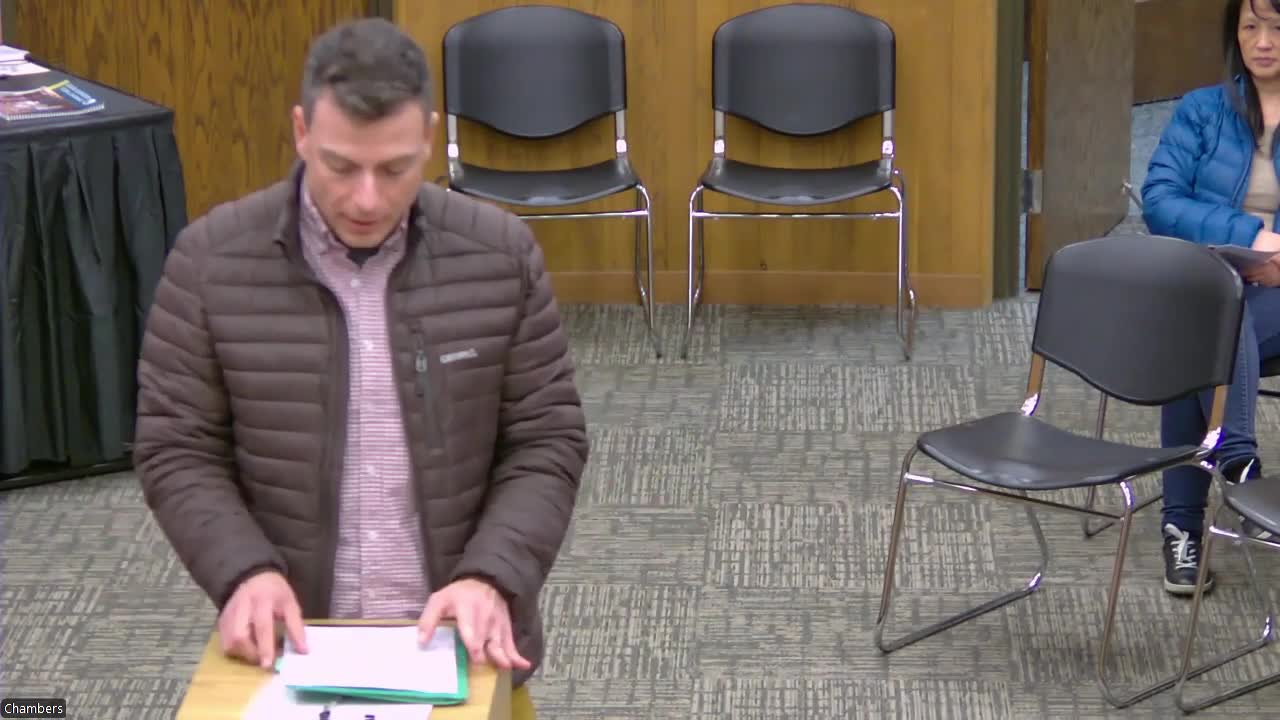
Summary
A representative from the Clark County Mosquito Control Board updated Washougal City Council on a plan that reduced patron assessments in 2025, possible increases in mosquito activity tied to higher river levels, and ongoing appeals to U.S. Fish and Wildlife to allow treatment in the Steigerwald wetlands.
Anthony (presenter, Clark County Mosquito Control Board of Trustees) told the Washougal City Council on March 10 that the district reduced patron assessments for 2025 and is preparing for a likely increase in mosquito activity this year.
The presenter said the district expects a roughly 15% rise in river levels along the Columbia and that could bring “a lot more mosquitoes.” He also told the council the agency implemented spending reductions and carried excess inventory and revenue from 2024, producing “about a 26% tax reduction on your bill.”
The update described the district’s priorities: surveillance, larvaciding, control activities, community outreach, employee skills, and facilities and equipment. Anthony said the district is promoting a long-term budget strategy and increasing technical capacity, including plans to install a PCR testing capability.
On field operations he said helicopter applications are roughly “10 times more effective” and that the district is seeking authorization to ensure helicopter coverage for Washougal if needed next season. He asked local officials and residents to assist with outreach to secure necessary permits and licensing.
The presenter flagged Steigerwald wetlands as a significant source of mosquitoes for Washougal neighborhoods. He said the district has obtained access for testing from U.S. Fish and Wildlife but has not yet received authorization to treat the wetlands and asked anyone with diplomatic contacts at Fish and Wildlife to help. “They’ve given us access for testing, but so far no treatment,” he said. He characterized the remaining delay as a bureaucratic process requiring surveys, environmental reviews and product approvals.
Anthony said demand for services grew across several categories and warned the council to watch long-term spending growth even though this year’s assessments were lowered. He added that service requests in the Washougal area fell by about 80% in 2024 — which he attributed to climate conditions — but that next year may see an uptick.
He closed by noting the district’s improved phone-and-ticket system and quicker response times, and by thanking director Mario Boivre and other staff members for operational improvements. “I’ve seen turnaround in, like, 8 hours if you guys have mosquitoes this summer,” he said.
The presentation prompted brief council discussion about permissions for treatment and the district’s staffing and facilities. No formal action was taken by the council during the presentation.
The district provided a website for service requests (CCMCD.org) and encouraged residents to file reports or attend agency meetings for more information.