Get Full Government Meeting Transcripts, Videos, & Alerts Forever!
Get email alerts on the Community Land Trusts topic
No spam. Unsubscribe anytime.
Norwalk committee hears expert briefing on community land trusts as a tool for preserving affordable homeownership
Summary
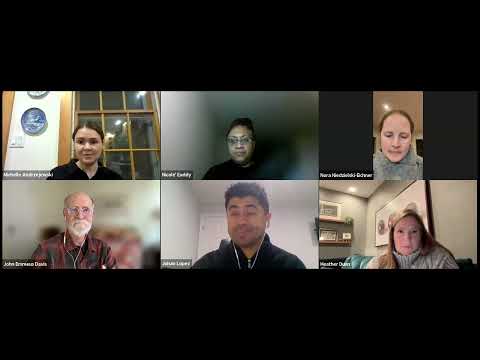
Norwalk — The Norwalk City Ad Hoc Affordable Housing Committee on an evening meeting restarted its 2025 work with a briefing on community land trusts, a nonprofit model that separates ownership of land from ownership of buildings to preserve long-term affordability, committee Chair Nora Azizi said.
Norwalk — The Norwalk City Ad Hoc Affordable Housing Committee on an evening meeting restarted its 2025 work with a briefing on community land trusts, a nonprofit model that separates ownership of land from ownership of buildings to preserve long-term affordability, committee Chair Nora Azizi said.
John Davis, a city planner who has consulted on community land trusts since 1993, told the committee there are about 320 CLTs in the United States and described the model as "community-led development on community-owned land of homes and other assets that remain permanently affordable." He summarized the classic CLT arrangement: a nonprofit land trust owns the land and sells or leases the structures to homeowners or other building owners under a long-term ground lease that includes resale-price limits and stewardship obligations.
The committee opened with a routine vote to accept the minutes from February of last year; the minutes were approved with three votes in favor and one abstention by Miss Dunn. A motion to adjourn closed the meeting at the end of the presentation; the record does not include a roll-call tally for that motion.
Why it matters: Members said the item ties into the draft affordable housing plan circulating in Norwalk and could offer a mechanism to preserve subsidized owner-occupied homes and protect gains in equity for current and future owners. "We are the developer that doesn't go away," Davis said of CLTs, describing the stewardship role CLTs play in intervening on maintenance, supporting homeowners facing default and managing resale so homes remain affordable for future buyers.
Davis explained key features and tradeoffs. A CLT typically uses a long (commonly 99-year) ground lease that allows homeowners to mortgage improvements while the land trust retains an ongoing stewardship role. Homeowners receive some equity on resale — for example, return of down payment, amortized mortgage principal and a capped share of appreciation — while the trust keeps a portion of appreciation to lower the price for the next buyer. Davis described this as a limited-equity, wealth-building model: "It's not a zero-equity model," he said, and noted that in Burlington, Vermont, about two-thirds of CLT homeowners who resold were able to buy on the open market afterward.
Committee members focused on municipal fiscal effects and resale outcomes. Miss Dunn asked whether CLT properties are removed from tax rolls; Davis replied that neither land nor buildings are removed from property tax rolls and that homeowners pay property taxes. He said assessments reflect the encumbrances on the property because "the more sticks in the bundle of rights that you give away ... that's reflected in the tax assessment." Council member Young, who lives in a long-lease property in the city, described low resale prices in her development and said residents had received limited equity after long tenure.
On municipal support, Davis said many CLTs form in partnership with city governments and that municipal contributions vary. In his survey work for a Lincoln Institute of Land Policy report, he found cities commonly support CLTs with donated or discounted publicly owned land, grants or low-interest loans for construction, and regulatory relief such as fee waivers or density bonuses. He also said only about one-third of municipalities surveyed provided ongoing operational support to CLT stewardship organizations.
Members asked about applicability to Norwalk's context, where vacant land is scarce. Davis noted CLTs can also acquire and rehab existing buildings, densify parcels, or steward affordable units created through inclusionary zoning or developer agreements; CLTs can also manage commercial storefronts, artist spaces and senior housing. He offered to share examples and models tailored to communities seeking to preserve affordability amid rising market values.
What happens next: Committee members said they will continue exploring CLT options as part of the draft affordable housing plan process and follow up with examples and more detailed program design questions, including resale formulas and potential partner nonprofits. Davis said the International Center for Community Land Trusts and the Lincoln Institute resources are available for further study.
Votes at a glance - Accept minutes from February (previous year): motion approved; vote recorded as 3 in favor, Miss Dunn abstaining; mover not specified in the record. - Motion to adjourn: motion made; outcome recorded as meeting adjourned; roll-call tally not specified.