Get Full Government Meeting Transcripts, Videos, & Alerts Forever!
Get email alerts on the Vape Shop Ordinance topic
No spam. Unsubscribe anytime.
Committee advances vape‑shop licensing ordinance for public hearing; city clerk to handle permits
Summary
Norwalk’s Ordinance Committee voted Feb. 18 to forward a draft vape‑shop licensing ordinance to public hearing in March, assigning the City Clerk as the licensing authority while retaining public-health and police roles for inspections and enforcement.
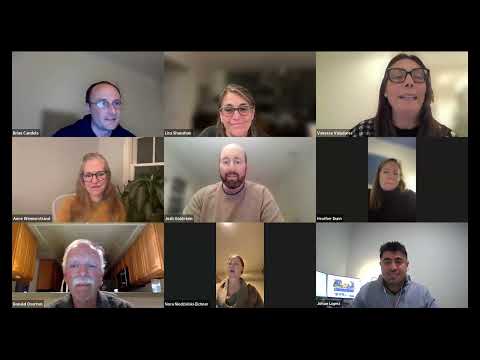
The Norwalk Ordinance Committee voted Feb. 18 to move a draft ordinance governing the sale of vaping products to public hearing in March. Committee members and staff described licensing requirements, renewal rules, inspection authority and penalty provisions; the draft makes the city clerk the licensing authority while preserving public-health and police roles for inspection and enforcement.
The proposed ordinance would require any entity selling vaping products to submit an application to the City Clerk and pay a fee established by the clerk and approved by the Common Council. Applications must include personal identifying information for applicants and, for non‑natural persons, identifying information for owners or partners; photographs, fingerprints and disclosure of criminal convictions are among materials listed in the draft. Renewals must be submitted 90 days before expiration, and licenses can be denied for outstanding violations, multiple recent violations, or suspension.
Johan Lopez and staff said the change from the director of health to the city clerk as licensing point-person was made after discussion about departmental capacity; the director of health and chief of police remain involved for inspections and enforcement. The draft requires periodic inspections by the director of health or the chief of police (or their designees). It also provides for suspension and revocation of licenses, fines for violations and daily penalties for failure to remove vape products after suspension or revocation.
Committee members raised enforcement questions. Chief Mark Walsh told the committee the police can seize contraband items that are illegal under state criminal law, but they cannot seize items that are legal to possess even if sold in violation of a municipal licensing requirement. The committee discussed limits on seizure and the interplay between civil ordinance violations (fines, license suspension/revocation) and criminal enforcement (seizure of illegal products and arrests when criminal statutes are violated).
Nora Nijewski Eitner asked whether the city could seize products if a license is revoked; Chief Walsh explained contraband seizures require a criminal basis, while an ordinance violation alone is not criminal contraband. Staff and the chief said the ordinance is intended to make such businesses less attractive and give the city civil levers — license denial, suspension, fines and renewal restrictions — while criminal enforcement would proceed where applicable.
The committee voted to send the draft ordinance to public hearing at the March meeting. Staff indicated that affected landlords and tenants, planning and zoning requirements, and landlord lease enforcement could be part of the broader strategy to reduce problematic operations, and staff will circulate consultant materials and final draft language prior to the hearing.