Get Full Government Meeting Transcripts, Videos, & Alerts Forever!
Get email alerts on the Post Fire Rebuild Management topic
No spam. Unsubscribe anytime.
Malibu leaders, residents push for rebuild manager and neighborhood representatives to speed post‑fire rebuilding
Summary
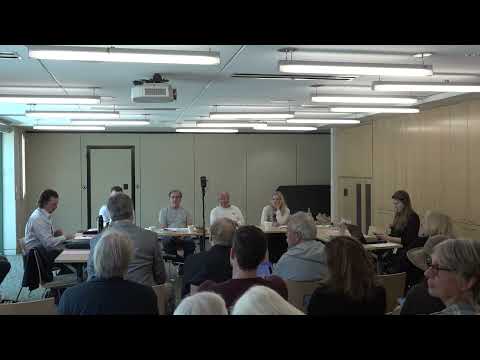
At a special meeting April 3, 2025, the Malibu City Council and dozens of residents discussed creating a dedicated rebuild manager and neighborhood representatives to coordinate permitting and technical reviews for homes lost in the recent fire.
At a special meeting April 3, 2025, the Malibu City Council and dozens of residents discussed creating a dedicated rebuild manager and neighborhood representatives to coordinate permitting and technical reviews for homes lost in the recent fire.
Residents and volunteer organizers told the council the current process is producing avoidable delays and inconsistent requirements — particularly for Big Rock beachside properties — and urged a single point of coordination to facilitate workshops, reduce redundant reviews and surface policy issues that should go to council.
Why it matters: Residents said administrative friction, repeated geotechnical requests, and new coastal guidance on sea level rise are stalling rebuilds and increasing costs. Council members and staff said a focused program of community workshops and clearer rules could shorten permitting time and reduce appeals.
The discussion and public comments Residents and volunteer leaders described a mix of technical and administrative bottlenecks. Speakers raised three recurrent concerns: (1) repeated or inconsistent geotechnical and survey requests for properties whose foundations survived the fire; (2) uncertainty about whether and when septic systems must be replaced; and (3) how coastal engineering studies and sea‑level rise guidance should be applied to wastewater systems and seawalls.
Abe (citizen volunteer) said streamlined rules could eliminate the need for a permanent manager, but added a rebuild manager would be useful to run workshops and resolve recurring issues before they reach the council. “If the process is simple and streamlined enough, then we actually don't need this position,” Abe said, but he recommended that a program begin with workshops that generate concrete, repeatable scenarios the council can adopt.
City staff and several speakers described specific technical hurdles. Lauren Doyle (city staff) summarized how the city’s coastal engineering guidance is used: “It says you need a coastal engineering study to determine how to protect the OWTS [on‑site wastewater treatment system], and it refers to the coastal engineering guidelines,” she said, and those guidelines address sea‑level rise as part of the study. Staff said they are working on guidance and taking public feedback before finalizing implementation.
Speakers gave examples residents say are causing delays: surveys requested for projects that are like‑for‑like rebuilds where foundations remain intact; $40,000 geotechnical studies that homeowners say are disproportionate when evidence shows long‑term stability; and differing interpretations of when an owner must replace an existing septic system. Several residents requested permission for engineers to certify foundations and septics as an alternative to repeated, costly third‑party reviews.
Options discussed and limits of authority Participants discussed multiple models: a single rebuild manager with city oversight, multiple neighborhood representatives (a “czar” per area), or an informal network of trained volunteers who convene workshops and present recommended policy changes to council. Council members repeatedly noted limits under state law and municipal code: the city can change local policy but cannot unilaterally override state statutes or regional water board requirements.
City staff described a program model in which a rebuild manager would act as a program or project manager — convening workshops, cataloging recurring technical questions, and preparing recommendation packages for council votes. Staff emphasized that the manager would not override building codes or safety requirements; rather, workshops would produce recommended rules or interpretations that the council could vote to adopt.
Public‑private and volunteer roles Multiple residents and volunteer task‑force members offered to serve as neighborhood representatives or to help produce a written “road map” of authority, roles and recommended procedures. Some urged multiple neighborhood representatives (for Big Rock, the beachfront, landslide areas) rather than a single city employee so the position could leverage local knowledge and reduce staff burden.
Council direction and next steps Council members asked volunteers to deliver a concrete road map describing: the role and scope of a rebuild manager, proposed governance and reporting lines, whether the role would be paid or voluntary, and any precedents from other cities. Council members requested that a draft be delivered to staff “next week” so it can be agendized for the next council meeting. Staff also committed to host a focused sewer/septic presentation and to continue drafting coastal guidance for council consideration.
Votes at a glance A procedural motion to approve the meeting agenda was made and seconded during the session; the motion was affirmed without a roll‑call tally recorded in the transcript. The consent calendar item on the agenda was approved by affirmation; no individual roll‑call tally is recorded in the transcript.
Ending Residents and volunteers who have been organizing rebuild efforts said they will prepare a written program proposal and examples of precedents for the council and staff. Council members asked staff and volunteers to return with a packaged proposal and any necessary staff reports so the full council can consider a formal policy or contract at a subsequent meeting.