
Aurora staff outline city role in retail recruitment; SBDC highlights services for entrepreneurs
Get AI-powered insights, summaries, and transcripts
Subscribe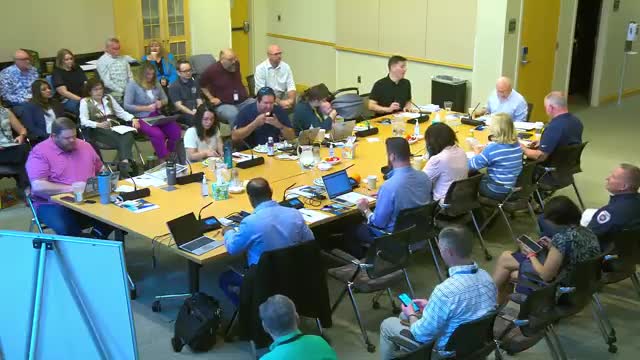
Summary
City planning staff and the Small Business Development Center described Aurora’s limited direct role in brokering retail deals, the city’s incentive tools — including urban renewal and sales tax rebate authority — and SBDC services for business attraction, retention and succession.
Aurora planning staff and the city’s Small Business Development Center (SBDC) briefed council on April 12 on how the city supports retail attraction and small businesses while stopping short of negotiating leases for private property.
The presentation explained the city’s functions, the financial tools available and how the SBDC supports entrepreneurs with counseling and training that staff say complements private brokers and property owners.
City staff emphasized Aurora’s relatively small direct footprint in retail ownership and its limited legal role in landlord–tenant negotiations. “The city does not own very much property, and particularly not retail property,” planning staff said, adding that brokers typically negotiate leases and the city acts as a partner and facilitator rather than a broker.
Why it matters: Council members asked for clearer guidance about tools the city can use to support retail in specific wards and for options to address high retail vacancies. Staff framed Aurora’s role as provider of incentives where market gaps exist and as a convener that makes introductions, markets sites and helps with permitting or licensing problems.
What staff said - Planning staff described three main incentive sources: (1) urban renewal authority programs (Aurora has 21 urban renewal areas), (2) local sales tax code authority to rebate or return portions of sales tax for targeted retail incentives, and (3) council-directed funds used for targeted programs such as restaurant pilot programs and ARPA/CARES-funded citywide restaurant support. - Staff stressed they cannot act as brokers because doing so would create a legal relationship and liability with property owners or tenants. - The retail team said it canvassed shopping centers across all wards, visiting 120 of 228 centers and surveying about 16% of individual businesses to inform a retail strategy that prioritizes centers by ward.
SBDC services: Ashwina Patel, identified as the SBDC executive director for Aurora/South Metro, described SBDC programs in attraction, retention, expansion and exit/relocation counseling. The SBDC provides pre‑venture and relocation advising, financial and marketing help, and confidential one‑on‑one advising; staff cited Dry Dock Brewing and Fortified Trucking as local examples of clients that expanded with SBDC help.
Council questions and staff responses - Brokers and incentives: Council members asked how brokers are paid and whether their incentives shape where brokers look. Staff said brokers are typically paid by property owners or tenants (flat fee or a percentage of a lease) and that the city works alongside brokers but does not replace them. - Vacant strip centers and conversion: Council members pressed on whether incentives or zoning tools could facilitate conversion of large, underused retail centers to mixed use. Staff said fragmented ownership complicates large redevelopments, but they are studying targeted incentives and code approaches as part of the retail strategy. - Market environment: Staff and SBDC representatives said inflation and economic uncertainty are slowing some leasing decisions, but Aurora is positioning itself to attract retailers who may be discouraged by conditions in nearby Denver.
What’s next: Staff said the retail strategy will return to council after the office finishes analysis and asks ward council members to help prioritize centers.
Speakers - Janine Rustad, planning and business development staff member (presentation start ~s:352) - Ashwina Patel, executive director, Small Business Development Center, Aurora/South Metro (presentation start ~s:1301) - Multiple council members asked questions during the presentation; statements above reflect staff responses recorded in the workshop.
Clarifying details - Urban renewal: Aurora has 21 urban renewal areas, representing under 2.5% of city land area (as presented by staff). - Outreach: staff visited 120 of 228 shopping centers and interviewed or surveyed roughly 16% of individual businesses in those centers. - Incentive sources named in the meeting: urban renewal authority programs; local sales tax rebate/return authority under city code; council‑directed funding (examples: restaurant program funded partly with ARPA/CARES).
Proper names - Aurora City; Aurora Urban Renewal Authority; Small Business Development Center (SBDC) Aurora/South Metro; Dry Dock Brewing; Fortified Trucking; Denver Business Journal.
Topics - primary: small-business-retention - topics:[{"name":"small-business-retention","justification":"City staff and SBDC described services and incentives for local business attraction and retention.","scoring":{"topic_relevance":1.00,"depth_score":0.75,"opinionatedness":0.05,"controversy":0.15,"civic_salience":0.65,"impactfulness":0.50,"geo_relevance":1.00}}],
Discussion vs. decision - Discussion points: city role vs. brokers; incentive sources; retail strategy outreach and vacancy remediation. - Direction: staff to finish the retail strategy and return with prioritized center lists; staff asked ward council members to identify priorities locally.
Searchable_tags:["retail","small-business","SBDC","urban-renewal","Aurora"]