Get Full Government Meeting Transcripts, Videos, & Alerts Forever!
Get email alerts on the Energy Microgrids topic
No spam. Unsubscribe anytime.
Senate debates microgrid bill to attract data centers; adopts tax-distribution and technical amendments
Summary
Senators considered an engrossed committee substitute for House Bill 2014 to certify microgrid districts tied to data centers, adopted several technical and allocation amendments, rejected proposed grandfathering and coal-plant exemptions and paused after a procedural dispute over a late amendment.
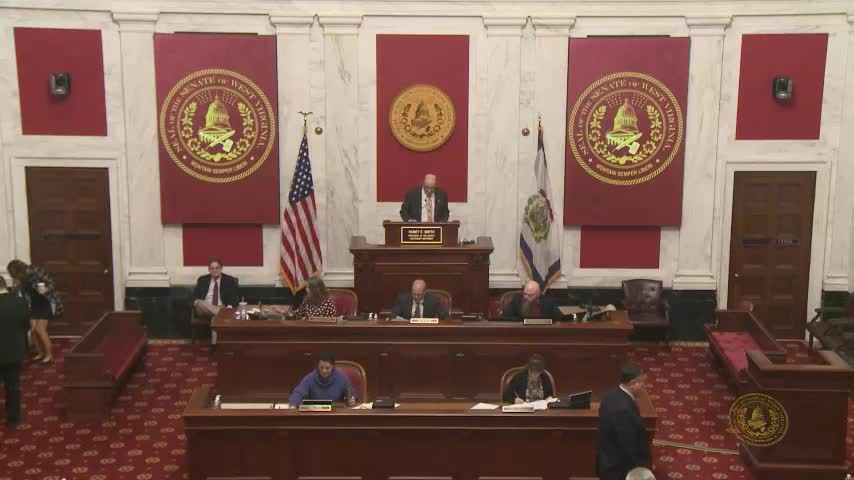
The West Virginia Senate took up an engrossed committee substitute for House Bill 2014 on third reading, a microgrid program bill aimed at promoting microgrid districts to attract high-impact data centers to the state.
The bill, as explained on the floor by the senior senator from the eighth, would permit a microgrid to qualify for the program if more than 70% of electricity generated in the microgrid “is consumed by or will be consumed by 1 or more data centers.” The senator said the measure would bar utility customers from bearing costs tied to construction or operation of generation, transmission or distribution facilities serving microgrid data centers: “the utility customers will not see any increase in their utility bills as a result of a data center coming to the state of West Virginia,” the senior senator from the eighth said.
Supporters on the floor tied the proposal to economic development. The striking-and-insert amendment discussed on the floor would establish a formula to tax property of data centers and microgrids and direct the resulting tax increment to multiple funds. The bill’s allocations discussed in debate included a major share set aside for a personal income tax (PIT) reduction fund, a county share returned to counties hosting data centers, and smaller percentages for statewide distributions including a state road fund and a grid stabilization fund.
Senators adopted a series of amendments that adjusted statutory references and changed distribution percentages. An amendment from the senator from Fayette altered the split so 50% of the increment would go to the PIT reduction fund and 40% would return to the county where a data center is constructed; other distributions discussed included a per-capita share to all 55 counties and smaller shares for low-income energy assistance and grid stabilization. A separate technical amendment corrected a statutory cross-reference and changed a destination fund from an earlier named fund to the grid stabilization fund.
The floor also considered limits on wholesale sales by microgrid power producers. Under the version of the bill debated, a power-production facility within a microgrid generally may sell only up to 10% of its output to the wholesale market. A later amendment that would have exempted merchant coal-fired plants that were in operation before Feb. 1, 2025 from that 10% limit was offered and rejected.
A proposed amendment to grandfather counties from the new distribution formula if they could show written or electronic contractor communications dated on or before Feb. 1, 2025 was vigorously debated and defeated. During debate on that amendment, a senator expressed a constitutional concern: “I believe, the constitutional infirmity of the amendment ... is that ... this would violate the equal protection clause,” the senator from Cabell said, arguing that the amendment would create unequal treatment across counties. Supporters of the amendment responded that the bill’s tax assessment would remain uniform and that the amendment was intended only to protect counties that had already incurred predevelopment costs.
Other points clarified on the floor: the bill would require certification procedures for microgrid districts and for high-impact data center status; the cost to construct and operate generation and distribution facilities serving microgrid data centers would be borne by generators or data-center customers in the microgrid rather than by outside utility customers; and the bill as amended includes a formula for allocating property-tax increments between state and county uses.
The session also featured a procedural dispute over the filing and timing of late amendments. A senator raised a point of order about an amendment appearing in the system after the discussion, prompting a short recess after a motion from the senator from Lewis. The transcript does not record final passage of the underlying engrossed committee substitute before the recess.
Votes at a glance - Amendment (clerk/Jeffries) to the amendment, page 21, section 4 — adopted (voice vote; chair declared adopted). - Amendment (Senator Rose), page 3, section 21 — adopted (voice vote; chair declared adopted). - Amendment (Senator Helton), page 21, section 4 — adopted; this amendment adjusted allocations (adopted by voice vote). - Amendment (Senator Tarr), page 19, section 4, line 2 (grandfathering counties with pre-2/01/2025 contractor communications) — rejected (voice vote; declared rejected). - Amendment (Senator Taramboli), page 3, section 21 (exempt merchant coal-fired plants in operation prior to 02/01/2025 from 10% wholesale limit) — rejected (voice vote; declared rejected). - Amendment (Senator Martin), page 22 — motion filed and debated; final disposition not recorded in the transcript.
What remains unresolved in the transcript is final disposition of the underlying engrossed committee substitute (House Bill 2014) itself; the record shows multiple adopted and rejected amendments and a subsequent recess before a final vote was recorded.
Ending Floor debate centered on balancing incentives for data-center investment with local tax revenues and broader grid—and consumer—protections. Senators pressed for precise statutory language and raised constitutional and implementation questions while refining how new tax increments would be allocated among state and local funds. The transcript ends with the Senate taking a 10-minute recess after a procedural dispute over amendment filing and timing.