Get Full Government Meeting Transcripts, Videos, & Alerts Forever!
Get email alerts on the After School And Prevention Programs topic
No spam. Unsubscribe anytime.
Levy County Prevention Coalition outlines after‑school, mentoring and prevention programs; reports enrollment and funding challenges
Summary
Representatives of the Levy County Prevention Coalition presented an overview of after‑school and prevention programs, enrollment across sites, funding sources and staffing; the coalition highlighted program reach, grant reimbursement rules, summer camps, mentoring and tobacco‑prevention efforts.
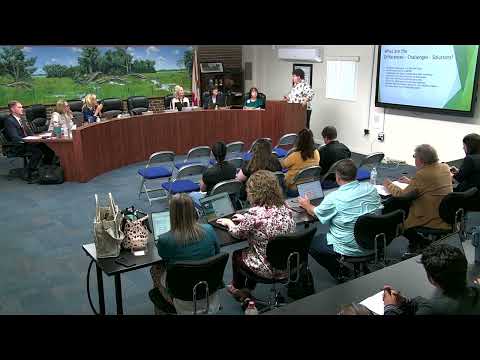
Jonathan Lewis, introducing himself as a representative of the Levy County Prevention Coalition, and colleagues described the coalition's programs for after‑school care, mentoring and substance‑use prevention and asked the board to note the services provided across the county.
Lewis said the coalition began as a volunteer group and has grown through mostly externally funded grants. He described the Achieve after‑school program model (three academic days and two enrichment days), the requirement that some grants are reimbursement based and the administrative burden of compiling reimbursement packets. He said the coalition tries to direct the majority of grant dollars back to schools and staff.
The coalition presented site enrollment figures and program details: combined enrollment for Joyce Bullock and Williston Elementary was stated as 234; Williston Middle High 48; Bronson Elementary 28; Bronson Middle High 70; Chiefland Elementary 45; Chiefland Middle High 48 (presented as "40 8"); Yankeetown 93; Cedar Key 27. The presenters described a 1:10 staffing ratio on academic days (sometimes up to 1:13), transportation routes, summer-camp programming and credit-retrieval services for older students.
Speakers also described mentoring programs, a Tobacco‑Free partnership that runs point‑of‑sale and youth clubs (SWAT), a "Natural High" campaign to promote pro‑social activities, prescription drug drop‑off events with the sheriff's office, and school‑based curricula such as "Too Good for Drugs." The coalition said it operates with a mix of full‑time core staff and many part‑time or contracted site staff and that most grant funding is competitive and reimbursement‑based.
Lewis and staff provided examples of how grant funds were used for personnel, materials and student services. During the presentation the coalition referenced a recent grant award and listed several line items and amounts; the meeting record shows those figures as presented by the coalition but does not make clear whether line items refer to the same single grant or to multiple grants across years.
Board members thanked coalition staff for programs in Yankeetown and elsewhere; no board action was required or taken on the presentation.