Get Full Government Meeting Transcripts, Videos, & Alerts Forever!
Get email alerts on the Short Term Rentals topic
No spam. Unsubscribe anytime.
Elk Creek Landing residents urge county action on high‑occupancy short‑term rentals
Summary
A neighborhood group told the Louisa County Board of Supervisors on April 7 that growth in investor-owned, high‑occupancy short‑term rentals is driving noise, trespass and assessment inflation in a lakefront community and requested separate assessment of income‑generating properties and stricter enforcement of codes and safety regulations.
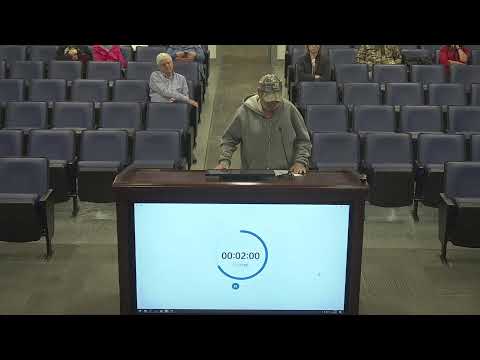
At the April 7 meeting of the Louisa County Board of Supervisors, David Potts of the Cuckoo District spoke for neighbors in the Elk Creek Landing lakefront development, saying investor‑owned short‑term rentals (STRs) have increased assessments and reduced residents’ quality of life.
Potts said assessments in his neighborhood have risen sharply in recent years and he attributed the increase to high‑selling prices for investor purchases used as income‑generating STRs. He described some lakefront STRs as configured for groups — “beds for 4 to 6 people and single bedrooms and multiple beds in non bedroom areas” — and said summer weekly rentals can run “as much as $20,000 a week.” He told the board that in his community more than 20% of 52 homes are now income‑generating STRs and that his homeowners association’s registry and fines have limited effect.
Potts asked the board for two actions: (1) that the county assessor begin to value income‑generating STR properties separately from single‑family homes used as residences, and (2) that the county require and enforce full compliance by STRs with the county short‑term rental ordinance, Virginia Department of Health regulations and applicable state building and safety codes. “We need the county’s help,” he said.
The remarks were part of the public-comment period; no board action on regulations or assessment practice was taken at the April 7 meeting. County staff and board members acknowledged the complaint and the limits of local enforcement; follow-up would require staff study or an agenda item for future action if the board directs it.