Get Full Government Meeting Transcripts, Videos, & Alerts Forever!
Get email alerts on the Wastewater Rates Financing topic
No spam. Unsubscribe anytime.
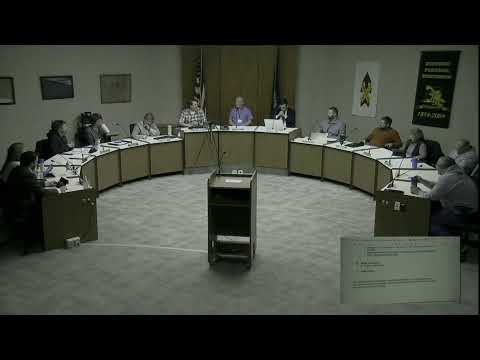
Portage council approves phased sewer-rate increases to fund $55 million wastewater upgrade
Summary
The Portage Common Council voted unanimously to approve phased sewer-rate increases to finance an estimated $55 million wastewater treatment facility upgrade, citing state Clean Water Fund loan terms and debt-coverage requirements.
The Portage Common Council voted to approve a series of sewer-rate increases intended to support financing for an estimated $55,000,000 upgrade of the city’s wastewater treatment facility.
The council approved a 40% rate increase effective July 1, 2025, followed by 30% increases on July 1, 2026, and July 1, 2027. The motion was made by Alderperson Mark Green and seconded by Alderperson Bernander; the roll call showed unanimous support (ayes recorded from Green, Paul, Wetzel, Bernander, Crowley, Bauer Frey and Feeney). The ordinance and rate schedule adopted by the council will be used to support permanent financing and to meet the state’s revenue-bond “additional bonds test.”
The increases are designed to position the city to use the Wisconsin Department of Natural Resources’ Clean Water Fund loan program, which the city’s financial advisor said offers the lowest-cost permanent financing option available. John (Ehlers financial advisor) told the council the Clean Water Fund currently provides a 30-year loan at about 2.595% and does not require a debt-service reserve, which reduces the city’s overall borrowing costs compared with open-market revenue bonds. “The total, right now we’re talking about an estimated price tag of the project at $55,000,000,” John said during the presentation.
Why it matters: Under state revenue-bond rules, the sewer utility must show that user revenues will cover operating and maintenance costs and then produce sufficient net revenue to meet a coverage ratio (commonly expressed as 125% of maximum annual principal and interest). City staff and the consultant said the staged increases are intended to meet those tests when permanent debt is issued and to avoid a single, much larger immediate increase.
What the increases mean for residents: The financial model presented used an average residential water use of 3,250 gallons per month. Under that example, current utility bills break down as about $28.76 for water and $28.12 for sewer. The approved rate schedule would raise the average sewer charge to roughly $66.54 per month after the phased increases. Council presentation materials showed combined water-and-sewer bills rising from about $683 per year now to “a little over $1,000” annually after the full set of increases, depending on water usage.
Discussion and alternatives: Council members and staff discussed two principal financing routes. The Clean Water Fund loan program (DNR administered) is presented as the best-case option if the city’s application scores high enough for funding; otherwise the city would need to consider open-market revenue bonds or interim borrowing and later refinancing. John walked the council through the tradeoffs: market-rate revenue bonds offer more structuring flexibility but currently carry materially higher interest rates (presented as roughly 4.5%–5% for a 20-year market issue at the time of the presentation).
Council debate emphasized reluctance to raise rates. “I don't like raising rates. I don't think any of us do,” Alderperson Green said, adding that the DNR mandate and the size of the project left the council limited choices. Several members asked about grant opportunities and whether principal forgiveness or federal appropriations could reduce the required increases; staff said the city has applied for federal funds and will continue to pursue state and federal assistance, but could not promise additional grant funding.
Formal action and next steps: The council’s recorded motion approves the rate schedule as presented and authorizes staff to use the approved increases in Clean Water Fund or market-borrowing applications. City staff said the next steps are to finalize the loan or bond application, bid the project, and continue working with the DNR on the city’s scoring. If the Clean Water Fund loan is awarded, the interest rate and 30-year term would be locked at closing; if not, the city would return to the council with a market-financing plan.
The council and staff noted related costs and smaller, ongoing projects — for example, a lift-station rehabilitation the city has flagged as a high-priority maintenance item — that may require future rate adjustments if additional state funding does not arrive.