Get Full Government Meeting Transcripts, Videos, & Alerts Forever!
Get email alerts on the Behavioral Health topic
No spam. Unsubscribe anytime.
Pathways CEO reviews services, staffing challenges and Medicaid risks in annual update to Delta County commissioners
Summary
Matt Maskart, CEO of Pathways (the county's community mental health authority), presented a year-in-review covering client populations, funding sources, staffing and accreditation; commissioners were asked to continue appointing committed board members.
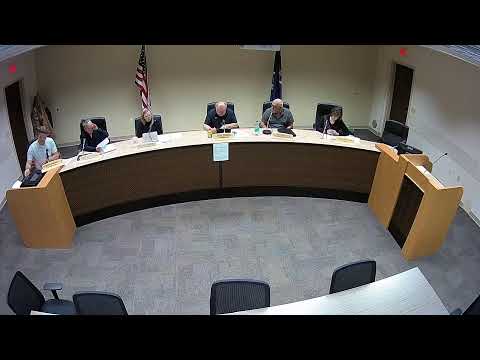
Matt Maskart, CEO of Pathways, presented the authority's annual report to the Delta County Board of Commissioners, summarizing who the agency serves, funding sources, staffing challenges and recent accomplishments.
"My name is Matt Maskart. I've been at Pathways for 26 years now," Maskart told commissioners, and he framed his report around the Michigan Mental Health Code requirement that Pathways provide a regular update to county government. He said Pathways serves adults with severe and persistent mental illness, children with severe emotional disturbances, and people with developmental disabilities across four Upper Peninsula counties under a governmental contract.
Maskart said roughly 93% of Pathways' funding comes from capitated Medicaid-related payments (including Healthy Michigan), with local county contributions set at a fixed amount established when the authority formed in 1998. He told commissioners the authority relies on those actuarially determined capitated payments and must operate within that budget.
The CEO highlighted recent achievements: Pathways received a three-year CARF accreditation, advanced its workplace culture rating from a Gold Seal to a higher tier, and expanded its behavioral health home program that integrates primary-care and specialty care with mental-health services. Maskart described a case where integrated care helped a mid-50s client manage diabetes and mental-health conditions, resulting in weight loss and improved health outcomes.
Maskart also described persistent staffing challenges. He said turnover reduced the average years of service among clinical staff from about 6.8 years in 2019 to roughly 3.8 years two years later, and that the authority has struggled to retain staff as school-based mental-health programs hired away clinicians. He said recent recruiting has improved and open positions are currently low, but that hiring brings many less-experienced workers into demanding clinical roles.
He warned of potential federal Medicaid changes that could affect funding, including discussion around reducing federal matching rates; Pathways' heavy reliance on Medicaid means any federal funding shifts could have major consequences. He asked the county to continue appointing local board members committed to mental-health services and thanked commissioners for recent appointments to the Pathways board.
No formal board action was requested or taken at the meeting. Maskart closed by inviting continued collaboration and offered to return next year with another update.