Get Full Government Meeting Transcripts, Videos, & Alerts Forever!
Get email alerts on the Governance Attendance topic
No spam. Unsubscribe anytime.
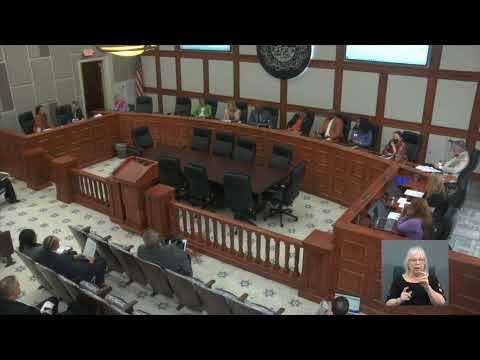
Board narrows virtual attendance policy, passes amendment 6-3
Summary
The board voted to remove the city's permissive virtual-attendance code and replace it with language that returns the board to pre-COVID in-person rules except in declared emergencies; amendment passed 6-3 after debate over flexibility and governance.
The Little Rock City Board of Directors voted to amend and adopt an ordinance that removes the city's previous permissive virtual-attendance code and returns the board to a pre-COVID model that generally requires in-person attendance, with one explicit exception for declared local emergencies.
Director Nan Peck moved to amend the ordinance with language provided by the city attorney; after debate the amendment passed on a roll-call vote of 6 ayes and 3 nays. Board members then voted on the ordinance as amended; a subsequent roll call again recorded a 6-3 outcome.
Debate centered on whether the city should retain flexibility for occasional virtual attendance and how the change would affect the ability to reach quorums. Director Phillips described the amended version as "cleaner" and said it "adds clarity" about which manual or code applies and about cases already in progress; he also said the rewrite is "good news for our development community," noting that the ordinance clarifies which version of the manual applies when.
Other directors said the change removes an operational tool. Director Lewis said virtual attendance provides flexibility for working board members and noted that requiring in-person attendance "will slow down government" because the board frequently suspends rules and needs a supermajority. Director Hines and others emphasized that municipal boards had functioned historically in-person and that temporary virtual rules were tied to the pandemic.
City Attorney Tom Carpenter explained the parliamentary procedure: because the ordinance draft had been read three times in previous meetings, members needed to move to amend the ordinance to its present draft before voting on the amended text; Carpenter said the three-readings practice traces to historical legislative procedure and does not require re-reading where amendments are made prior to a vote. Carpenter also advised that, absent bylaw language, proxy voting or indirect attendance is not permissible under Arkansas Supreme Court precedent and that commissions must have bylaws to allow telephonic or virtual attendance in the future.
Carpenter and staff noted one retained clause: the amended ordinance does not alter authority in the event of a declared state of emergency, meaning an emergency declaration could temporarily permit virtual participation as during the COVID emergency period.
The amendment and subsequent ordinance vote were recorded by roll call: 6 ayes and 3 nays. Directors opposing the amendment cited loss of flexibility for board members and volunteers who serve on city commissions; supporters cited clearer rules and concerns about participation quality during extended virtual meetings.
The board did not adopt a blanket change for commissions; Carpenter said separate bylaws or commission-specific provisions would be required for commissions to permit virtual attendance.