Get Full Government Meeting Transcripts, Videos, & Alerts Forever!
Get email alerts on the Stormwater Drainage Manual topic
No spam. Unsubscribe anytime.
Little Rock board adopts updated stormwater and drainage manual
Summary
The Little Rock Board of Directors voted unanimously to adopt a revised stormwater and drainage manual tied to the city's MS4 permit; board members asked for a standing water-quality working group and clarified the role of ADEQ and the board in future changes.
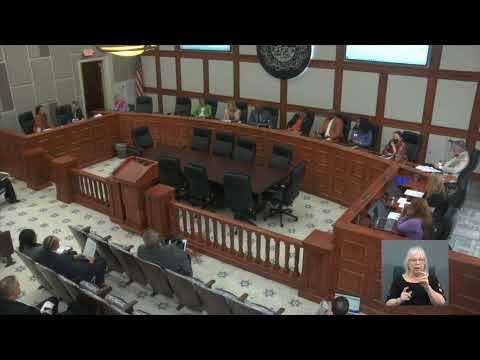
The Little Rock City Board of Directors on a special called meeting voted unanimously to adopt a revised city stormwater and drainage manual intended to comply with the municipal separate storm sewer system (MS4) permit requirements.
The manual update affects how the city manages stormwater discharge and drainage practices; the board and staff said the manual will be submitted to the Arkansas Department of Environmental Quality (ADEQ) for review and that further refinements will require additional work and board oversight.
Director Mark Hines asked whether staff could later change the manual at an administrative level, citing past administrative changes made without broad notice. City Attorney Tom Carpenter said the manual must be submitted to ADEQ and that the board "would want to be able to make those decisions" if changes are needed after permit review. Carpenter noted the city had an application under the permit and that ADEQ "will look at this manual" and may require changes as part of the permit process.
Several board members, private stakeholders and consultants who had participated in the drafting acknowledged compromises were required to reach the present draft. Tim Daeters and Joe White, two stakeholders present and involved in the process, confirmed publicly that they were satisfied with the current draft. Director Kompierich said the agreement represented hard compromise: "When nobody really likes what they're doing, but they all agree to do it ... it's a sign that [people] compromised and moved." Director Weierich asked that staff and stakeholders form a water-quality working group to address unresolved water-quality issues; Carpenter and staff indicated such a group would be appropriate to coordinate ongoing technical work and alignment with EPA standards.
Mayor Scott called the vote after a motion and second; the meeting minutes and statements on the record reflect a unanimous vote to adopt the manual.
Board members emphasized the manual does not end water-quality work: several said additional technical work and stakeholder engagement are necessary to resolve outstanding issues before the next permit cycle. Carpenter cautioned that while the board can set policy, ADEQ will review the city's application and permit and could require programmatic changes as part of permitting.
Board members directed staff to continue stakeholder coordination and to stand up the proposed water-quality working group to track implementation, technical questions and any future amendments.
The adoption replaces a version of the manual that had been used for decades; staff said the update addresses modern practice and permit alignment. The city will transmit the adopted manual to ADEQ as part of the MS4 permit submittal.
Implementation details, including any subsequent administrative or board-level amendments, will depend on ADEQ review, the working-group recommendations and future board action.