Get Full Government Meeting Transcripts, Videos, & Alerts Forever!
Get email alerts on the Planning Permits Growth topic
No spam. Unsubscribe anytime.
Wasilla planning staff reports surge in permit workload; hotel CU25-03 submitted
Summary
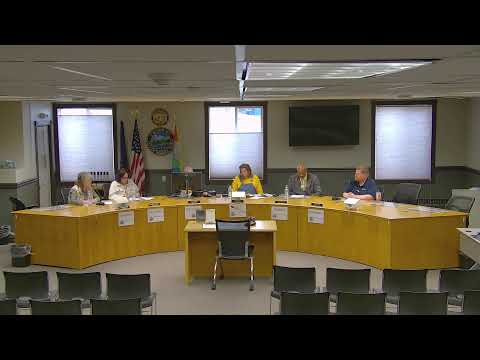
City Planner Wellman told the Wasilla Planning Commission on April 8 that permit demand in the planning office has jumped sharply and staff are operating in a triage mode to process a growing backlog.
City Planner Wellman told the Wasilla Planning Commission on April 8 that permit demand in the planning office has jumped sharply and staff are operating in a triage mode to process a growing backlog.
“Last year on April 28 or 29, we were at about 38 permits. Right now, when I walked down here, I think I saw 101,” City Planner Wellman said, describing the current caseload and the department’s effort to prioritize work.
The planner said the office hosted a “permitting party” and is preparing a memorandum of understanding with the Alaska Municipal League (AML) to provide supplemental planning services. Wellman also said the city is rewriting Title 16 and preparing an enterprise resource planning (ERP) deployment to reduce manual steps in permit processing.
Why it matters: Commissioners and staff said faster development increases near-term demands on water, sewer and other infrastructure. Commissioners urged linking approvals to infrastructure capacity and flagged the long lead times and high costs for major system components.
Details from staff and administration
Wellman said the office is using a red/yellow/green triage system to decide where to allocate staff time, and that Deputy Administrator Nygaard has been assisting with permitting tasks and broader planning work. Wellman said Deputy Administrator Nygaard has also been named project manager for the comprehensive plan and has compiled a community-events timeline to support outreach.
Wellman described how use permits are processed: an administrative review followed by a mailed 1,200-foot notice to nearby property owners and reviewing parties. If substantive comments return, Wellman said she would elevate a use permit to the Planning Commission. “Any time I can elevate a use, actually any permit, I can elevate a use permit at any time,” she said.
A hotel application has been submitted and identified as conditional use permit CU25-03. Wellman said notices had not been mailed at the time of the meeting but that the application is public knowledge because it had been filed.
Economic-development and growth numbers
Deputy Administrator Nygaard told commissioners the city was tracking a wave of private projects and associated infrastructure needs. “The last we looked as of March, without the hotel, we had just under 300,000 square feet of new development coming on, which was about $300,000,000 of capital,” Nygaard said. Nygaard added that the projects listed at that time were estimated to create about “1,400 jobs full time within the next three years,” including “at least a hundred of them; 25 are medical jobs.”
Nygaard and commissioners said the city is coordinating planning, economic development and public works to identify capacity gaps and funding. Nygaard described airport master-plan work and an approximately $240 million investment for airport improvements in the borough’s multi-year plan, and promoted upcoming local events where staff will present data and project tours.
Staffing and next steps
Wellman said temporary help Mary has rejoined the office and may remain while funds allow. She said she is “helping to quantify the necessity for another full time position” but did not commit to a hiring timeline. To manage the workload the planner said the AML contract will be used as a quick source of qualified planning help without issuing a separate, ongoing request for proposals.
Commissioners stressed infrastructure caution
Multiple commissioners warned that approving development without sufficient infrastructure planning can create fiscal and operational problems. One commissioner cited experiences in other cities where rapid approval led to water, drainage and sewer shortfalls and estimated that replacing major pumps could cost “about a half a million to a million dollars.”
What’s next
Wellman said the Planning Commission will receive notices and staff reports as use permits advance; the next regular commission meeting is scheduled for April 22. The planning office also encouraged commissioners to review the city budget calendar and attend forthcoming public events on regional economic development and infrastructure.