Get Full Government Meeting Transcripts, Videos, & Alerts Forever!
Get email alerts on the Curriculum topic
No spam. Unsubscribe anytime.
East Stroudsburg EPR committee approves multiple curriculum purchases, staff to revise ninth-grade science course
Summary
The district's Educational Programs & Research committee approved purchases of Writable (HMH) and Activate Learning science materials and reviewed a series of curriculum rewrites and first looks, while staff agreed to revise a ninth-grade general science course and to give teachers time and training to adopt the new science approach.
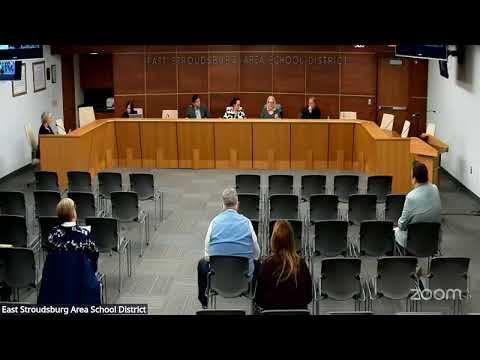
The East Stroudsburg Area School District Educational Programs & Research committee on an advisory vote approved several curriculum purchases and reviewed multiple curriculum updates affecting elementary through high school instruction.
Committee members voted to recommend purchases of Writable from HMH ($31,200) and two Activate Learning science packages (high school and intermediate levels), and members were briefed on ELD materials (VISTA), family and consumer sciences, business course rewrites, intermediate ELA supports, and overall curriculum pacing and implementation plans.
The purchases matter because they shape classroom instruction, materials budgets and staff professional development. District presenters said the purchases bundle content, assessments and teacher supports that staff expect will speed classroom adoption and raise the district’s alignment to Pennsylvania standards.
District staff described two distinct decisions made during the meeting. First, the district will not finalize a proposed ninth‑grade general science course now; staff said they will rework that course to better use the ninth-grade “captive audience” and ramp students to tenth‑grade biology. Second, the committee recommended three purchases: Writable (an HMH product for intermediate writing) and Activate Learning packages that wrap the OpenSciEd phenomenon‑based materials with professional development and teacher resources.
Mister Tansen, who described his background as a middle‑level science teacher and supervisor, said Activate Learning stood out after his district outreach and attendance at Pennsylvania Department of Education events. "Activate Learning was the central product that everyone was talking about," Tansen said, describing reviews from peer districts and conference sessions. He and other leaders argued Activate Learning reduces teacher prep time and supplies structured professional development to support a shift from single‑discipline teaching to phenomenon‑based science instruction.
Staff emphasized a cautious approach to the science purchase: the recommendation is for a three‑year term rather than a typical six‑year contract so teachers can gain experience with the materials and the district can watch for competitors or changes in the market. "We decided to purchase this for a three‑year term because in that time our teachers will have the capability and the market may produce more competitors," a district curriculum presenter said during discussion.
English and writing materials were also presented. Jill Greenwood, who described the district’s intermediate ELA work and integration with HMH, said Writable links texts and writing tasks and provides granular feedback and Turnitin integration. "The writing capabilities are embedded and connected to the passages that our students are reading," Greenwood said, adding that Writable supports peer review, formative low‑stakes writing and standards tracking.
Family and Consumer Science and business departments presented comprehensive rewrites to align with Pennsylvania’s 2026 standards and to modernize units (examples: budgeting simulations, infant simulation, farm‑to‑table culinary projects, Microsoft certifications for business apps). Regina Brotherton, presenting the FCS rewrite, said the plan includes both 22‑ and 43‑day pacing guides to preserve scheduling flexibility at the middle level.
Several teachers and chairs raised implementation concerns about the shift to phenomenon‑based science. The committee said it will rely on a phased rollout, summer training and early evaluation: teachers will pilot units and report back so the district can adjust before any longer contract is adopted.
Ending: The committee recommended the purchases by voice vote with "aye" on each motion. Staff later noted a technical correction: the agenda line items specified different budget lines for some purchases; the district will correct purchase coding so the items come from the intended curriculum or general fund accounts. Board approval on the regular agenda will reflect the corrected accounting.