
Committee adopts amendment extending Vermont protections to out-of-state providers and tightens patient-data limits
Get AI-powered insights, summaries, and transcripts
Subscribe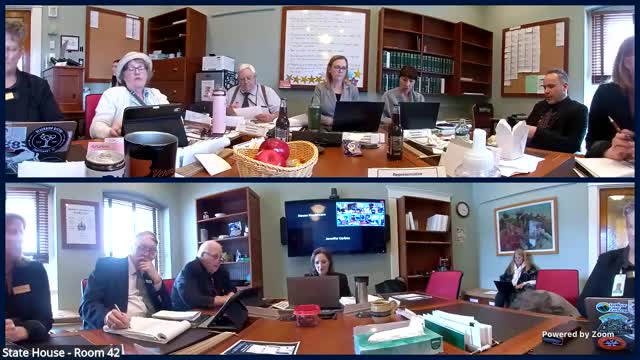
Summary
The House Committee on Health Care on April 11 approved an amended version of S.28, expanding Vermont's legal protections for people who engaged in legally protected reproductive or gender-affirming health care in other U.S. jurisdictions and tightening limits on disclosure of protected health information.
The House Committee on Health Care on April 11 approved an amended version of S.28, an act concerning access to certain legally protected health care services, advancing a draft that expands Vermont's protections for providers and patients and tightens limits on disclosure of protected health information.
Committee members voted to adopt the bill as amended (version 3.4). The amendments add language that would extend the protections available under Vermont law to a person who previously undertook one or more acts or omissions while in another U.S. jurisdiction to aid, encourage or attempt to aid or encourage legally protected reproductive or gender-affirming health care services, provided those acts were lawful where they occurred; they also expand an existing noncooperation shield to federal investigations and refine exceptions to a proposed ban on certain disclosures of protected health information.
The measure as amended places the new cross‑jurisdiction protection in the statutory definition of "legally protected health care activity," and adds a separate change to the consumer-protection chapter by revising the definition of "health care services" to list medical, dental, behavioral health, mental health, substance use disorder treatment, surgical, psychiatric, diagnostic, preventive, rehabilitative and supportive services.
"This is S.28. It is an act relating to access to certain legally protected health care services," said Jen Carvey, Office of Legislative Counsel, as she summarized the draft and the changes in context. Carvey told the committee the cross‑jurisdiction provision aims to ensure that "the protections available to persons who engage in legally protected health care activity shall also apply to a person who has previously undertaken . . . acts or omissions while in another U.S. jurisdiction" if those acts were permitted where they were performed.
Carvey said the draft also revises an existing noncooperation statute (originally passed in 2023) to make clear that a public agency or individual acting for a public agency may not knowingly provide information or use resources to further an interstate or federal investigation or proceeding that seeks to impose civil or criminal liability for providing or seeking legally protected health care activity that is lawful in Vermont. She described a narrow set of exceptions, including compliance with orders of a Vermont state or federal court and ordinary-course disclosures required by Vermont's Medicaid program.
On patient privacy, the amended language would prohibit a covered entity or business associate from disclosing protected health information that is identifiable or susceptible to re‑identification and that relates to legally protected health care activity to any government entity other than the State of Vermont or its subdivisions when there is reason to believe the information will be used to investigate or pursue liability for the mere act of seeking, obtaining, providing or facilitating legally protected health care activity. The draft keeps a court-ordered exception but would require the issuing court to include a finding that the information will not be used to impose liability or professional discipline solely for engaging in legally protected care.
Committee members asked procedural and scope questions during the markup, including whether the provision would affect extradition or private actors; Carvey said the changes are intended to limit state cooperation rather than physically prevent a person from traveling to Vermont.
Action and vote: The committee moved to adopt S.28 as amended (version 3.4). A roll-call portion recorded the following votes: Representative Chen — Yes; Representative Cortes — Yes; Representative Critchlow — Yes; Representative DeMar — No; Representative Goldman — Yes; Representative Houghton — Yes; Representative Paige — No; Representative Powers — No; Representative Rebecca — Yes; Representative McFarlane — Yes; Representative Black — Yes. Recorded tally from the roll-call entries in the transcript: 8 Yes, 3 No. The motion passed.
The committee asked staff to produce a clean, non‑highlighted draft for final clearance; Representative Brooke Ecko was named as the floor reporter to present the committee's action.
Background and context: Committee counsel said much of the bill collects, renumbers and clarifies existing protections and adds targeted expansions reflecting concerns about cross‑jurisdiction enforcement against providers and patients involved in reproductive and gender‑affirming services. The bill links the consumer-protection definition of "health care services" to the statute for legally protected activities, explicitly adding "substance use disorder treatment" to that listing for consumer-protection purposes.
Next steps: The committee approved the amendment and will report the measure to the floor with the adopted changes.