
Representative Donna Hughes proposes aligning aspirational intent dates in H.454; committee debates timing, public input and cost
Get AI-powered insights, summaries, and transcripts
Subscribe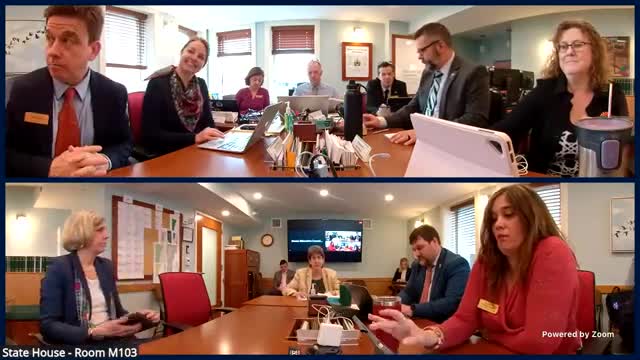
Summary
Representative Donna Hughes offered an amendment to H.454 to move aspirational intent dates earlier for district boundary and ward work if that preparatory work can be completed sooner than currently scheduled.
Representative Donna Hughes presented a late amendment to H.454 focused on aligning the bill—s aspirational intent dates with the anticipated work to create new school district boundaries and voting wards. "This proposal is simply saying our aspirational intent dates should align with that hope," Hughes said, explaining the amendment would move some dates forward if the related work were completed sooner than previously scheduled.
Hughes described the intent language as nonbinding: "It's it's not binding. It's aspiration," she told the committee. She said the amendment would change the bill—s intent to indicate the General Assembly hopes to enact new, larger district boundaries effective July 1, 2026 (instead of 2027), enable initial school board member elections as early as March 2027 (instead of 2028) and allow full district responsibility to begin July 1, 2028 (instead of 2029) if the preparatory work is completed. Hughes also said she removed phrasing that merely directed the start of the ward-creation process, because the intent was to show the legislature—s hope that wards would be created in 2026.
Committee members expressed multiple concerns. One member said the work to draw ward lines cannot be finalized until district boundaries are settled and noted the process requires extensive public comment and legal steps similar to legislative apportionment. That speaker stated, "we are creating the largest political subdivisions ever created in the state potentially" and warned that the public process and funding for mapping and software purchases had not been addressed in the amendment. Others said the amendment was intended to match dates in a companion Houghton amendment and would be withdrawn if that amendment failed.
Hughes acknowledged the amendment did not change any operative effective dates, saying she "consciously did not change any of the effective dates." She framed the amendment as a technical alignment of aspirational intent language rather than an immediate operational change. The committee discussed sequencing for floor amendments and the possibility that mapping costs and staff time would require appropriations in subsequent budget bills. The transcript records the committee taking a straw vote on the amendment but does not record a formal committee adoption or a detailed roll-call tally in the hearing.