
HCAI webinar highlights analysis choices: linear vs. nonlinear, SSI and time histories for SPC projects
Get AI-powered insights, summaries, and transcripts
Subscribe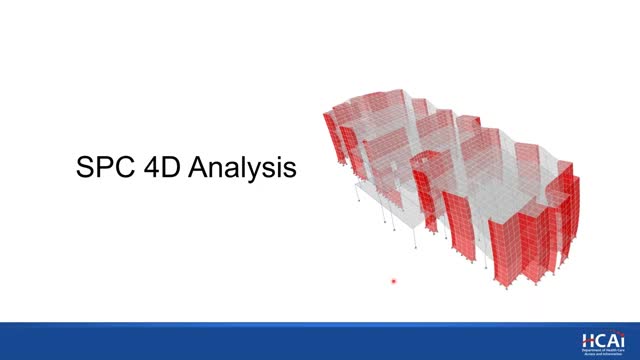
Summary
HCAI staff reviewed analytical approaches for SPC upgrades, advising engineers to respect linear-analysis limitations, consider nonlinear time-history or pushover checks, and model soil‑structure interaction where required.
The Department of Health Care Access and Information’s Seismic Compliance Unit advised engineers on analysis approaches for SPC retrofit projects, emphasizing correct method selection, checks and common pitfalls.
Seismic Compliance Unit staff said ASCE/SEI 41‑13 remains the governing standard for SPC 4D evaluation. For many projects designers use linear analysis, but HCAI cautioned that linear approaches have limitations for buildings with certain irregularities and should not be used where code or geometry disqualify them. The webinar recommended doing linear checks and a pushover analysis as a sanity check before committing to nonlinear time‑history analysis. Sumer said nonlinear methods often produce a more accurate model of damage behavior and can reduce retrofit scope, but they require specialized expertise.
Soil‑structure interaction (SSI): HCAI told attendees that for stiff, short‑period buildings (where the response spectra increases with decreasing period) SSI modeling may be required because softening of the structure in damage can paradoxically increase base shear. The unit offered two options where SSI effects matter: perform SSI modeling or adopt a conservative flat-top modification to the response spectrum (a commonly accepted simplification) when justified.
Other technical cautions in the webinar included checking diaphragm modeling (artificially low base shear can result from improper diaphragm assumptions), careful treatment of accidental torsion for semi‑rigid diaphragms, correct coupling‑beam modeling, and careful selection of ground‑motion records (ASCE 7‑10 site spectra were the default guidance cited). HCAI also noted growing experience with fiber‑reinforced polymer (FRP) solutions and that the Seismic Compliance Unit is collecting FRP tests under a preapproval program to inform future guidance.
Ending: HCAI encouraged owners to hire firms with demonstrated nonlinear analysis experience for complex projects, run linear sanity checks, and consult with the Seismic Compliance Unit early when advanced modeling choices or SSI issues arise.