Get Full Government Meeting Transcripts, Videos, & Alerts Forever!
Get email alerts on the Cef Implementation Grant topic
No spam. Unsubscribe anytime.
CDFW funds $2 million project to operationalize California Environmental Flows Framework
Summary
California Department of Fish and Wildlife awarded roughly $2 million to a multi‑partner project to further operationalize the California Environmental Flows Framework, focusing on refined modeling, groundwater–surface-water linkages, implementation tracking and outreach.
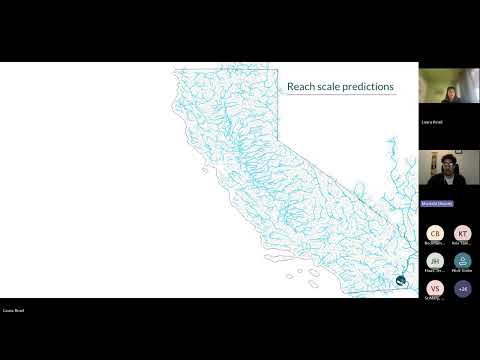
The California Department of Fish and Wildlife (CDFW) has funded an approximately $2 million, three-year project to advance implementation of the California Environmental Flows Framework (CEF), a statewide technical approach that identifies protective ranges of functional flow components for stream reaches, a presenter told the California Environmental Flows Work Group.
Why it matters: The grant is intended to move CEF from a statewide technical dataset and calculator toward routine use by practitioners and agencies for applications including dam operations, restoration, groundwater planning and regulatory compliance.
Project goals and partners Chris Taniguchi Quan, who provided the staff update during the meeting, described three primary workstreams funded by the grant: (1) improve and refine models and tools to predict flows important for fish and wildlife, with a focus on better handling of flashy and intermittent streams and exploring deep-learning integrations; (2) develop methods to quantify groundwater–surface-water interactions and groundwater-depletion effects on surface flows in targeted case studies; and (3) track implementation of existing environmental-flow requirements across the state and develop outreach and implementation guidance based on case-study lessons learned.
Taniguchi Quan said the work will build on existing datasets and tools — including the functional-flows calculator developed by TNC and UC Davis — and on analytics developed by the State Water Board Division of Water Rights. He said the project will pilot modeling approaches in selected case studies, refine methods to link flow changes to water-quality responses (for example stream temperature and dissolved oxygen), and then synthesize practical implementation guidance for agencies and practitioners.
Funding, schedule and coordination Presenters said the project is funded at about $2,000,000 and will run three years. The initial development of the statewide models and tools was funded by the State Water Board Division of Water Rights, and this CDFW grant is intended to support the next phase focused on operationalization, tracking and outreach. Team partners include TNC, UC Davis and other organizations shown on a collaboration slide displayed during the meeting.
Tracking implementation and training The project includes a synthesis and reconciliation step: presenters said they will combine the State Water Board’s existing dashboard of environmental-flow requirements with additional documents and newly identified requirements to produce a more complete inventory. Where observed data (gauges or other observations) exist, the team will evaluate whether stated flow requirements are being achieved on the ground. The grant also funds development of training materials, workshops and stakeholder outreach to help agencies and practitioners apply the framework consistently.
Open questions and next steps Attendees discussed whether intermittent flows are an issue where cannabis cultivation occurs; Ethan from CDFW’s Office of Cannabis said many monitored streams that include cannabis cultivation are headwater streams that can be perennial in places but also include high-elevation or upland irrigated uses. Presenters invited collaboration on case studies and said they will use the Environmental Flows Work Group as a forum for ongoing feedback.
Ending Project leads said they expect to begin work within weeks and will return to the work group with updates and opportunities for collaboration, pilot participation and review.