
Resident urges Lancaster County to adopt vacancy and blight tax to address long-term empty properties
Get AI-powered insights, summaries, and transcripts
Subscribe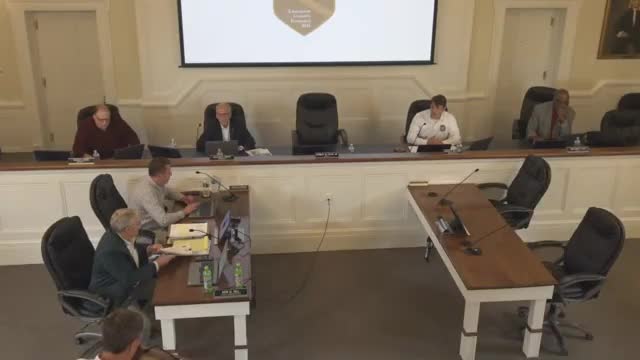
Summary
John Guzak, a Lancaster County resident from Kilmarnock, urged the Lancaster County Board of Supervisors on April 10 to adopt a vacancy tax and a blighted building tax to address long-term commercial and residential vacancies that he said are harming local tax revenue, housing availability and downtown character.
John Guzak, a Lancaster County resident from Kilmarnock, urged the Lancaster County Board of Supervisors on April 10 to adopt a vacancy tax and a blighted building tax to address long-term commercial and residential vacancies that he said are harming local tax revenue, housing availability and downtown character.
Guzak said the county should use a tax as “a tool to combat vacancies and blight,” arguing that long-term empty storefronts and houses reduce sales and property values and increase local costs for code enforcement. He cited a downtown Kilmarnock grocery that has sat empty for decades and said, “If the owner of this single property must begin to pay a 3% penalty tax the town will collect an additional $16,320 every year until it’s rented.”
The request came during the supervisors’ FY26 budget work session and prompted questions from board members and county staff about what the county can legally adopt and enforce.
County staff said state rules limit where a local government may pass a blighted-property tax. “A locality has to qualify, it has to be a qualifying locality in order to enact such a tax or a blighted tax for sure,” a county official said. He said Lancaster does not meet the cited fiscal-stress index threshold for a blighted property tax and that it is unclear whether the same state threshold applies to a vacancy tax.
Board members and staff discussed two enforcement threads. First, county staff noted the county already has a property maintenance code that could be enforced more strictly; one supervisor suggested the county could “start enforcing the… property maintenance code.” Second, supervisors emphasized the limits of county authority inside incorporated towns: the town would have to adopt its own ordinance to apply within its limits. Board members suggested Guzak raise the issue with the town council and pursue available court petition routes where appropriate.
Supervisors did not adopt an ordinance or set a formal timetable. Instead they asked staff to research the legal constraints and possible local steps— including options under the county’s property maintenance code — and to report back. Guzak said he would organize community support and attend town council meetings to press the issue.
The exchange highlighted specific local examples Guzak used to illustrate his case (a long-vacant grocery building, other empty storefronts and a residential lot with uncut grass and a removed dead tree) and the practical limits officials described: the building cited in Kilmarnock was not judged “unsafe” by building officials and thus not condemnable under current enforcement practice, and towns must adopt any town-level ordinance to change local rules.
For now, supervisors directed staff to research applicability of vacancy/blight taxes and enforcement options and to return with information about statutory qualifications and local code enforcement tools. Guzak said he stands ready to help draft or lead a citizen committee if the board supports moving forward.