
Planning commission told to add clearer findings in Love's travel-stop appeal
Get AI-powered insights, summaries, and transcripts
Subscribe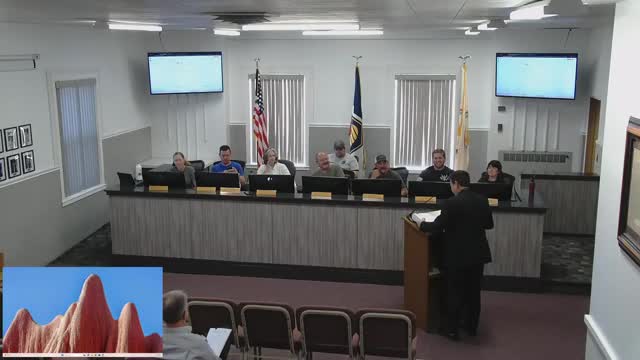
Summary
A county attorney told the San Juan County Planning Commission it must supply more specific legal findings after an administrative law judge affirmed several earlier rulings but remanded the decision on whether Love’s Travel Stop is a permitted use on SITLA land.
Bart, a county attorney's office representative, told the San Juan County Planning Commission on April 10 that Administrative Law Judge Cresswell affirmed several of the commission's prior rulings on the Love's Travel Stop application but sent the matter back because the commission’s written findings of fact and conclusions of law were insufficient.
The judge “affirmed several of the planning commission's decisions,” Bart said, including that the Love’s application was complete, accompanied by the required fee and was not barred by the county moratorium or by more recent Spanish Valley development ordinances. But, Bart said, the judge asked the commission to explain more precisely why the travel stop is a permitted use under the county’s 2011 ordinances or, if not listed, why it qualifies as an “other use” in harmony with the neighborhood commercial intent.
Why it matters: the remand focuses on legal reasoning rather than the basic procedural steps. The ALJ asked the commission to supply (1) a clearer statement about whether Love’s or SITLA holds a property interest that makes the applicant subject to county ordinances; (2) whether a single use may be treated as falling within multiple permitted uses in the CDH (highway commercial) subzone; and (3) specific factual findings to support any conclusion that the travel stop is either contained within listed permitted uses (for example, automobile service station or restaurant/drive-in) or — if not listed — is both in harmony with the neighborhood commercial zone and similar in nature to the permitted uses.
Bart reviewed the legal framework the ALJ relied on, including Utah Code section 17-27a-304 and the county’s chapter 12/2011 zoning tables. He said the ALJ supplied working definitions for terms the county code does not define — for example, for “restaurant or drive-in cafe,” “automobile service station,” and “accessory use” — and that the commission should either adopt similar explanatory language or make clear, supportable factual findings that point to evidence in the record.
Commission discussion centered on two recurring points: ownership/jurisdiction and the proper characterization of the proposed use. Commissioners asked whether SITLA (the School and Institutional Trust Lands Administration) remains the property owner and whether SITLA has waived any statutory immunity from county land-use controls. Bart said the record indicates SITLA is the owner and Love’s (the applicant) has a contractual development interest, but he emphasized there is no written waiver from SITLA on file and that the county will request a formal clarifying statement from SITLA or Love’s before returning the matter for the commission’s decision.
On use classification, Bart explained the commission has three primary legal paths: (1) find the travel stop is a permitted use because it falls within one or more listed uses in CDH; (2) find it is an "other use" that is both in harmony with the neighborhood commercial zone and similar in nature to the listed uses (which requires two explicit findings); or (3) determine it is not an "other use approved" and instead consider conditional-use procedures where applicable. He stressed that any chosen path must include specific factual findings tied to substantial evidence in the record — for example, the number of fueling stations, the balance of truck versus car parking, or the presence of a fast-food restaurant and drive-through — to allow a reviewing judge to see the factual basis for the legal conclusion.
No final decision on the Love's application was made at the meeting. Instead, staff and the county attorney’s office will request additional documentation and a written representation from SITLA and Love’s about their property interests and willingness to be governed by county ordinances. Planning staff will prepare an expanded staff report and proposed findings for the commission’s next meeting; the county attorney said he will provide legal guidance on the form and content of those findings.
The commission and county attorney noted the matter is likely to continue through administrative and possibly district court review regardless of the commission’s next decision, and the county plans to coordinate future filings so related appeals can be consolidated.