
Cabarrus officials propose updated permit and fire fees; commissioners ask for municipal consultations
Get AI-powered insights, summaries, and transcripts
Subscribe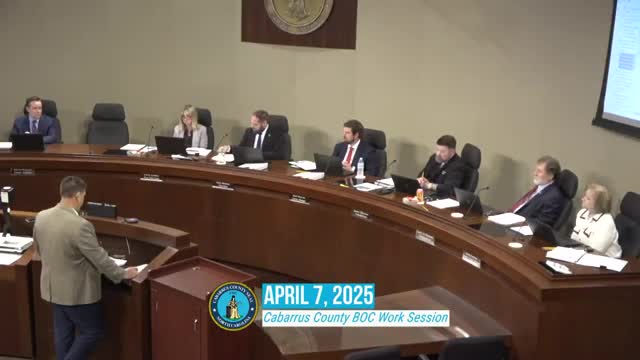
Summary
Construction standards, fire services and planning officials presented fee studies and proposed increases to recover inspection and plan‑review costs; discussion included a proposal to charge small towns for county fire/prevention services and calls for further talks with Mount Pleasant and Midland
County staff on April 7 presented a package of proposed fee‑schedule updates for construction standards, fire services and planning and zoning aimed at better matching permit and inspection charges to the county’s costs.
Construction standards staff said most consultant recommendations were followed but that multifamily projects and certain plan reviews required upward adjustments. The department proposed eliminating a two‑tier single‑family residential rate (custom vs. production homes) and applying a square‑foot or flat fee structure instead; staff proposed keeping current single‑wide and double‑wide manufactured‑home fees at $600 and $800 respectively and $100 for each additional unit.
Staff also proposed five new permit categories, including existing certificates of occupancy, day‑care permits, ABC permits, licensed care facilities and accessory dwelling units. The department asked for a modest increase to the base trade permit fee (a staff recommendation of $75 flat, below a consultant recommendation of $91.03) and said some smaller fees were lowered so homeowners would pull permits rather than work without them.
Jacob Thompson, presenting for Fire Services, said new‑construction fees would follow the consultant’s recommendations, while consumer‑facing event and tent permits would be set at a 50% cost‑recovery rate. Thompson said the department recommended holding off on fees tied to recently delayed state fire‑code changes (example: food trucks) and had removed three items (foster‑care homes, group homes, and food trucks) from immediate fee consideration.
Officials also presented preliminary figures showing how much the county spends to provide fire‑prevention and inspection services inside smaller municipalities. Using a five‑year average of work done in Mount Pleasant, Midland and Locust, staff estimated annual costs of roughly $52,857 for Mount Pleasant, $52,794 for Midland and $4,794 for Locust. That prompted immediate concern from commissioners and two municipal managers; a commissioner said she was "not in favor of charging Mount Pleasant, Midland or Locust" without further consultation.
Construction standards staff told the board that implementing a municipal charge would require further conversations about methodology — for example, whether to charge per inspection, per billable hour or by other metrics — and likely would be considered for a future fiscal year so municipalities could budget for changes.
Susie Morris presented planning and zoning fee work showing the department has not kept pace with growth since a prior 2018 fee decision and recommended incremental steps toward higher cost recovery. Commissioners asked staff to consult town managers before any billing change was implemented and to consider phasing any new charges into the next fiscal year.
No formal fee ordinance or final vote was recorded on April 7; staff asked for policy direction and additional consultation with affected towns before returning with a recommended implementation plan.